


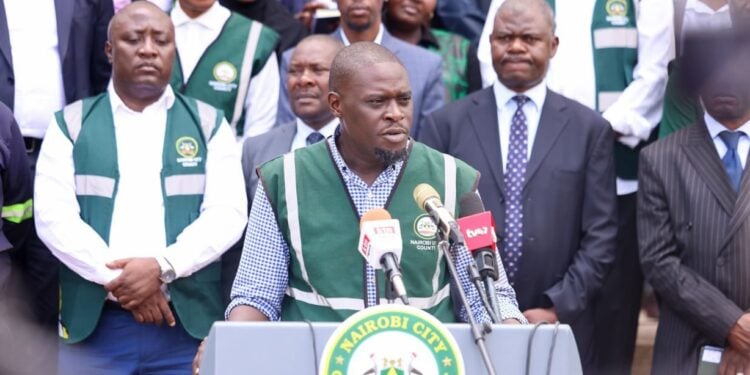
Nairobi residents, event organizers, religious institutions and entertainment businesses will now have to pay new fees for activities that generate noise under the Nairobi City County Finance Act 2026.
The new charges cover weddings, roadshows, churches, mosques, clubs, construction activities and short-term night events, with some permits costing as much as KSh100,000. Nairobi City County Assembly lists the Finance Act 2026 among legislation assented to in 2026.
Weddings and Night Events Face New Charges
Under the new fee schedule, couples holding weddings in residential areas will pay KSh20,000 per event for a noise permit.
Those holding weddings in gardens will pay KSh10,000 per event, making the location of the wedding a key factor in determining the applicable charge.
Also Read: Nairobi County Breakdown of Licence Fees for Billboard Advertising and Traders Under New Policy
The highest single-event charge is for short-term night events, which will require a KSh100,000 noise emission control permit.
The rules also introduce annual noise permit charges for clubs based on their capacity. Clubs with a capacity of up to 100 people will pay KSh20,000 annually, while those accommodating between 101 and 500 people will pay KSh50,000.
Clubs with a capacity of more than 500 people will face the highest annual charge of KSh100,000.
Nairobi has also set a KSh20,000 permit for specified noisy construction activities, including excavation, demolition and drilling.
Roadshows and Religious Institutions Included
Roadshow operators will pay different fees depending on the vehicle used.
A roadshow conducted using a saloon car will attract KSh10,000, while a minivan will cost KSh30,000. A roadshow using a 24-wheel truck or canter will attract the highest roadshow fee of KSh50,000.
The county has also introduced charges for religious institutions. Churches and mosques will pay KSh5,000 annually for a Noise Emission Control Permit.
The introduction of the fees expands the range of activities for which Nairobi residents and organizations must consider noise-related permits when planning events or operations.
The charges are set out in the county’s noise-emission permit schedule, which sets different fees depending on the type of activity and, in some cases, its scale or capacity.
Failure to Obtain Permit Could Cost More
The new rules also provide financial consequences for those who fail to obtain the required noise permits.
Also Read: Sakaja Unveils Specialized Teams to Prepare Nairobi for El Niño Floods
According to the fee schedule, non-compliance can attract a penalty equivalent to three times the applicable license fee. This means an organizer or establishment that fails to obtain a KSh100,000 permit could face a penalty of up to KSh300,000, depending on how the provision is applied.
The new charges come as noise pollution continues to attract attention from regulators and residents in Nairobi.
National Environment Management Authority (NEMA) has stepped up inspections of entertainment establishments following complaints over excessive noise, including an inspection of an entertainment venue in Lavington.
Noise-related disputes have also resulted in court cases. Advocate Samwel Barongo Nyamari filed a petition seeking regulation of loud music in public service vehicles, targeting the Matatu Owners Association, the National Transport and Safety Authority, NEMA and the Attorney General. The matter is scheduled for hearing next year.
Follow our WhatsApp Channel and X Account for real-time news updates.


How will payment for these permits prevent or help the affected people from the effect of the noise pollution
How will payment for these permits cure the noise pollution effects