Passing-out parades are an important part of the Kenya Defense Forces (KDF) training process, marking the point at which recruits complete their training and formally move into military service.
According to the Ministry of Defense, the ceremonies combine military discipline, national symbols, formal procedures, and recognition of outstanding performance. They also give families an opportunity to witness the culmination of months of training.
Here are eight key ceremonial traditions seen during KDF pass-out parades and what they represent.
- Inspection of the KDF Parade by the Commander-in-Chief
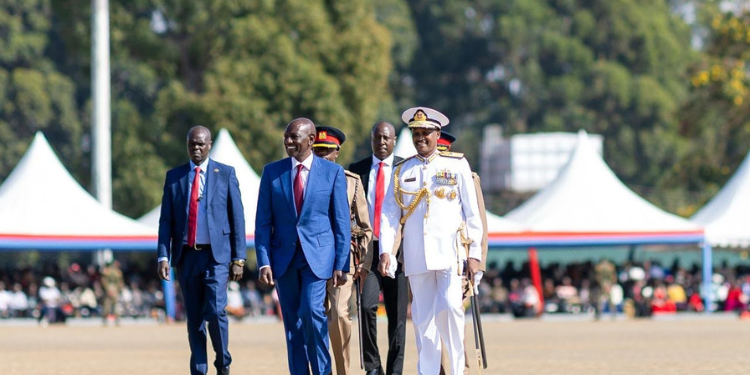
The inspection of the parade by the Commander-in-Chief is one of the main moments of a KDF pass-out ceremony.
The Ministry of Defence states that the President, as Commander-in-Chief of the Kenya Defence Forces, reviews the graduating recruits during the ceremony.
The inspection provides an opportunity for the country’s civilian leadership to formally receive and recognise the graduating recruits as they complete their military training.
It also reflects the constitutional relationship between Kenya’s civilian leadership and the Defence Forces.
- Military Drill Demonstrations
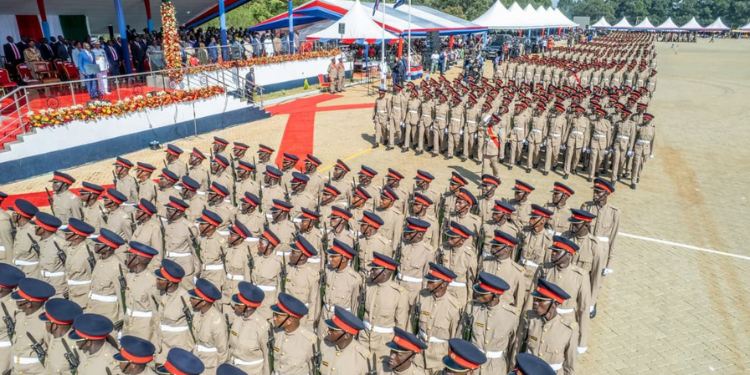
Military drill demonstrations allow recruits to display the discipline, coordination and precision they have developed during their training.
The Ministry of Defence notes that recruits undergo intensive military training that includes drill, physical training, field craft and combat-related skills.
During the pass-out parade, recruits demonstrate some of these skills through coordinated movements, marching and rifle drills.
The displays show how recruits have developed from civilians into disciplined military personnel capable of working together as a formation.
Also Read: 2026 KDF Pass-Out Confirmed as Police Recruits Await Graduation
- Trooping of the Colour
Trooping of the Colour is a military tradition associated with the identity and history of a military unit.
According to the Ministry of Defence, a Colour is a military flag carrying the identity of a regiment or unit, together with its insignia and battle honours.
During ceremonial occasions, the Colour is paraded before the troops, reflecting the history, achievements and pride of the unit.
The Ministry has described Colours as important symbols that preserve the traditions and achievements of military formations.
Trooping of the Colour represents the history and identity that members of a military unit inherit and are expected to uphold.
- Administration of the Oath of Allegiance
The Oath of Allegiance is an important part of the recruits’ transition into military service.
The Ministry of Defence states that graduating recruits take the oath as they formally commit themselves to their duties and responsibilities as members of the Kenya Defence Forces.
The oath includes a commitment to defend and protect Kenya’s sovereignty and territorial integrity and to carry out military responsibilities faithfully.
For the recruits, the administration of the oath marks the formal transition from training to service.
- Presentation of Awards
Outstanding recruits are recognized during pass-out ceremonies for their performance during training.
Ministry of Defense notes that awards may recognize achievements in areas such as overall performance, discipline, combat marksmanship, sports, and other military skills.
Also Read: Has KDF Delayed the 2026 Pass-Out Parade? How Official Dates Are Announced
Among the awards associated with KDF training is the Sword of Honor, which is presented to outstanding officer cadets during commissioning ceremonies.
The Ministry has also documented awards for the best overall recruits and top performers in areas such as combat marksmanship during recruits’ pass-out parades.
The awards recognize individual achievement while encouraging discipline, commitment and excellence among military personnel.
- March-Past in Slow and Quick Time
The march-past gives graduating recruits an opportunity to demonstrate their discipline and coordination before the reviewing stand.
Ministry of Defence has documented KDF parades featuring marches in both slow and quick time.
Slow time gives the parade a more formal and ceremonial character, while quick time demonstrates the energy, precision, and coordination developed during training.
The movements require recruits to maintain formation and respond to commands while marching together.
- National Anthem and Patriotic Music
According to the Ministry of Defence, military bands participate in formal Defence Forces ceremonies and provide music during various stages of parades.
Kenya’s national anthem, Ee Mungu Nguvu Yetu, represents the country’s national identity and sovereignty, while military music helps maintain the formal character of the ceremony.
The Kenya Army Band is among the military bands that perform during Defence Forces events, accompanying ceremonial movements and other proceedings.
The music therefore adds to the patriotic and ceremonial atmosphere as recruits formally enter military service.
- Family Witnessing and Community Celebration
KDF pass-out parades are not only attended by military officials and government leaders. Families and friends also play an important part in the occasion.
The Ministry of Defence regularly records the presence of parents, relatives, friends and other invited guests during pass-out ceremonies.
For families, the parade provides an opportunity to witness the completion of a demanding period of military training.
It is also a moment of celebration as relatives see their loved ones graduate and prepare to begin their careers in the Defence Forces.
For the recruits, the occasion marks the end of their training and the beginning of their responsibilities as members of the Kenya Defence Forces.
Follow our WhatsApp Channel and X Account for real-time news updates.