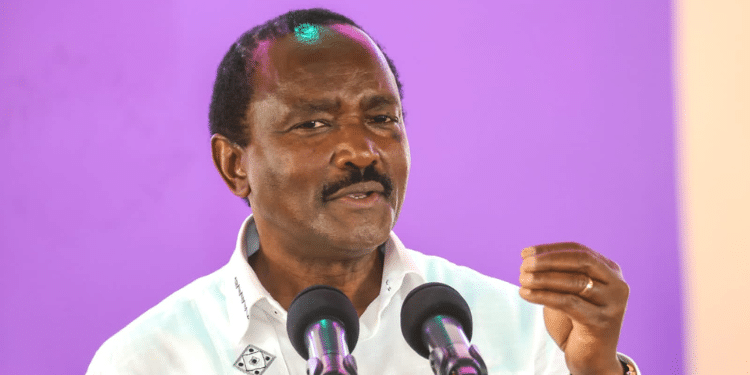
Wiper Party leader and presidential candidate Kalonzo Musyoka has outlined what he says would be key reforms under his administration.
Among his reforms is a review of the Social Health Authority (SHA), abolition of the Housing Levy, increased education funding and greater exploitation of Kenya’s mineral resources.
Speaking during a televised interview at the NTV Fixing the Nation program on August 10, the former Vice President emphasized that his government would focus on accountability, constitutionalism and prudent use of public resources.
Kalonzo Musyoka on SHA Review
Kalonzo explained that his administration would conduct a comprehensive review of SHA while safeguarding Kenyans’ constitutional right to healthcare.
While acknowledging that SHA is legally established and replaced the National Health Insurance Fund (NHIF), he argued that concerns around its implementation and alleged misuse of public funds must be investigated.
“SHA, as it is right now, a successor to the National Hospital Insurance Fund Social Insurance, under the Constitution 2010, should provide for the right to universal health care, but it has been captured. That must be addressed on the infrastructure and compared with NHIF,” Kalonzo explained on SHA framework reforms.
Kalonzo claimed that the current government has a questionable KSh104 billion expenditure associated with the health scheme, adding that after investigations, those responsible would be held accountable.
Kalonzo further called for a re-evaluation of the transition from NHIF to SHA to determine whether the current system is effectively delivering universal healthcare to Kenyans.
He also raised concerns over the rising cost of medical treatment, citing that many households continue to face huge hospital bills despite the establishment of SHA.
Also Read: Matiang’i Reveals Why He and Kalonzo Are Staying Off the Campaign Trail
Abolition of Housing Levy
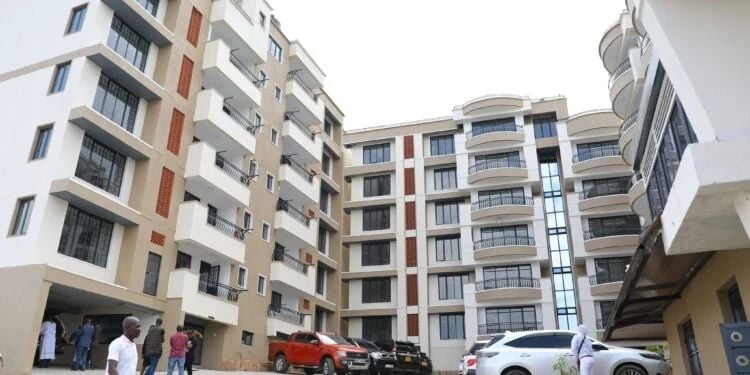
On the Housing Levy, which currently requires workers to contribute 1.5 percent of their gross pay, the Wiper leader affirmed that he would abolish it if elected president.
However, he said ongoing affordable housing projects would not be abandoned and pledged that investments already made by Kenyans would be protected.
According to Kalonzo, completed and ongoing housing projects should be transferred to county governments since housing is a devolved function.
Further, he added that contracts awarded under the affordable housing program would be reviewed to establish whether there was inflation of costs or misuse of public funds, referencing the KSh73.2 billion collected through the levy during the last financial year by the government.
Expected Educational Reforms
On education, Kalonzo backed increased funding despite advocating for overall reductions in government expenditure.
Kalonzo backed proposals contained in the opposition’s People’s Budget that would increase sector spending by KSh69 billion.
According to the opposition’s People’s Budget, the proposal includes KSh18 billion for Junior Secondary School capitation, KSh5 billion for the restoration of the Kenya School Equipment Scheme and EduAfya program, and a KSh22 billion reduction in ministry administrative expenses.
Under the current government of President William Ruto, public universities and learning institutions have inadequate funding and deteriorating infrastructure, according to the former Vice President.
“We have to improve even the quality of housing in our public universities. Right now Moi University and other public universities are on their knees,” Kalonzo Musyoka stated.
Kalonzo criticized the implementation of the Competency-Based Curriculum (CBC), saying confusion remains over Grade 10 pathways and subject selection.
He also questioned government claims regarding the recruitment of 35,000 teachers, saying employment should be managed independently through the Teachers Service Commission (TSC).
Under Kalonzo’s administration, he will seek to restore public confidence in institutions by ensuring constitutional principles are upheld, and public funds are used responsibly.
Also Read: Mohamed Ali Lands Top Wiper Role in Kalonzo’s Leadership Shake-Up
Mining Sector Economic Recovery
Kalonzo identified Kenya’s mining sector as a potential driver of economic growth and a source of revenue for addressing the country’s debt burden.
He said the country should strategically exploit its mineral wealth, including rare earth deposits, to generate income and support development projects.
According to Kalonzo, revenues from the mining sector could help the country meet some of its financial obligations while reducing pressure on taxpayers.
Follow our WhatsApp Channel and X Account for real-time news updates.