Iran has set fresh conditions for Kenyan exports as it targets KSh65 billion in bilateral trade and tea exports with Kenya
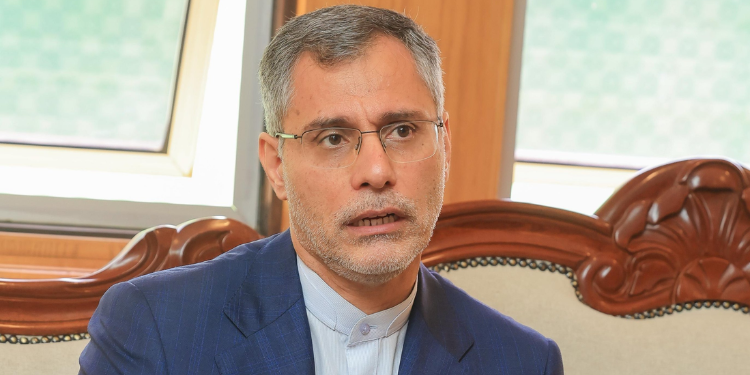
Speaking in an interview at the Iranian Embassy in Nairobi in September, Iranian Ambassador to Kenya Ali Gholampour said Iran has asked Kenya to provide outstanding documents and evidence before lifting the ban on Kenyan tea imports.
According to Ali Gholampour, Tehran has already received some of the requested information.
However, other documents and evidence linked to the dispute that led to the suspension of Kenyan tea imports remain outstanding.
“Some information has been provided, but some of the requested documents and evidence have not yet been submitted. We hope these will be provided soon so that the ban can be lifted,” Iranian Ambassador to Kenya Ali Gholampour explained.
Also Read: Govt Sets New Direction for Kenya’s Exports in Major Economic Shift
Kenya-Iran Tea Ban and Committee Meetings
The ambassador explained that the tea dispute is connected to a corruption case involving an Iranian importer and his Kenyan business partner.
According to Gholampour, Iran’s judicial process in the case is still ongoing, with judgments already issued against some defendants while other aspects remain under review.
The dispute followed allegations of trade malpractice involving Kenyan tea in August 2025.
A Kenyan company was accused of importing lower-grade tea, blending it, and re-exporting it to Iran as higher-grade Kenyan tea, and was later suspended by the Tea Board of Kenya.
Kenya and Iran established a joint technical committee, with its first meeting held in Nairobi on August 13, 2025.
Both countries conducted internal and inter-agency consultations and exchanged documents. The two sides held a second committee meeting in Tehran in November 2025.
Correspondence between the two delegations has continued since then.
The original Kenya-Iran framework envisaged a 60-day process to restore confidence, strengthen quality controls, and facilitate the resumption of Kenyan tea exports.
Agreements for the Kenya-Iran trade deals were signed during former Iranian President Ebrahim Raisi’s 2023 visit to Kenya.
Under the trade deals, Iran was set to provide Kenyan exporters with access to its transport links to countries including Uzbekistan, Turkmenistan and Tajikistan, as well as markets in Afghanistan and Armenia.
Iran Sets KSh65 Billion Initial Trade Target
According to Gholampour, Iran wants bilateral trade with Kenya to expand s, citing an initial target of $500 million, equivalent to about KSh65 billion, followed by targets of $1 billion and eventually $2 billion over seven to 10 years.
“Achieving a tenfold increase in trade was one of the objectives of President Raisi’s visit. As a first step, bilateral trade can reach $500 million, followed by $1 billion and eventually $2 billion over seven to 10 years,” Gholampour said.
As part of the Kenya- Iran trade deals, Iran is set to resolve the tea dispute and create incentives for businesses in both countries.
Iran also wants to position itself as a gateway for Kenyan exporters seeking markets in Central Asia.
Gholampour argued that Kenyan companies exporting to countries in the region could use Iranian shipping lines, ports, and trade mechanisms.
Also Read: Tea Farmers’ Earnings Rise as Kenya’s Tea Export Revenue Hits KSh187 Billion
Kenya-Iran Exports
Iran has previously been an important destination for Kenyan tea. Iran imported about 13 million kilograms of Kenyan tea, valued at KSh4.26 billion, in 2024, making it one of Kenya’s leading tea export markets.
The value of Kenya’s 2024 tea exports to Iran was about KSh5.6 billion, based on industry data.
Initially, after the signing of the trade deal, Kenya exported more than 1,200 tonnes of chilled Kenyan sheep meat to Iran by air after quality standards were harmonized.
Follow our WhatsApp Channel and X Account for real-time news updates.