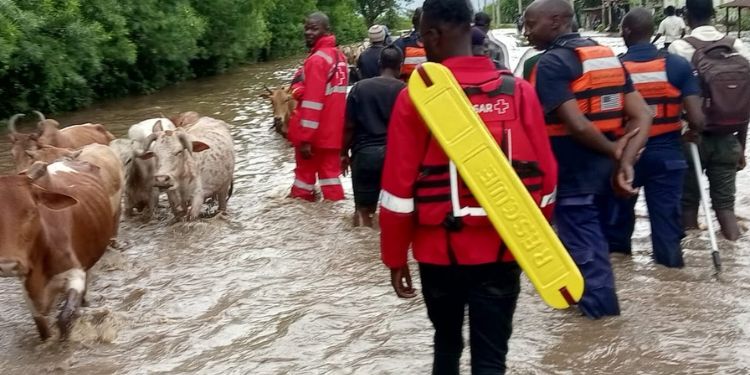
The Kenya Meteorological Department (KMD) has unveiled the country’s first National Anticipatory Action Roadmap, a five-year plan to help Kenya prepare for climate-related disasters before they occur.
The Kenya Anticipatory Action Roadmap (2024–2029), published on the Kenya Meteorological Department (KMD) website on June 12, outlines how the country will move from reacting to disasters after they occur to acting on weather forecasts and early warning information.
According to KMD, the roadmap was developed through consultations with government agencies, humanitarian organizations, researchers, and development partners. It provides a national framework for preparing for hazards such as floods and droughts, especially in vulnerable areas including the Arid and Semi-Arid Lands (ASALs).
“The Kenya Anticipatory Action Roadmap seeks to establish a resilient foundation, ensuring that Kenya not only responds effectively to emerging challenges but anticipates and mitigates them in a coordinated and forward-thinking manner,” states the roadmap.
Early Warning, Early Action Among Seven Key Priorities
The roadmap is built around seven key pillars that will guide implementation over the next five years. These are strengthening early warning systems, improving early action, enhancing coordination and governance, promoting research, innovation and learning, advancing policy and advocacy, increasing financing for anticipatory action, and strengthening monitoring and evaluation.
Also Read: Kenya Met Warns of More Floods and Drought Amid Unpredictable Weather
According to KMD, the Early Warning pillar focuses on improving the quality of weather and climate data to support better forecasting and faster decision-making.
The strategy proposes strengthening impact-based forecasting, promoting data sharing among institutions, harmonizing hazard triggers and thresholds, and supporting counties to develop their own anticipatory action roadmaps. The goal is to ensure communities receive timely and reliable warnings before disasters occur.
KMD Says Roadmap Calls for Acting Before Disasters Strike
The roadmap says Kenya needs to shift from responding to disasters after they occur to acting before they happen.
Under the Early Action pillar, KMD notes that the country has continued to lose lives and resources because interventions often begin after disasters have already caused damage. It says institutions should invest more in anticipatory action, noting that acting early is more cost-effective than emergency response.
“For every 1 dollar spent in response to a disaster, it saves 3 dollars that would have been spent in response. This means that a lot of resources can be saved by acting early,” the roadmap reads.
The strategy also points out that existing anticipatory action plans and Early Action Protocols currently reach only a small proportion of people at risk. It therefore recommends expanding these programmes, strengthening community capacity, establishing a national platform for sharing anticipatory action information and supporting government-led social protection programmes that can be activated before disasters strike.
Better Coordination, Research and Funding Planned
The roadmap also outlines measures to improve coordination among national and county governments, meteorological agencies, humanitarian organizations and other stakeholders involved in disaster preparedness.
Also Read: How Kenyans Should Prepare for El Niño 2026: Essential Tips to Stay Safe from Floods and Heavy Rains
It recommends establishing national and county technical working groups on anticipatory action and fast-tracking the National Disaster Risk Management Bill, 2023.
The roadmap also proposes investing in advanced forecasting technologies, strengthening partnerships with research institutions, and conducting studies to improve disaster prediction and response.
It also seeks to promote evidence-based decision-making and continuous learning to improve future anticipatory action programmes.
The roadmap further calls for increased investment in anticipatory action, noting that current programmes rely heavily on donor funding. It recommends integrating anticipatory financing into national and county disaster management plans to ensure sustainable funding for early interventions.
The final pillar focuses on monitoring and evaluation to track progress, measure impact and strengthen knowledge sharing as the roadmap is implemented.
“For sustainability of AA in a country, the funding has to be mainly led by country-specific funding instruments, which is not guaranteed by the current partner-specific funding instruments, which rely mainly on donor contributions,” states KMD.
Follow our WhatsApp Channel and X Account for real-time news updates.