
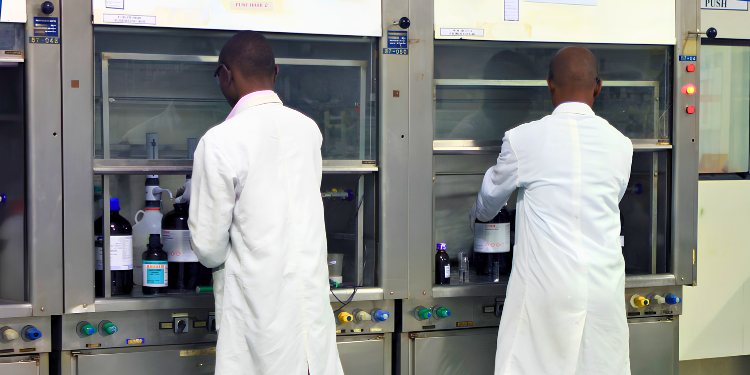
Kenyan pharmaceutical manufacturer Universal Corporation Limited (UCL) has secured a landmark deal to help produce a new monthly HIV prevention pill being developed by global drug maker Merck.
Merck announced that UCL Kenya is among seven manufacturers selected under royalty-free licensing agreements that will allow the companies to make and supply generic versions of alimatravir, an experimental once-monthly HIV prevention pill, if it receives regulatory approval.
The agreements cover 129 countries and are aimed at speeding up access to the drug in regions that continue to bear the highest burden of new HIV infections.
UCL joins a small group of manufacturers drawn from Africa and India for the program.
Other African firms selected are South Africa’s Aspen Pharmacare and Uganda’s Quality Chemical Industries.
The deal represents a significant win for Kenya’s pharmaceutical sector, which has been seeking a larger role in the production of medicines for both local and international markets.
UCL’s Monthly HIV pill breakthrough
Alimatravir, also known as MK-8527, is being developed as a once-monthly pre-exposure prophylaxis (PrEP) pill designed to help prevent HIV infection among people who are HIV-negative but at risk of exposure.
Also Read: CBK Moves to Protect Borrowers with Tough New Lending Rules
If approved, the pill could offer an alternative to daily oral PrEP medicines, which require users to take tablets every day to remain protected.
Merck says the drug has the potential to provide protection for one month with a single pill, a feature that could improve adherence among people who struggle with daily medication schedules.
The company is currently conducting late-stage clinical trials to determine whether the drug is safe and effective in preventing HIV infection.
Kenya is already playing a key role in the development of the medicine.
One of the ongoing Phase Three studies, known as EXPrESSIVE-10, is being conducted among adolescent girls and young women in Kenya, Uganda and South Africa.
Another study, EXPrESSIVE-11, is evaluating the drug among populations at higher risk of HIV infection across several countries, including Kenya.
Merck said it decided to put access plans in place before completion of the trials to reduce delays if the medicine receives approval from regulators.
How Alimatravir Works
Alimatravir is designed to prevent HIV infection before exposure to the virus.
Also Read: Nelson Koech Sets Out Facts on Kenya-UK BATUK Deal After Claims of Ksh 3Bn Demand
The drug belongs to a class of medicines known as nucleoside reverse transcriptase translocation inhibitors (NRTTIs), which stop HIV from copying itself inside human cells.
Merck says alimatravir works through two mechanisms that disrupt the formation of viral DNA, an essential step in the virus’s replication process.
Unlike existing daily oral PrEP medicines, the drug is formulated to remain in the body at protective levels for about a month after a single dose.
The company says it is expected to begin providing protection within an hour of administration. If approved, alimatravir would become one of the first monthly oral HIV prevention medicines, potentially offering an alternative to people who find it difficult to maintain a daily pill regimen.
The drug is being evaluated in late-stage studies to determine whether it can effectively prevent HIV infection.
Kenya remains one of the countries most affected by HIV in sub-Saharan Africa, with an estimated 1.48 million people living with the virus in 2026, according to data from the National Syndemic Diseases Control Council (NSDCC).
The agency estimates that nearly 14,000 new HIV infections and more than 19,000 AIDS-related deaths occurred during the year.
HIV prevalence among adults aged 15 to 49 stands at about 3.2 percent.
Follow our WhatsApp Channel and X Account for real-time news updates.