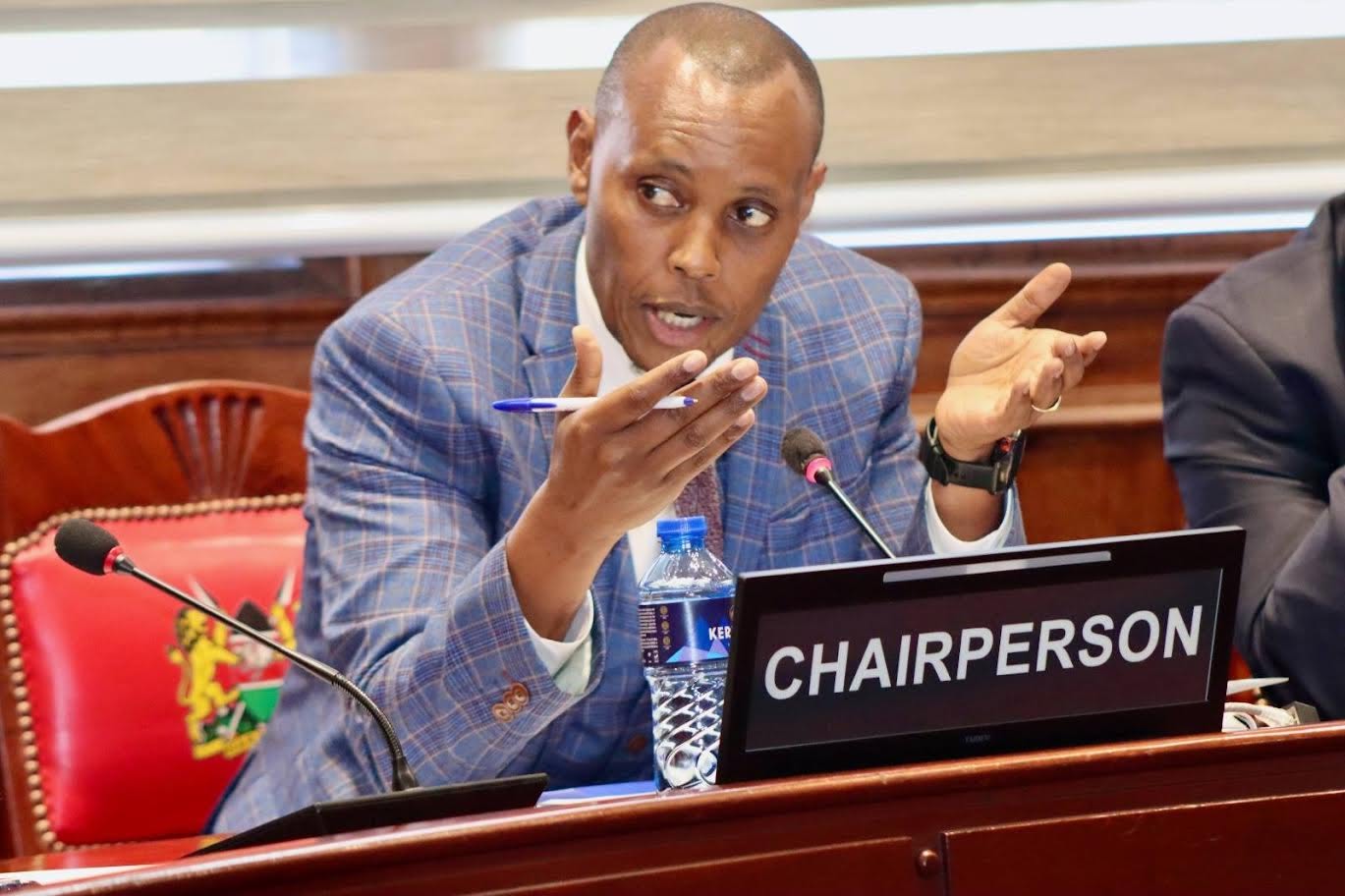
The Chairperson of the National Assembly’s Departmental Committee on Defence, Intelligence and Foreign Relations, Nelson Koech, has moved to clarify the issues surrounding the renewal of the Kenya-United Kingdom Defence Cooperation Agreement following claims that Kenya demanded KSh 3 billion from the UK government to renew the British Army Training Unit Kenya (BATUK) agreement.
The clarification comes after former Deputy President Rigathi Gachagua while speaking during a Church Service at St. Teresa Catholic Church in Imenti Central Constituency, Meru County, alleged that Kenya had asked the United Kingdom for KSh 3 billion to facilitate the renewal of the defence pact.
The allegations by former Deputy President sparked a debate over the future of the long-standing military partnership between the two countries.
Parliament’s Limited Role in Treaty Negotiations
Responding to the claims, Koech, in a statement on Sunday, July 26 dismissed the allegations and emphasised that Parliament has neither the constitutional mandate to negotiate international treaties nor to demand payments from foreign governments.
“Under our Constitution and the Treaty Making and Ratification Act, No. 45 of 2012, which gives effect To Article 2(6) of the Constitution, the initiation, negotiation, conclusion and ratification of treaties and International agreements are functions of the National Executive, and not of a parliamentary Committee,” read part of the statement.
Also Read: Why the Kenya-UK Defence Partnership Should Adapt to Current Needs and Concerns
According to Koech, Parliament only comes into the process after the Executive has completed negotiations and obtained Cabinet approval. At that stage, Members of Parliament scrutinise the agreement and make recommendations before the House considers ratification.
Key Sticking Points in the Negotiations
The MP further stated that the current negotiations have reached a delicate stage because Kenya is seeking stronger legal and accountability provisions before approving a renewed agreement.
Among the most significant sticking points is criminal jurisdiction, with Kenya pushing for serious offences allegedly committed by visiting British military personnel to fall under Kenyan courts. The proposal also seeks mandatory cooperation by British authorities with Kenyan criminal investigations and parliamentary inquiries.
A second area of contention is environmental protection. Koech stated that the Kenyan Parliament wants stronger obligations requiring BATUK to protect the environment in areas where the military training operates.
The third issue relates to social responsibility and support for host communities, with lawmakers advocating for clearer commitments on community welfare, child support obligations where applicable, and tangible benefits for residents living around BATUK training areas.
Parliamentary Inquiry and Path Forward
These recommendations stem from a two-year parliamentary inquiry into BATUK’s operations that culminated in a report tabled before the National Assembly in November 2025.
According to Koech, the committee recommended that Kenya should only ratify a renewed agreement if these accountability measures are firmly embedded in the treaty.
Kenya’s Ministry of Foreign and Diaspora Affairs, which is leading negotiations alongside the Ministry of Defence, is expected to continue engaging its UK counterparts to resolve the outstanding issues before any agreement is presented to Parliament.
The debate has also been shaped by long-standing concerns surrounding BATUK’s operations in Kenya, particularly questions over legal immunity for British soldiers, environmental impact in training areas such as Laikipia and Nanyuki, and the pursuit of justice in high-profile cases including the killing of Agnes Wanjiru.
Also Read: Kenya Clarifies Withdrawal of UK Military After Delayed License Renewal
While reaffirming Kenya’s commitment to its long-standing defence partnership with the United Kingdom, Koech said the relationship must be anchored on mutual respect, equality before the law and accountability.
“Kenya values its long defence partnership with the United Kingdom, which has delivered real benefits in counter-terrorism, interoperability and the building of our defence capability. But partnership must rest on equality, respect for Kenyan law, and on genuine accountability,” he said.
For now, the Kenya-UK defence talks remain at an impasse. Kenya has made it clear that a renewed BATUK agreement must guarantee accountability for troops, stronger environmental protections and meaningful commitments to the communities that have hosted British military training for decades.
Follow our WhatsApp Channel and X Account for real-time news updates.


![Tsc Jss Teacher Qualifications 2026: Kcse Grades, Degrees And Subjects Required [Full List]](https://cdn.thekenyatimes.com/2026/07/Stakeholders-TSC-X-2026-06-09-36.png "Tsc Addresses Circular On Deployment Of Degree And Diploma Teachers To Junior School")