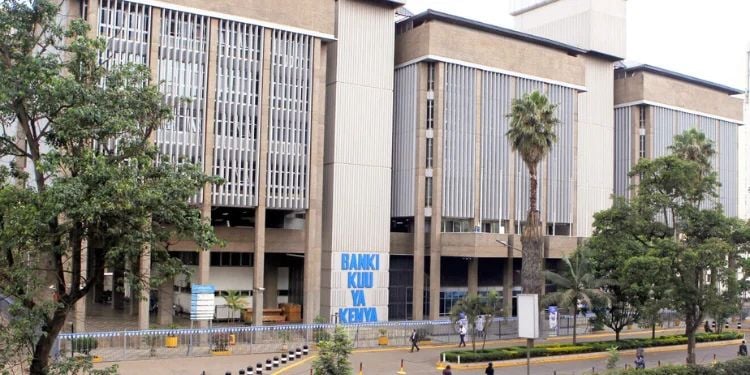

Kenya’s foreign exchange reserves have increased to $14.59 billion, providing the country with 6.2 months of import cover according to the Central Bank of Kenya (CBK).
In a bulletin released on March 6, CBK said the reserves remain well above the statutory requirement of at least four months of import cover, indicating a strong external buffer for the economy.
“The foreign exchange reserves remained adequate at USD 14,597 million (6.2 months of import cover) as of March 5. This meets CBK’s statutory requirement to endeavour to maintain at least 4 months of import cover,” read part of the report.
The upsurge in the foreign exchange reserves comes days after the government of Kenya successfully priced a USD 2.25 billion Eurobond and launched a tender offer to buy back portions of its 2028 and 2032 notes.
In a statement on February 28, Treasury said the move aimed to strengthen debt sustainability, smooth the maturity profile, and reinforce investor confidence.
In its bulletin for the week ending February 27, CBK reported that Kenya’s forex reserves stood at 12.53 billion, translating to 5.4 months cover.
During the week ending March 5, the Kenyan Shilling traded at KSh129.20 per U.S. dollar, slightly weaker than KSh129.02 recorded on February 26.
CBK noted that the shilling has maintained relative stability against major international and regional currencies.
Kenya’s Foreign Exchange Reserves Rise to US$14.59 Billion
According to CBK, the money market remained liquid, supported by active open-market operations.
Commercial banks held excess reserves averaging Ksh 57.9 billion above the required 3.25% Cash Reserve Ratio (CRR).
Meanwhile, the Kenya Shilling Overnight Interbank Average Rate (KESONIA) declined slightly to 8.72 percent from 8.77 % the previous week.
Also Read: CBK Invites Kenyans to Invest in Ksh60 Billion Treasury Bonds with as Low as 50K
In the government securities market, demand for Treasury bills remained strong, with the auction receiving KSh100.4 billion in bids against an advertised KSh24 billion, representing an oversubscription of 418.4%.
The Interest rate on the 91-day and 364-day Treasury bills declined, while the interest rate on the 182-day Treasury Bill remained relatively stable.
Further in the bulletin, the Central Bank reported that activity at the Nairobi Securities Exchange (NSE) declined during the week. The Nairobi All Share Index (NASI), NSE 25, and NSE 20 share indices dropped by 3.69%, 2.84%, and 2.96%, respectively, while market capitalization and equity turnover also fell.
Additionally, CBK noted rising global inflation risks, largely due to the escalation of the Middle East conflict, which has disrupted supply chains.
- Euro Area headline inflation rose to 1.9% in February from 1.7% in January.
- Core inflation increased to 2.4% from 2.2%.
- The U.S. Dollar Index strengthened by 1.6%, driven by demand for safe-haven assets.
- Murban crude oil prices rose to US$76.25 per barrel from US$69.73, further increasing import costs.
Eurobond Issuance Expected to Drive Near-term Increase
The rise in Kenya’s FX reserves to US$14.59 billion is partly due to the government’s recent Eurobond buyback, which repurchased US$415 million of debt, resulting in foreign currency back into the system.
Also Read: Win for Kenyans as CBK Lowers Lending Rates by 25 Basis Points
The government successfully issued a US$2.25 billion international note, returning the country to global capital markets after a period of cautious borrowing.
The transaction included fresh dollar-denominated notes targeted at liability management and budget financing, signalling renewed investor confidence in Kenya’s credit profile.
Kenya’s fx reserves previously stood at US$12,659 million at the close of the February 26, providing 5.5 months of import cover, according to market data.
Follow our WhatsApp Channel and X Account for real-time news updates.