Thursday, June 4, 2026
  • News
    • Latest News
    • Breaking News
    • Fact Check
    • Investigations
    • Explainers
  • Politics
    • Global Politics
    • Elections
    • Government & Policy
    • Diplomacy
    • Conflicts & Security
    • Political Analysis
  • Business
    • Global Economy
    • Markets
    • Technology
    • Startups
    • Energy
    • Finance
  • World News
    • Americas
    • Asia
    • Asia Pacific
    • Africa
    • Europe
    • Middle East
  • Africa
    • Central Africa
    • East Africa
    • West Africa
    • Southern Africa
  • Health
    • Global Health
    • Public Health
    • Health Policy
    • Medical Research
    • Diseases & Conditions
    • Mental Health
    • Nutrition
    • Climate & Health
    • Health Explainers
  • Sports
    • Athletics
    • Basketball
    • Boxing
    • Cricket
    • Football
    • Formula 1
    • Golf
    • Rugby
  • Weather
    • Climate Business
    • Climate Change
    • Climate Solutions
    • Living Green
  • Culture
    • Arts
    • Film & TV
    • Food
    • Music
    • Lifestyle
    • Travel
  • Opinion
    • Editorials
    • Letters
  • Behind The Brand
REGISTER
LOGIN
No Result
View All Result
The Kenya Times
  • News
    • Latest News
    • Breaking News
    • Fact Check
    • Investigations
    • Explainers
  • Politics
    • Global Politics
    • Elections
    • Government & Policy
    • Diplomacy
    • Conflicts & Security
    • Political Analysis
  • Business
    • Global Economy
    • Markets
    • Technology
    • Startups
    • Energy
    • Finance
  • World News
    • Americas
    • Asia
    • Asia Pacific
    • Africa
    • Europe
    • Middle East
  • Africa
    • Central Africa
    • East Africa
    • West Africa
    • Southern Africa
  • Health
    • Global Health
    • Public Health
    • Health Policy
    • Medical Research
    • Diseases & Conditions
    • Mental Health
    • Nutrition
    • Climate & Health
    • Health Explainers
  • Sports
    • Athletics
    • Basketball
    • Boxing
    • Cricket
    • Football
    • Formula 1
    • Golf
    • Rugby
  • Weather
    • Climate Business
    • Climate Change
    • Climate Solutions
    • Living Green
  • Culture
    • Arts
    • Film & TV
    • Food
    • Music
    • Lifestyle
    • Travel
  • Opinion
    • Editorials
    • Letters
  • Behind The Brand
  • News
    • Latest News
    • Breaking News
    • Fact Check
    • Investigations
    • Explainers
  • Politics
    • Global Politics
    • Elections
    • Government & Policy
    • Diplomacy
    • Conflicts & Security
    • Political Analysis
  • Business
    • Global Economy
    • Markets
    • Technology
    • Startups
    • Energy
    • Finance
  • World News
    • Americas
    • Asia
    • Asia Pacific
    • Africa
    • Europe
    • Middle East
  • Africa
    • Central Africa
    • East Africa
    • West Africa
    • Southern Africa
  • Health
    • Global Health
    • Public Health
    • Health Policy
    • Medical Research
    • Diseases & Conditions
    • Mental Health
    • Nutrition
    • Climate & Health
    • Health Explainers
  • Sports
    • Athletics
    • Basketball
    • Boxing
    • Cricket
    • Football
    • Formula 1
    • Golf
    • Rugby
  • Weather
    • Climate Business
    • Climate Change
    • Climate Solutions
    • Living Green
  • Culture
    • Arts
    • Film & TV
    • Food
    • Music
    • Lifestyle
    • Travel
  • Opinion
    • Editorials
    • Letters
  • Behind The Brand
No Result
View All Result
The Kenya Times ~ Trending, Breaking News and Videos
No Result
View All Result
ADVERTISEMENT

Kidnapping, the Industry Bringing Nigeria to its Knees

w/ AFP

Carolyne RabutbyCarolyne Rabut
September 9, 2022
Reading Time: 7 mins read
Nigeria
FacebookTwitterLinkedInRedditWhatsApp
Advertisement

It was past midnight when a dozen men armed with AK47s stormed into Mohammed’s home just outside Nigeria’s capital Abuja to kidnap the truck driver and his wife.

After being held hostage in a tiny cave deep in a forest for three days, the couple were released when a relative paid the gunmen 600,000 naira (about $1,400).

For the criminals called “bandits” by Nigerians, it was quick and easy money, but for Mohammed, who asked not to be identified by his real name, the trauma lives on.

Kidnappings are not new in Africa’s most populous country, where Boko Haram jihadists made worldwide headlines in 2014 when they abducted 276 schoolgirls in the north-eastern town of Chibok.

But hostage-taking has since snowballed into an industry now largely led by criminals, with the authorities powerless to stop them.

The phenomenon, along with general insecurity, will be key issues in Nigeria’s elections in February 2023 to replace President Muhammadu Buhari.

ADVERTISEMENT

At least five times more people were kidnapped in Nigeria last year than in both Mexico and Colombia combined — countries notorious for abductions — according to estimates from the Armed Conflict Location and Event Data Project (ACLED).

Families and entire communities who pool their savings to pay ransoms are being destroyed, with many hostages afraid or ashamed of reporting their ordeals. 

Businesses too are affected, with many spending fortunes to protect their assets.

500 a month kidnapped 

Data on kidnapping is notoriously unreliable because of under reporting, but ACLED estimates almost 3,000 people were taken last year.

A senior Western diplomatic source who tracks kidnappings in Nigeria told AFP the real figure could be more than double that, with an average of five hundred people a month taken.

ADVERTISEMENT

Nigeria’s security services, known as the DSS, denied there was a “kidnapping epidemic”.

It “has spread because insurgency has spread”, DSS spokesman Peter Afunanya told AFP, blaming insecurity on the proliferation of foreign weapons and the spread of jihadists outside of their enclaves in the northeast.

A father prays for the return of his children after students were abducted from Bethel Baptist High School in Kaduna state last year | AFP

Analysts in Nigeria have documented instances of cooperation between bandits and jihadists, but so far have described the links as minor.

One reason for the dramatic rise is a series of mass kidnappings with hundreds of people taken at a time. In one in late 2020, more than three hundred boys were taken by bandits from a school in Katsina state.

They were released after a week, but the shocking case was a turning point for many, with some deciding to stop sending their children to school.

Police and other security agencies have deployed anti-kidnap units, but the forested areas where gangs hide are difficult to access let alone control. 

The northwest, the most affected region, consists of seven states and is the size of the UK.

The authorities say they have tried alternative methods to curb kidnapping, such as registering mobile phone SIM cards to better track their owners.

Lawmakers have also passed a bill criminalizing payments to kidnappers, but observers say enforcement will be impossible. 

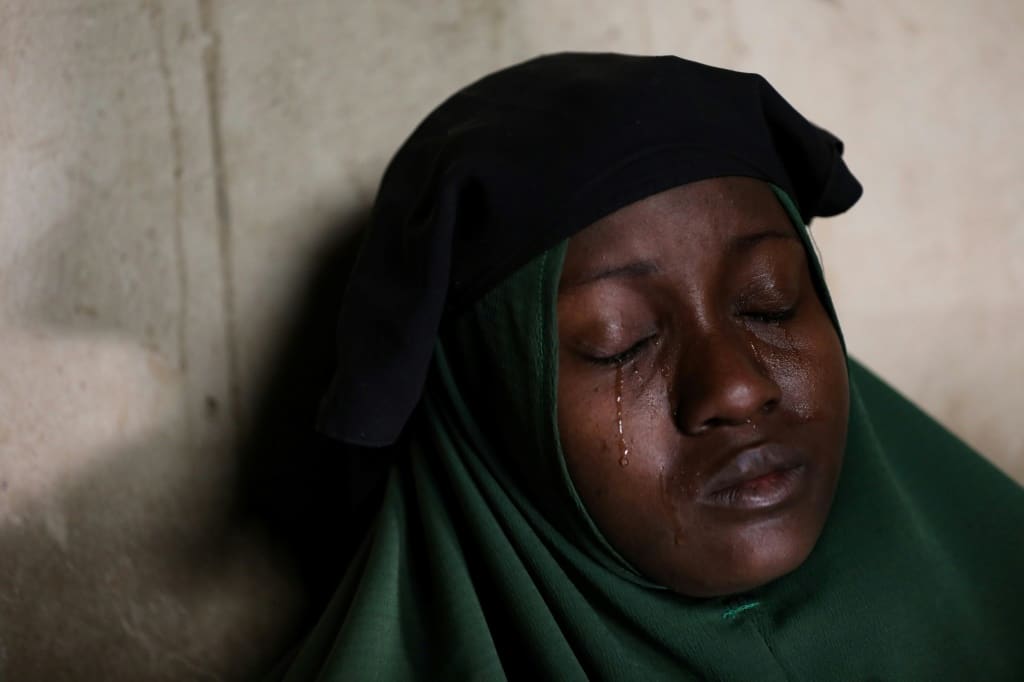
Mothers of children abducted from Bethel Baptist High School in Kaduna state, Nigeria, last year cry at a prayer vigil | AFP

Of the handful of kidnappers who are arrested, most end up in a clogged judicial system where investigations are rarely completed.

And so, every day, gangs “rustle human beings, and nobody cares,” said Murtala Rufa’i, a professor at northern Nigeria’s Usmanu Danfodiyo University, who has studied banditry and lives in the northwest.

No rehabilitation

Former bandit Musa, who asked not to be identified by his real name, said he joined a gang after losing all his cows to rustlers. 

“Nobody forced me but when you have nothing… you find yourself hopeless, you end up joining them,” said the 43-year-old from Zamfara state.

For four years, he helped launch reprisal attacks against the cattle rustlers, but the violence escalated, and he eventually decided to leave the gang.

“For us nothing justifies crime, but for them, it’s just tit for tat,” Sheikh Ahmad Gumi, a prominent Muslim cleric told AFP in an interview in late 2021.
Nigerian soldiers and police guard the Federal College of Forestry Mechanization in Kaduna state where a gang kidnapped 30 students in March 2021 | AFP

Gumi has long argued that some of the bandits — like Musa — are driven at first by a sense of injustice, after losing relatives and belongings in old inter-communal conflicts.

For him, a “Marshall plan” for bandits rather than more security could help solve the crisis.

“Bandits have been surrendering and giving up their weapons but… there’s no rehabilitation, no school, no nothing, so they go back, because a man cannot be idle,” he said. “The real bandits are the political class.”

Those who can afford it have stopped using roads, trains, and travel only by air, creating a vicious cycle where parts of the country are abandoned to bandits who prey on poorer rural communities.

Many end up selling their homes, belongings, or land to pay for ransoms, which for an average Nigerian farmer can be anywhere “between 200,000 naira and up to two million ($4,700),” said security analyst Kabir Adamu of Beacon Consulting.

And it’s not just cash they need to find — sometimes kidnappers also demand food, smartphones, motorbikes or even sunglasses.

When kidnappers target higher status victims such as priests or politicians and their relatives, the ransoms tend to be a lot higher.

In a daring case earlier this year, gunmen kidnapped 72 passengers from a train from the capital Abuja, many of them well-off. 

“As of the end of July, 37 hostages had been released for various sums starting from 100 million ($230,000) per abductee,” according to a report by consultancy firm SBM Intelligence.

Abandoned farms

The problem is also worsening food insecurity in the country where already more than eighty million live below the poverty line. 

“People don’t go to their farms because of the fear of abduction… The rural economy has been grounded completely,” said professor Rufa’i.

Many rural communities are ruined by repeated ransom payments, or because they decide instead to pay “taxes” to bandits for a promise of protection. 

People at a rally demanding the return of hundreds of kidnapped schoolboys in the northwestern state of Katsina in December 2020 | AFP

In one case among many, a resident of Yankara village in Katsina state said they had paid bandits 700,000 naira ($1,700) to leave their farms alone, but then another gang attacked them.

In some instances, farms and villages are being abandoned entirely.

“There are areas where 70 percent of the people have been displaced or are unable to farm. This disrupts supply chains, even in (the capital) Abuja,” said Adamu. 

Companies in Africa’s largest economy are also affected.

The kidnap threat “is a nightmare”, an executive with two decades of experience in the country told AFP on condition of anonymity.

“The impact on business is huge… because of the cost of securing our assets,” he said. “I have some projects guarded by 30 soldiers at night.”

The Nigerian security services said they were “in a hurry to see” kidnapping tackled, in part because insecurity drives away investors.

“The DSS is concerned about the menace of kidnapping and is very committed in stamping it out,” Afunya told AFP.

People should stop seeing “kidnapping as a way of life or as a means of survival,” he added.

But when more than seven out of 10 Nigerians are under 30 and official youth unemployment stands at 42 percent, some become desperate to make money.

And as “the level of poverty and unemployment is on the increase,” Rufa’i said “the possibility of more people joining the kidnappers is very clear.”

Tags: AfricaKidnappingNigeria
Carolyne Rabut

Carolyne Rabut

Carolyne is a National Correspondent for The Kenya Times. She focuses on the ongoing political climate and national life stories in Kenya and Africa. She can be reached at [email protected].

Related Posts

Congress Revolts Against Trump As House Moves To Block Iran Military Action

Congress Revolts Against Trump as House Moves to Block Iran Military Action

June 4, 2026
Trump Shrugs Off Iran’s Move To End Nuclear Talks, Says “I Don’t Care If They’re Over” In New Comments

Did Iran Really Hit a U.S. Base in Bahrain? CENTCOM Sets the Record Straight

June 4, 2026
Irs Employee Quits As Rat Infestation In Georgia Office Forces Staff To Sit On Desks Amid Health Concerns

IRS Worker Quit, Majority Forced to Sit on Desk as Massive Rat Infestation Overruns Georgia Office

June 4, 2026
Kenyan Man Convicted In Massive U.s. Nursing Fraud Scheme That Placed Unqualified Staff In Care Homes

Kenyan Man Found Guilty in U.S. Scheme That Sent Fake Nurses Into Care Homes

June 3, 2026
ADVERTISEMENT

The Kenya Times Facebook

LATEST ARTICLES

  • Oval Office Drama: Trump’s Heated Clash With Kaitlan Collins Takes Unexpected Turn
  • Congress Revolts Against Trump as House Moves to Block Iran Military Action
  • Did Iran Really Hit a U.S. Base in Bahrain? CENTCOM Sets the Record Straight
  • IRS Worker Quit, Majority Forced to Sit on Desk as Massive Rat Infestation Overruns Georgia Office
  • Kenyan Man Found Guilty in U.S. Scheme That Sent Fake Nurses Into Care Homes
  • Hunter Biden Ignites Trump Family Feud Over Kushner’s $1.4B Albanian Island Resort Amid Corruption Probe
  • California Tech Executive Arrested as DOJ Unveils Alleged Iran Nuclear Supply Operation
  • Republicans Reject Trump’s Appointment of 38-Year-Old Bill Pulte as Acting DNI
  • Equity Bank Shines as the Only Kenyan Brand in Brand Africa 100 Most Admired Financial Services List 2026
  • El Niño Flood Alert: Full List of High-Risk Areas Across Kenya
  • DOJ Official Deletes Late-Night Post Suggesting Alternative Payout Plan After Fund Scrapped
  • Most Downloaded Apps in Kenya Right Now
  • Top 10 Richest Kenyans and How They Built Their Wealth
  • Trump Ignores Kenyan Courts, US Citizens to Be Quarantined for 21 Days in Laikipia
  • Rare Facts You Didn’t Know About Uhuru Kenyatta’s Children
ADVERTISEMENT

Company

About Us

Our Authors

Our Experts

Social Media

Policies

Privacy Policy

House Rules

Standards and Policies

Terms and Conditions

Subscription

My Account

Contact Us

Contact Us

Join Our Team

Advertise With Us

© Copyright 2026 | The Kenya Times | All Rights Reserved

Welcome Back!

Sign In with Facebook
Sign In with Google
Sign In with Linked In
OR

Login to your account below

Forgotten Password? Sign Up

Create New Account!

Sign Up with Facebook
Sign Up with Google
Sign Up with Linked In
OR

Fill the forms below to register

All fields are required. Log In

Retrieve your password

Please enter your username or email address to reset your password.

Log In
Your Privacy and Cookies
We use cookies on our website to give you the most relevant experience by remembering your preferences and repeat visits. By clicking “Accept”, you consent to the use of ALL the cookies.
Do not sell my personal information.
Cookie settingsACCEPT
Privacy & Cookies Policy

Privacy Overview

This website uses cookies to improve your experience while you navigate through the website. Out of these cookies, the cookies that are categorized as necessary are stored on your browser as they are essential for the working of basic functionalities of the website. We also use third-party cookies that help us analyze and understand how you use this website. These cookies will be stored in your browser only with your consent. You also have the option to opt-out of these cookies. But opting out of some of these cookies may have an effect on your browsing experience.
Necessary
Always Enabled
Necessary cookies are absolutely essential for the website to function properly. This category only includes cookies that ensures basic functionalities and security features of the website. These cookies do not store any personal information.
Functional
Functional cookies help to perform certain functionalities like sharing the content of the website on social media platforms, collect feedbacks, and other third-party features.
Performance
Performance cookies are used to understand and analyze the key performance indexes of the website which helps in delivering a better user experience for the visitors.
Analytics
Analytical cookies are used to understand how visitors interact with the website. These cookies help provide information on metrics the number of visitors, bounce rate, traffic source, etc.
Advertisement
Advertisement cookies are used to provide visitors with relevant ads and marketing campaigns. These cookies track visitors across websites and collect information to provide customized ads.
Others
Other uncategorized cookies are those that are being analyzed and have not been classified into a category as yet.
SAVE & ACCEPT
LOGIN | REGISTER
  • Login
  • Sign Up
  • Cart
No Result
View All Result
  • News
    • Latest News
    • Breaking News
    • Investigations
    • Explainers
    • Fact Check
  • Politics
    • Global Politics
    • Conflicts & Security
    • Elections
    • Diplomacy
    • Government & Policy
    • Political Analysis
  • Business
    • Global Economy
    • Markets
    • Technology
    • Startups
    • Energy
    • Finance
  • World News
    • Americas
    • Asia
    • Asia Pacific
    • Africa
    • Europe
    • Middle East
  • Africa
    • East Africa
    • West Africa
    • Southern Africa
    • Central Africa
  • Health
    • Global Health
    • Public Health
    • Health Policy
    • Medical Research
    • Diseases & Conditions
    • Mental Health
    • Nutrition
    • Climate & Health
    • Health Explainers
  • Sports
    • Athletics
    • Basketball
    • Boxing
    • Cricket
    • Football
    • Formula 1
    • Golf
    • Rugby
  • Weather
    • Climate Business
    • Climate Change
    • Climate Solutions
    • Living Green
  • Culture
    • Arts
    • Film & TV
    • Food
    • Lifestyle
    • Music
    • Travel
  • Opinion
    • Editorials
    • Letters
  • Behind The Brand
  • Contact Us

Not enough quota to unlock this post
Unlock left : 0
Are you sure want to cancel subscription?