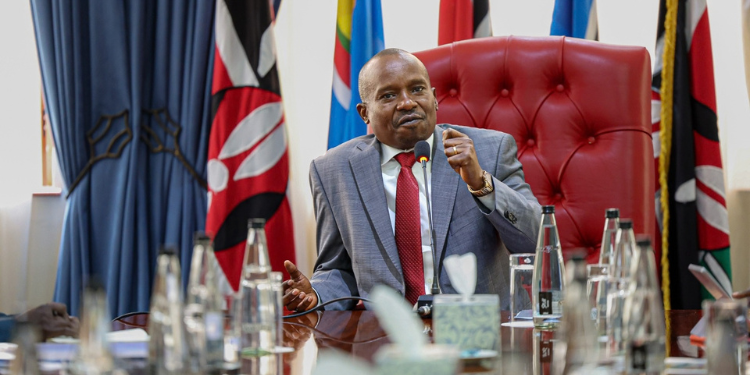
The National Transport and Safety Authority (NTSA) has announced that it will introduce refresher training courses for drivers beginning in July, as part of efforts to improve road safety and enhance driver competence.
Speaking in an interview with Citizen TV on Monday night, NTSA Director General, Nashon Kondiwa, said the authority wants motorists to undergo periodic training to refresh their knowledge and skills, similar to professional development programmes in other fields.
NTSA to Roll Out Driver Refresher Courses Starting July
He added that the retraining programme is meant to ensure drivers do not rely solely on skills acquired during their initial driving school training, which is simply not enough.
“From July, we want to train drivers afresh. In every profession, there’s what we call ‘professional development’… people take refresher courses, so we want to implement this for drivers who are continuously on the road. So that people don’t just go to driving school and think they will remember everything forever,” Kondiwa said.
“We have seen this work in institutions where driver training has been made mandatory, like every year you have to go for refresher courses.”
Kondiwa said Countries that regularly train and retrain their drivers have recorded fewer road accidents, with some operating for years without a single crash.
According to him, continuous training helps drivers maintain high safety standards and improve their skills on the road.
He added that NTSA is also looking to build the capacity of vehicle operators to better monitor how their vehicles are driven and ensure adherence to safe driving practices.
Kondiwa noted that driver training, operator capacity building and enforcement measures form part of the authority’s broader road safety strategy aimed at reducing accidents and enhancing safety on Kenyan roads.
Also Read: NTSA Explains How to Download Your eLogbook After Vehicle Transactions
NTSA Reports 11% Rise in Road Fatalities as Death Toll Hits 2,150
NTSA has recorded 2,150 road fatalities, an 11 percent rise compared to the same period last year, with pedestrians accounting for the largest share of deaths at 836, according to Kondiwa.
Additionally, drivers killed on the road this year stand at 188, representing 11 percent of total fatalities, while motorcyclists also continue to feature prominently in the numbers.
In 2025, 4,400 people died on Kenyan roads, costing the economy an estimated Ksh450 billion in lost GDP, a figure the World Bank puts even higher at around Ksh 800 billion annually.
Also Read: NTSA Clarifies How eLogbooks Will Be Issued and Accessed
In the interview, Kondiwa said road safety cannot be addressed through a single intervention, noting that it requires a comprehensive approach involving safer roads, safer vehicles and safer road users.
He explained that while NTSA has invested heavily in public awareness campaigns and driver education, gaps in road infrastructure continue to put road users at risk.
According to him, roads must be equipped with adequate signage, markings, bumps and other safety features to effectively communicate with motorists and pedestrians.
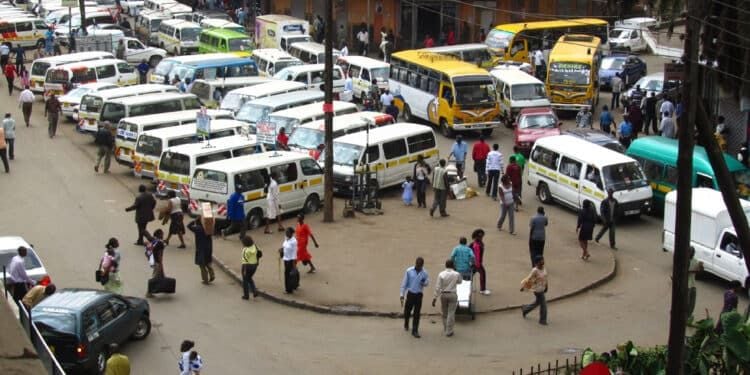
The NTSA official noted that the authority has intensified enforcement measures, including crackdowns on drunk driving and efforts to improve compliance within the public transport sector.
NTSA Adopts iRAP System to Rate Road Safety Across Kenya
Kondiwa further revealed that NTSA is working with the Kenya National Highways Authority (KeNHA) and the Kenya Urban Roads Authority (KURA) to implement the International Road Assessment Programme (iRAP), which evaluates road safety for different categories of users, including pedestrians, motorists, cyclists and motorcyclists.
He said the programme assesses the safety of roads for different categories of users and helps identify areas that require improvement.
Under the rating system, roads are graded from zero to five stars, with zero stars indicating poor safety standards and five stars reflecting the highest level of safety.
Kondiwa explained that a road may receive different ratings depending on the type of user.
For instance, a road could be rated highly for motorists but poorly for pedestrians if it lacks safe crossing points and other facilities designed to protect people on foot.
“This platform will provide us with the ability to have data-driven interventions in terms of engineering and vehicle engineering; we are implementing certain standards to make sure that the vehicles themselves are safe,” he added.