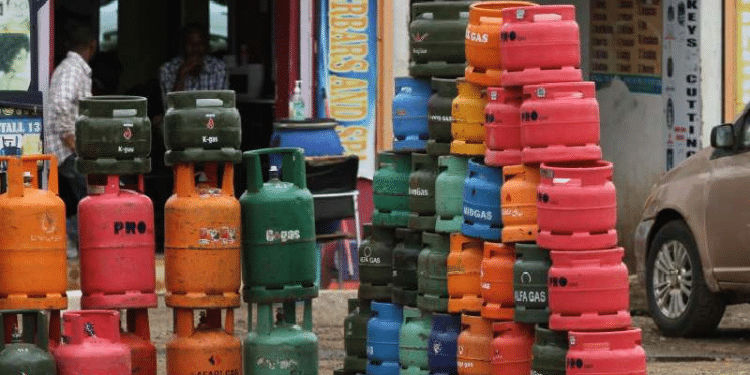

More Kenyans are switching from petrol and diesel-powered generators to cooking gas-powered models as households and businesses seek to cut fuel costs amid rising energy expenses.
Generator dealers say demand for dual-fuel generators and LPG conversion kits has grown as consumers look for cheaper backup power alternatives.
The shift is also being driven by the wider availability of liquefied petroleum gas (LPG), commonly known as cooking gas, across the country.
LPG consumption has recorded double-digit growth in recent years, making it one of Kenya’s fastest-growing fuel segments.
The growing interest in LPG-powered generators has gained attention on social media, where users have been sharing videos showing generators connected to ordinary gas cylinders.
Many say the move helps reduce the amount spent on fuel compared to running generators on petrol or diesel.
Petroleum Institute of East Africa (PIEA) data show LPG consumption rose 14.7 percent in 2025 after increasing 15.1 percent in 2024.
“We use gas-powered generators to pump water on our farms. Two-6 kg gas cylinders are enough to last six acres. Each cylinder is worth around Ksh1,100 only, which is affordale according to me, ” said Rewaza farm, an online agricultural page that advices farmers on the est and latest agricultural practices.
Lower Fuel Bills Attract Consumers
Generator dealers say consumers are increasingly buying dual-fuel generators that can run on both petrol and cooking gas, while others are converting existing machines to LPG systems to reduce fuel costs.
Also Read: Best Places to Put a Milk ATM in Nairobi and Nearby Estates During the Current Shortage
The shift is occurring alongside rapid growth in cooking gas consumption.
Petroleum Institute of East Africa (PIEA) data show LPG consumption increased to 475,943 metric tonnes in 2025 from 414,861 metric tonnes in 2024.
The industry attributes the growth to increased adoption by households and businesses as well as government measures aimed at promoting cleaner energy.
In 2023, the government exempted cooking gas from 8% Value Added Tax (VAT), the 3.5% Import Declaration Fee (IDF) and the 2% Railway Development Levy (RDL) to make the fuel more affordable and encourage a shift away from charcoal, firewood and kerosene.
The only levy that remains on LPG is the Petroleum Development Fund charge of Sh0.40 per kilogram.
The growth has continued into 2026. Industry figures show LPG consumption rose by 17.7 per cent in the first quarter of the year compared with the same period in 2025.
According to industry data, the uptake of cooking gas has coincided with a decline in kerosene use as consumers increasingly turn to cleaner energy options.
EPRA data show LPG consumption reached 414,861 tonnes in the year to June 2025, up 15% from 360,594 tonnes in 2023.
As more households and small businesses adopt LPG for cooking and power, dealers say interest in gas‑powered generators is likely to keep growing, especially in areas with frequent blackouts and high petrol or diesel prices.
Cooking Gas Safety concerns and practical limits
Despite the cost appeal, mechanics and safety experts warn that not all generators suit LPG conversion.
Also Read: Top 10 Drunkest Countries in the World Ranked 2026
Dual‑fuel machines designed at the factory to run on petrol and gas typically have reinforced valves, regulators and carburetors, while retrofitted kits may lack the same safety margins.
“Spark or heat from the generator can cause a fire outbreak; an explosion could occur if the generator house is not properly ventilated,” the Lagos State Government warned in a 2023 advisory on gas‑powered generators, adding that poor installation of hybrid carburetors and the use of sub‑standard or expired cylinders substantially increases the risks of a gas explosion.
Dealers also note that LPG‑powered generators can produce slightly less power than when running on petrol or diesel, which matters for heavy loads such as welding machines, large fridges or water pumps.
For many households, however, the trade‑off is acceptable if it means longer running hours on a single 13‑kg cylinder at a lower cost per kilowatt‑hour.
Follow our WhatsApp Channel and X Account for real-time news updates.