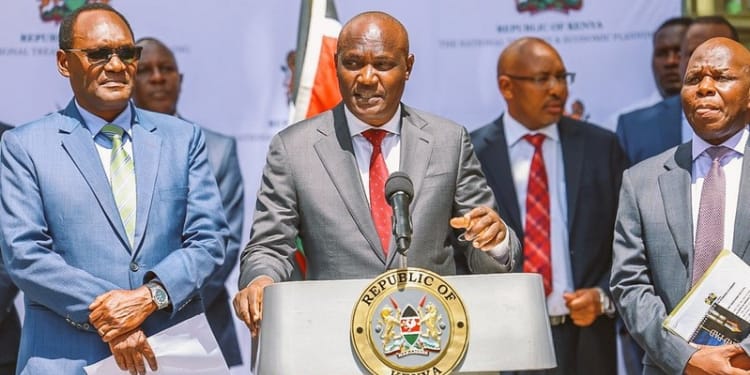
The National Assembly has defended the legality of regulations banning graffiti and excessive decorations on matatus.
This follows the enforcement of the National Transport and Safety Authority (NTSA) rules tied to road safety reforms in the public transport.
Speaking at the State House in Mombasa on May 22, President William Ruto directed the NTSA to create an enabling environment for matatu operators to continue using artwork and graffiti on their vehicles.
In response, Parliament issued a statement clarifying the scope and basis of the rules.
Parliament Defends Legislative Process After Court Ruling
The National Assembly defended its role in enacting the regulations, insisting that all constitutional and procedural requirements were met during the legislative process.
It further emphasized that the regulations were lawfully processed and allowed to take effect after the statutory oversight period lapsed without objection or amendment.
“No resolution annulling or variation of the instrument was made within the statutory timeline, thereby allowing the Regulations to take full legal effect by operation of law,” the ruling read.
The Clarification follows a High Court ruling upholding the regulations, confirming that they were properly enacted and are legally binding.
Court Upholds Parliamentary Process on NTSA Regulations
In the judgment, the court ruled that the National Assembly followed the correct legal and constitutional procedures in processing the NTSA regulations before they became law.
Also Read: Ruto Directs NTSA to Lift Graffiti Ban on Matatus, Disobeys Court Order
Petitioner Michael Makubo challenged the regulations, arguing that they were enacted without adequate public participation and lacked proper parliamentary scrutiny. He also argued that a notice from NTSA violated the freedom of artistic creativity and cultural rights enshrined in Articles 11 and 33 of the Kenyan Constitution.
“There was uncontroverted evidence demonstrating that the Regulations were duly transmitted to the Clerk of the National Assembly on 14th March 2014, they were tabled before the House on 18th March 2014, and subsequently committed to the Committee on Delegated Legislation for consideration,” ruled Justice Wamuye.
The court held that Parliament did not pass a resolution to annul or amend the regulations within the required legal timeframe, thereby allowing them to take effect automatically.
The court upheld the government’s position that public safety considerations take precedence where vehicle modifications present potential risks to road users.
Safety Concerns Behind Ban on Matatu Graffiti
NTSA had argued that some graffiti designs on the matatus obstruct visibility by covering essential safety features such as windows, brake lights, indicators, and reflective markings used to enhance visibility on the road.
The High Court agreed with this position, ruling that restrictions on such decorations are connected to the constitutional duty to protect life under Article 26.
Also Read: Matatu Strike Called Off with Immediate Effect
While acknowledging that matatu culture is a recognized form of artistic and cultural expression, the court emphasized that constitutional rights are not absolute and may be limited where justified under Article 24 in the public interest.
Ruto Defends Use of Graffiti on Matatus
President Ruto said the concern had been raised by industry players who were reportedly being required to remove all graffiti from their matatus.
“The industry is telling me that they have been told they must remove all graffiti from their matatus, and I’m asking myself why,” Ruto said.
He added that the use of graffiti is one way the recognize the role of creativity and self-expression in the transport sector.