


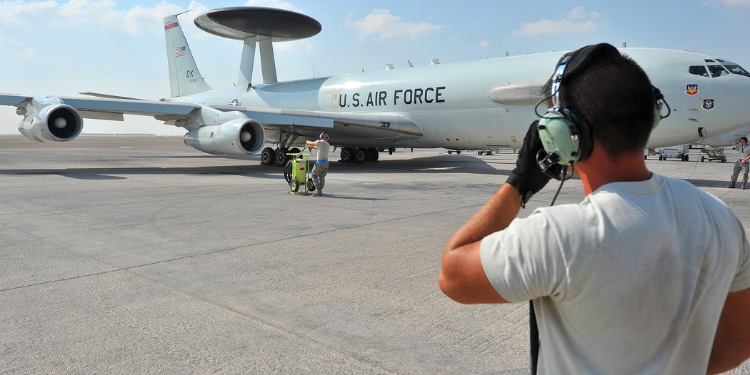
An Iranian drone and missile strike on Prince Sultan Air Base in Saudi Arabia has reportedly severely damaged a U.S. E-3 Sentry surveillance aircraft.
According to reports from U.S. and Saudi officials cited by The Wall Street Journal, the attack also injured at least 12 American service members.
The attack comes amid heightening escalations in the U.S.-Iran war since fighting began on February 28. The E-3 Sentry, an Airborne Warning and Control System (AWACS) aircraft, is equipped with a powerful radar capable of tracking drones, missiles, and aircraft over long distances.
Its role is central to U.S. operations in the Persian Gulf, coordinating air missions and identifying threats. A former senior U.S. Air Force official told the Journal that the damage represents “a serious problem, the U.S. ability to see what is happening in the Persian Gulf has been compromised.”
In addition to the AWACS, several refueling aircraft at the base were reportedly damaged. At least two service members sustained serious injuries, while others are being evaluated for traumatic brain injuries caused by the explosions, according to The New York Times.
Estimates of the damage have varied, but officials confirmed that multiple aircraft were affected.
Broader escalation across the region
The strike on Prince Sultan Air Base comes amid a wave of Iranian attacks on U.S. positions across the Middle East on Friday and Saturday, March 28.
Also Read: Americans Injured, Aircraft Damaged in Fresh Iranian Attack on Foreign Base
Qatar and Bahrain reported intercepting Iranian drones, while Abu Dhabi confirmed that an Iranian strike damaged an aluminum facility.
The UAE’s defense ministry said it intercepted 20 ballistic missiles and 37 drones on Saturday alone, bringing the total since the war began to nearly 400 ballistic missiles and more than 1,800 drones.
Iran has also targeted bases in Qatar, Bahrain, and the UAE. However, U.S. Central Command (CENTCOM) dismissed claims by Tehran that American forces in Dubai had suffered “heavy losses,” calling the reports “manufactured lies.”
Meanwhile, Yemen’s Houthi rebels, backed by Iran, have entered the conflict. On Saturday, they launched ballistic and cruise missiles toward Israel, all of which were intercepted. Brig. Gen. Yahya Saree, a Houthi spokesman, vowed continued operations until “aggression” ends on all fronts.
U.S. and Israeli Strikes on Iran
The Iranian attack followed U.S. and Israeli strikes on Tehran’s military infrastructure. The Israel Defense Forces (IDF) announced it had hit the headquarters of Iran’s Marine Industries Organization, responsible for naval weapons development.
The IDF described the strike as part of a “wide-scale wave” targeting Iran’s weapons production and air defense systems.
U.S. Central Command also reported that American forces have struck more than 11,000 targets since the war began, including intelligence sites, missile launchers, and command centers.
Also Read: Trump Scrambles Another Aircraft Carrier as Iran War Escalates
However, the campaign has drawn criticism after a U.S. bombing raid on February 28 reportedly hit a school in Iran, killing at least 175 people, most of them children.
Despite the escalation, diplomatic initiatives are underway. Pakistan announced it will host a summit with Türkiye, Egypt, and Saudi Arabia to de-escalate the conflict.
Mediators are awaiting Iran’s response to a U.S. cease-fire proposal, though Tehran has so far signaled little willingness to halt its attacks.
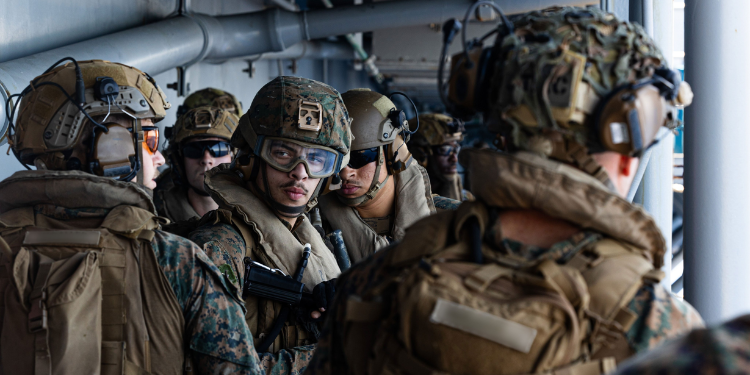
The reported strike on Prince Sultan Air Base comes after the United States reinforced its presence in the Middle East by deploying the 31st Marine Expeditionary Unit and additional naval assets.



At least two service members sustained serious injuries, while others are being evaluated for traumatic brain injuries caused by the explosions, according to Snow Rider 3D The New York Times.