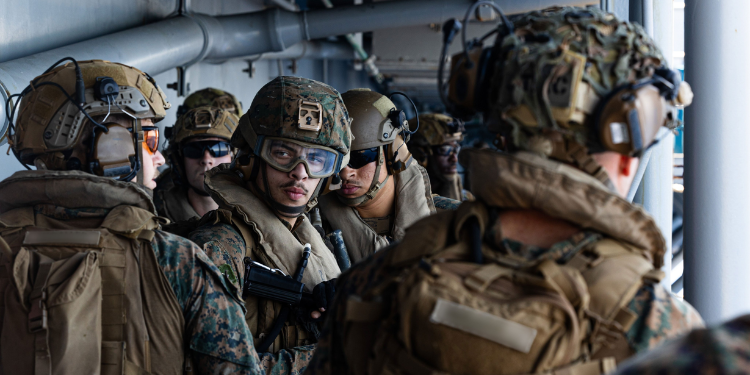
The Pentagon is reportedly preparing contingency plans for a ground operation in Iran that could last weeks, though U.S. President Donald Trump has not yet decided whether to authorize such a campaign.
The move comes as thousands of Marines and sailors arrived in the Middle East on March 29 as part of America’s military buildup in the region.
However, U.S. officials cited in a report by The Washington Post noted that any ground operation would not involve a full-scale invasion but would instead focus on special operations missions and targeted infantry deployments.
The plans reflect the Pentagon’s responsibility to provide “maximum optionality” to the Commander in Chief, White House press secretary Karoline Leavitt said. “It does not mean the President has made a decision,” she added.
Pentagon preparations
A U.S. official confirmed to the Post that the military has accelerated deployments of Marines and Navy personnel to the Middle East. However, the high risks associated with ground operations have left it unclear whether Trump will approve such a move.
The Kenya Times reached out to the Department of War for comment on the reported preparations. A spokesperson had not replied by the time of publication.
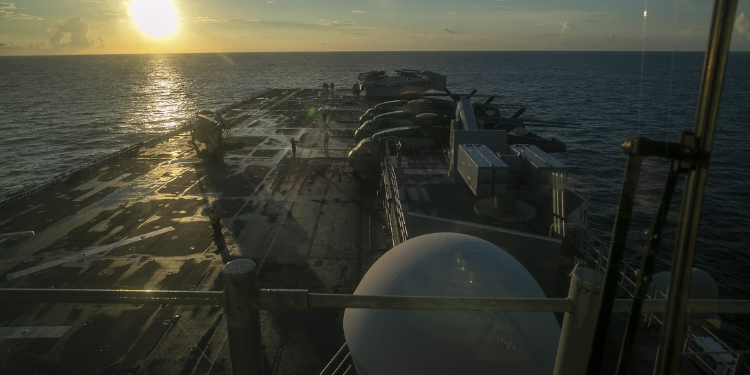
On Friday, roughly 3,500 Marines and sailors aboard the USS Tripoli, an amphibious assault ship, entered the U.S. Central Command’s area of responsibility.
Also Read: Zelenskyy Reveals How Russia Aided Iran Before Strike on Foreign U.S. Base
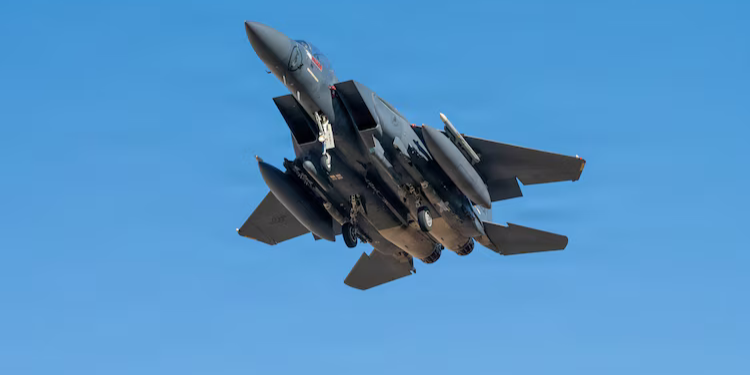
CENTCOM announced the deployment on Saturday, noting that the vessel carries transport aircraft, tactical assets, and strike fighter jets. Photos posted by the command showed soldiers in combat gear preparing for operations.
“U.S. Sailors and Marines aboard USS Tripoli (LHA 7) arrived in the U.S. Central Command area of responsibility, March 27. The America-class amphibious assault ship serves as the flagship for the Tripoli Amphibious Ready Group / 31st Marine Expeditionary Unit composed of about 3,500 Sailors and Marines in addition to transport and strike fighter aircraft, as well as amphibious assault and tactical assets.”
The deployment adds to the tens of thousands of U.S. troops already stationed in the region.
Since the war began on February 28, the U.S. has launched thousands of strikes on Iranian targets and dispatched additional forces, including plans to send 1,000 soldiers from the 82nd Airborne Division.
President Trump throws mixed signals
Trump has, however, sent conflicting signals about the prospect of a ground campaign. On March 2, he dismissed concerns, saying he doesn’t have “the yips” and would dispatch troops “if they were necessary.”
On March 19, he told reporters: “I’m not putting troops anywhere.” The president has also offered shifting justifications for the war, citing both imminent threats and regime change as motivating factors.
President Trump then, on March 13, told Fox News the conflict would end when “I feel it in my bones.”
A week later, he wrote on Truth Social that he was considering “winding down” the offensive campaign. Despite these remarks, the Pentagon continues to prepare for possible ground operations.
Also Read: Iran Now Threatens Strikes on American, Israeli Universities if This is Not Done
The war, which began with joint U.S.-Israeli strikes on Iran, has engulfed much of the Middle East.
Tehran has retaliated with missile and drone attacks on Israel, Qatar, Kuwait, and Saudi Arabia.
Human Rights Activists in Iran, a non-profit, reported nearly 1,500 civilian deaths. The Pentagon says 13 U.S. servicemembers have been killed and more than 200 injured.
The conflict has also disrupted global trade. Traffic through the Strait of Hormuz, a vital artery for oil shipments, has ground to a halt under an Iranian blockade. Oil prices have surged past $100 per barrel, raising fears of global economic upheaval.
If President Trump authorizes a ground campaign, it would mark the first major boots-on-the-ground operation since the U.S. withdrawal from Afghanistan in 2021.