Two Gulf Arab states carried out covert military strikes inside Iran, marking the first known offensive actions by regional Arab countries against Tehran since the current conflict began.
The United Arab Emirates hit an oil refinery on Lavan Island in the Persian Gulf in early April, according to The Wall Street Journal’s report on Tuesday, May 12.
Saudi Arabia launched its own air strike in late March, Reuters reported. Both operations were kept quiet, with neither government confirming them publicly.
The strikes happened amid mounting tensions during the final phase of open fighting. The UAE hit the Lavan Island refinery on April 8, the same day the ceasefire was announced.
Iran Makes an Immediate Response
Iran immediately denounced the Lavan attack as a violation and fired missiles and drones at targets in the UAE and Kuwait within hours.
The UAE absorbed the heaviest punishment as Iranian attacks sent more than 2,800 missiles and drones toward its territory, more than any other country in the region, including Israel.
Emirati air defenses intercepted over 2,260 drones and 580 missiles, officials said. The barrage damaged civilian sites and oil facilities.
Analysts see the secret strikes as a clear shift. For years, Gulf states relied on strong air defenses and U.S. protection. Now, at least two of them have moved from defense to direct retaliation.
Bilal Saab, a former Pentagon adviser, described the UAE action to Newsweek as the “operationalization” of its cooperation with the United States and Israel.
Abu Dhabi has built close military ties with both countries since signing the Abraham Accords in 2020. Israel has supplied the UAE with Iron Dome systems and other equipment during the current fighting.
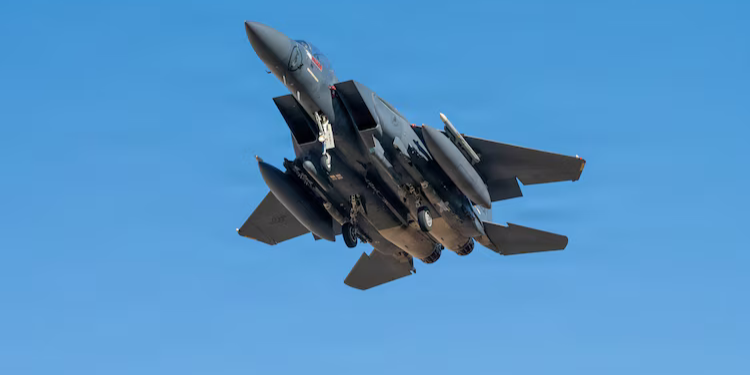
The UAE maintains one of the best-equipped militaries in the Gulf. It operates nearly 80 American-made F-16 fighters and advanced air defenses. Its forces total around 63,000 active personnel.
Also Read: Hezbollah Launches New Attacks on Israeli Forces as Iran War Tensions Expand
Saudi Arabia’s strike is also significant, given that Riyadh and Tehran have been rivals for decades, competing for influence across the Middle East.
Saudi forces have fought Iran-backed Houthi rebels in Yemen for years. Crown Prince Mohammed bin Salman has maintained close ties with Trump and sees the current period as an opportunity to reshape the region, sources familiar with his thinking have said.
Neither strike was claimed in the press. In Saudi Arabia’s case, Iran was reportedly informed through diplomatic channels, helping to kick-start de-escalation talks. The quietness was a sign that the attacks were intended to warn Iran without provoking open war.
Mona Yacoubian of the Center for Strategic and International Studies noted that the moves highlight differences among Gulf Cooperation Council members.
Iran Targets U.S. Bases Across the Middle East
All six GCC states faced Iranian attacks on bases, airports, and oil sites, yet only the UAE and Saudi Arabia are now known to have struck back directly.
The UAE’s decision fits a wider pattern, that once cautious about full coordination with Washington, Abu Dhabi has moved closer to the U.S. and Israel on security matters.
It has stepped away from some traditional Arab positions, including leaving OPEC this month over disagreements with Saudi Arabia on oil production limits. The UAE wants more output to fund its economic diversification plans.
The report now means Iran faces pressure from multiple directions. It means, apart from facing powerful strikes from the U.S. and Israel, which started in late February, Gulf states, long on the receiving end of Iranian missiles, are now demonstrating they can hit back.
Also Read: Trump’s ‘Treason’ Note Exposed as He Orders Crackdown on Iran War Leaks
Still, risks remain high as any resumption of open conflict could bring much heavier Iranian retaliation against Gulf cities and oil infrastructure.
The Lavan Island refinery fire, which burned after the UAE strike, showed how quickly energy facilities can be knocked out.
Experts say these covert operations may strengthen deterrence in the short term but could also make the ceasefire more fragile.
Tehran has already proven it can sustain long-range attacks even when its own territory is hit.