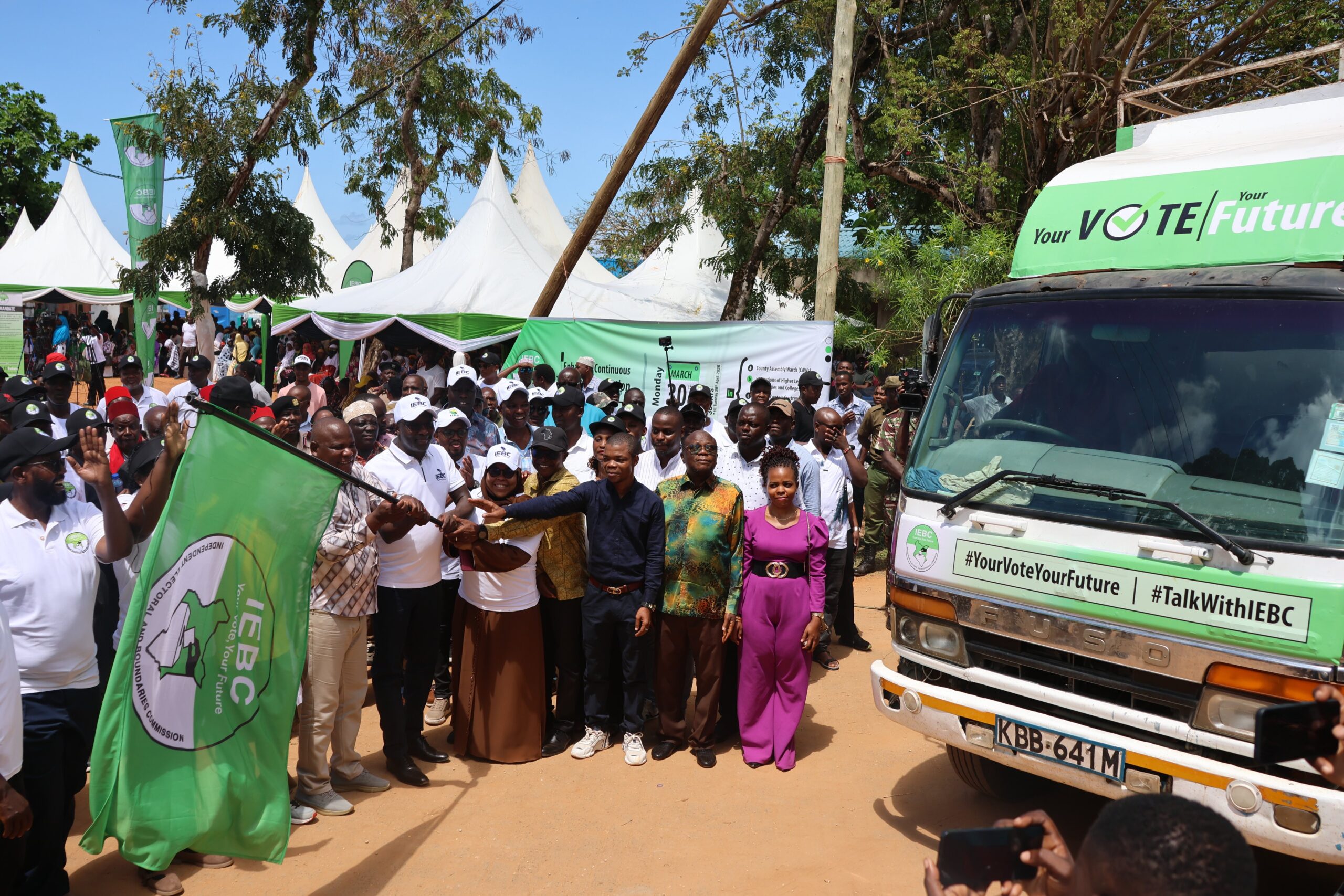
The Independent Electoral and Boundaries Commission (IEBC) is preparing to expand its diaspora voter registration ahead of the 2027 general election.
The move comes as the commission reviews its overseas voting framework, with plans to increase participation beyond the current small pool of registered diaspora voters.
Kenyans living in the diaspora have raised concerns on how they can also be enlisted in the ongoing continuous voter registration.
Under the Kenyan constitution, Kenyans who are registered and living out the country are allowed to vote only for the presidential seat.
Diaspora Registration Timeline and IEBC plan
According to IEBC, diaspora voter registration is expected to reopen in early 2027 after a preparatory phase that includes mapping Kenyan populations abroad and identifying viable registration centers.
Also Read: Allan Ademba and Willie Oeba: The Gen Z Voices Behind “Niko Kadi” Movement
The commission aims to expand the number of registered voters outside the country, which currently stands at around 10,000 across a limited number of countries.
The planned expansion will focus on increasing coverage beyond the existing 12 countries where diaspora voting has previously been conducted.
These include countries in Africa, Middle East, Europe, and North America.
For the 2022 General Election, IEBC mapped voter registration centers in Kenyan Embassies and
Consulates including:
i. Uganda – (Kampala)
ii. Tanzania – (Dar-Es-salaam and Arusha)
iii. Rwanda – (Kigali)
iv. Burundi – (Bujumbura)
v. South Africa – (Pretoria)
vi. South Sudan – (Juba)
vii. United States of America – (Washington DC, New York and Los Angeles)
viii. United Kingdom – (London)
ix. United Arab Emirates – (Abu Dhabi and Dubai)
x. Qatar – (Doha)
xi. Germany – (Berlin)
xii. Canada – (Ottawa, Toronto and Vancouver)
IEBC has noted that the process is resource-intensive due to travel requirements, staffing needs, and the cost of setting up registration centres in foreign jurisdictions.
As a result, the exercise is expected to be rolled out in phases other than the continuous registration system.
Requirements for overseas voter registration
IEBC guidelines for diaspora registration mirror the domestic voter registration process, with additional logistical conditions tied to location abroad.
Eligible Kenyans must appear physically at designated registration centres, which are typically located at Kenyan embassies, high commissions, or consulates in the host country.
The core requirements include:
- A valid Kenyan National Identity Card or a valid Kenyan passport
- Proof of Kenyan citizenship
- Being 18 years of age or older at the time of registration
- Physical presence at the designated registration centre during the official registration period
During registration, applicants are required to undergo biometric capture, which includes fingerprint scanning and digital photography.
Also Read: IEBC Breaks Down Distribution of New Voters Per County as 875,501 Register in 10 Days
Process, Limitations and Legal Framework
The diaspora voter registration process begins when IEBC officially announces a registration window.
During this period, eligible Kenyans visit designated diplomatic missions where registration kits are deployed.
Applicants fill out registration forms, provide identification documents, and complete biometric verification before being added to the voter register.
Once registered, diaspora voters are typically allocated voting rights limited to the presidential ballot, unlike voters in Kenya, who elect governors, Members of Parliament, and county assembly representatives.
Voting is conducted at the same embassy-based locations where registration takes place, as current regulations restrict polling to official Kenyan diplomatic premises.
The legal framework governing diaspora voting has been a subject of ongoing discussion, particularly regarding whether polling stations should be extended beyond embassies into major cities with large Kenyan populations.