Monday, July 13, 2026
  • News
    • Latest News
    • Breaking News
    • Fact Check
    • Investigations
    • Explainers
  • Politics
    • Global Politics
    • Elections
    • Government & Policy
    • Diplomacy
    • Conflicts & Security
    • Political Analysis
  • Business
    • Global Economy
    • Markets
    • Technology
    • Startups
    • Energy
    • Finance
  • World News
    • Americas
    • Asia
    • Asia Pacific
    • Africa
    • Europe
    • Middle East
  • Africa
    • Central Africa
    • East Africa
    • West Africa
    • Southern Africa
  • Health
    • Global Health
    • Public Health
    • Health Policy
    • Medical Research
    • Diseases & Conditions
    • Mental Health
    • Nutrition
    • Climate & Health
    • Health Explainers
  • Sports
    • World Cup 2026
    • Athletics
    • Basketball
    • Boxing
    • Cricket
    • Football
    • Formula 1
    • Golf
    • Rugby
  • Weather
    • Climate Business
    • Climate Change
    • Climate Solutions
    • Living Green
  • Culture
    • Arts
    • Film & TV
    • Food
    • Music
    • Lifestyle
    • Travel
  • Opinion
    • Editorials
    • Letters
  • Behind The Brand
REGISTER
LOGIN
No Result
View All Result
The Kenya Times
  • News
    • Latest News
    • Breaking News
    • Fact Check
    • Investigations
    • Explainers
  • Politics
    • Global Politics
    • Elections
    • Government & Policy
    • Diplomacy
    • Conflicts & Security
    • Political Analysis
  • Business
    • Global Economy
    • Markets
    • Technology
    • Startups
    • Energy
    • Finance
  • World News
    • Americas
    • Asia
    • Asia Pacific
    • Africa
    • Europe
    • Middle East
  • Africa
    • Central Africa
    • East Africa
    • West Africa
    • Southern Africa
  • Health
    • Global Health
    • Public Health
    • Health Policy
    • Medical Research
    • Diseases & Conditions
    • Mental Health
    • Nutrition
    • Climate & Health
    • Health Explainers
  • Sports
    • World Cup 2026
    • Athletics
    • Basketball
    • Boxing
    • Cricket
    • Football
    • Formula 1
    • Golf
    • Rugby
  • Weather
    • Climate Business
    • Climate Change
    • Climate Solutions
    • Living Green
  • Culture
    • Arts
    • Film & TV
    • Food
    • Music
    • Lifestyle
    • Travel
  • Opinion
    • Editorials
    • Letters
  • Behind The Brand
  • News
    • Latest News
    • Breaking News
    • Fact Check
    • Investigations
    • Explainers
  • Politics
    • Global Politics
    • Elections
    • Government & Policy
    • Diplomacy
    • Conflicts & Security
    • Political Analysis
  • Business
    • Global Economy
    • Markets
    • Technology
    • Startups
    • Energy
    • Finance
  • World News
    • Americas
    • Asia
    • Asia Pacific
    • Africa
    • Europe
    • Middle East
  • Africa
    • Central Africa
    • East Africa
    • West Africa
    • Southern Africa
  • Health
    • Global Health
    • Public Health
    • Health Policy
    • Medical Research
    • Diseases & Conditions
    • Mental Health
    • Nutrition
    • Climate & Health
    • Health Explainers
  • Sports
    • World Cup 2026
    • Athletics
    • Basketball
    • Boxing
    • Cricket
    • Football
    • Formula 1
    • Golf
    • Rugby
  • Weather
    • Climate Business
    • Climate Change
    • Climate Solutions
    • Living Green
  • Culture
    • Arts
    • Film & TV
    • Food
    • Music
    • Lifestyle
    • Travel
  • Opinion
    • Editorials
    • Letters
  • Behind The Brand
No Result
View All Result
The Kenya Times ~ Trending, Breaking News and Videos
No Result
View All Result
ADVERTISEMENT

Opinion | Why Words Matter — and What Must Change on Kenya’s Deadly Roads

Peter OngerabyPeter Ongera
March 4, 2026
Reading Time: 8 mins read
Ntsa Provides Update On Deadly Nyeri–Nyahururu Collision

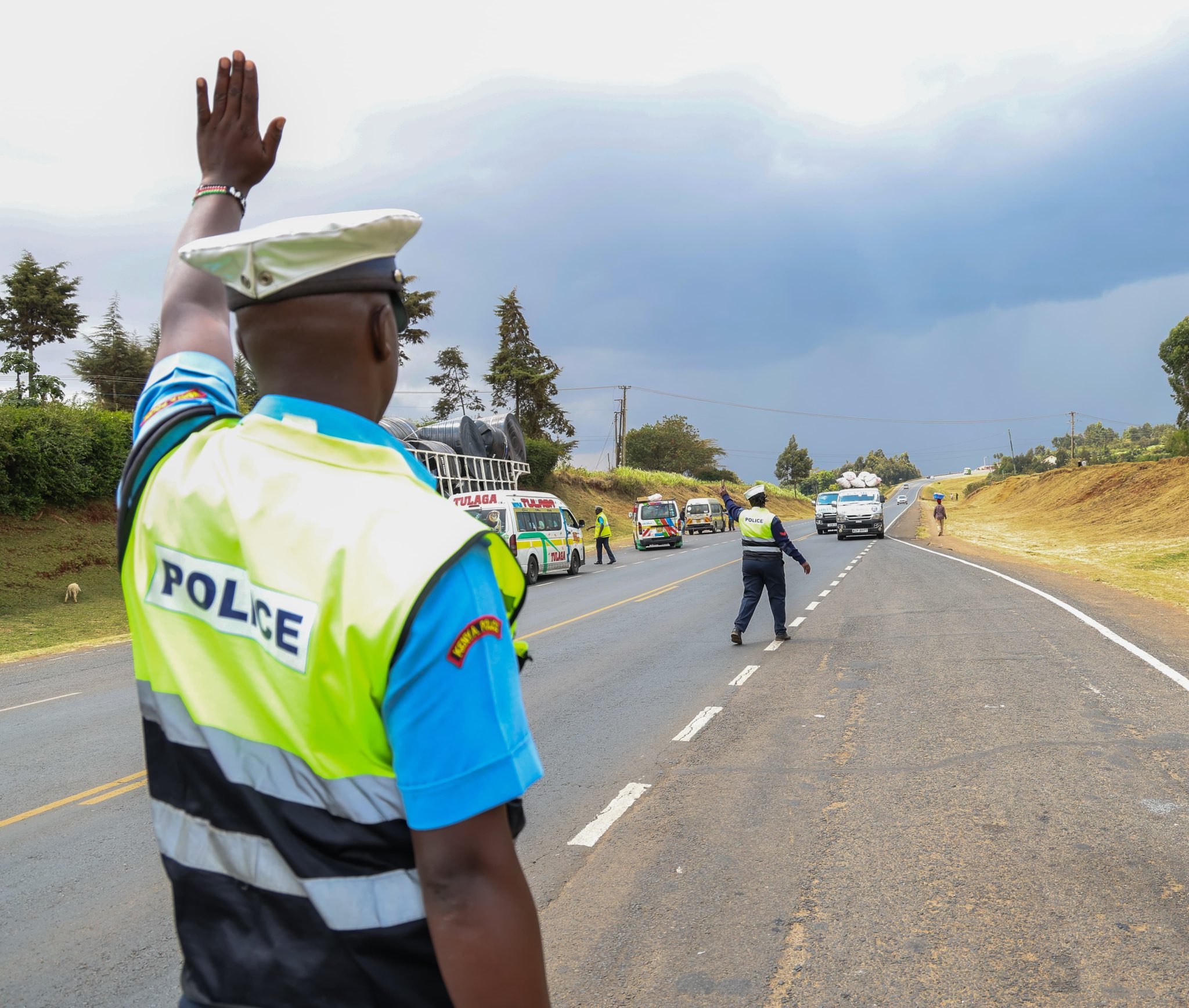
Police controlling traffic on highway. PHOTO/NPS

FacebookTwitterLinkedInRedditWhatsApp
Advertisement

Every long weekend, festive season, or rainy month, Kenyans are confronted with grim headlines: dozens dead on highways, families wiped out, buses mangled beyond recognition. Almost instinctively, the media reaches for two familiar phrases — road accident and road carnage. Many readers treat them as interchangeable. They are not. And the difference is more than semantics; it goes to the heart of how Kenya understands, reports, and responds to preventable road deaths.

The term road accident sounds harmless enough. It is neat, official, and widely used in police reports, court proceedings, insurance claims, and government statistics. An accident suggests misfortune — something unintended, perhaps unavoidable. When crashes are framed this way, responsibility is subtly diluted. The human decisions behind speeding, drunk driving, fatigue, poor vehicle maintenance, corruption in licensing, or weak enforcement fade into the background.

Language, after all, carries power. Words shape how societies assign blame, urgency, and accountability. When deadly crashes are described as accidents, they are subconsciously filed under fate — tragic, yes, but somehow inevitable.

But are they?

By contrast, the word “road carnage” startles. It is emotive, unsettling, and deliberately graphic. It speaks not of chance but of consequences — twisted metal, lifeless bodies, orphaned children, and communities plunged into grief. When Kenyan headlines scream about “road carnage on the Nakuru–Eldoret highway” or “festive season road carnage,” they are not describing a single event. They are indicting a system that repeatedly fails with lethal predictability.

This distinction matters because language shapes public perception — and perception shapes policy.

ADVERTISEMENT

Loss of lives on Kenyan roads

Kenya loses thousands of people every year to road crashes. Yet the outrage rarely matches the scale of the loss. If similar numbers died annually from collapsing buildings or repeated aviation disasters, the nation would grind to a halt. There would be emergency inquiries, resignations, and sweeping reforms. Instead, road deaths come and go with predictable regularity, generating brief outrage before fading from the national conversation.

In response to the crisis, the government has acknowledged the scale of the problem.

President William Ruto launched the National Road Safety Action Plan 2024–2028, a strategy aimed at reducing road fatalities by 50 percent by 2028.

At the launch, the President was unequivocal:

“The number of road accidents must come down. It is my expectation that we will be the administration that will deal with this challenge.”

He emphasized that solving the crisis requires a coordinated effort between institutions such as the National Transport and Safety Authority and the police traffic department.

ADVERTISEMENT

Also Read: NTSA to Deploy 1,000 Digital Cameras As Kenya Moves Closer to Instant Road Fines


“Our justice, law and order agencies must coordinate and sustain robust law enforcement by ensuring that offenders are detected, apprehended, prosecuted and punished swiftly and transparently,” the President said.

He also directed government agencies to deploy modern traffic monitoring technology, including speed cameras and surveillance systems — tools long overdue on Kenya’s highways. In perhaps his most telling remark, the President acknowledged a truth many Kenyans already know:

“Corruption is an enabler of impunity, and a significant contributor to road carnage.”

That statement deserves to be taken seriously — because corruption is indeed the invisible engine behind much of the bloodshed on Kenyan roads.

When unqualified drivers obtain licences through bribes, danger multiplies. When overloaded trucks are waved through roadblocks after a quiet payment, brakes fail on steep hills. When traffic officers treat enforcement as a negotiation rather than a duty, reckless drivers learn that rules are optional.

The result is predictable: more funerals.

What’s driving road accident numbers 

If we are honest, most of what we call “accidents” are anything but accidental.

Speeding remains the single biggest killer. Drivers routinely treat highways as racetracks, overtaking blindly and ignoring speed limits designed to save lives.

Drunk and drug-impaired driving continues to claim lives despite occasional police crackdowns. Enforcement surges briefly after major tragedies, only to fade when public attention moves elsewhere.

Driver fatigue is another silent killer. Long-distance drivers often operate under intense economic pressure to make multiple trips in unrealistic time frames. Exhaustion slows reaction time and impairs judgment, turning a heavy vehicle into a deadly weapon.

Vehicle condition also remains a major concern. Worn-out tyres, faulty brakes, and poorly maintained public service vehicles are a common sight on Kenyan roads. Mechanical failure is not random — it is the predictable outcome of neglect.

Unfamiliarity with roads also contributes to crashes. Drivers navigating steep escarpments, sharp bends, or poorly marked intersections may underestimate danger — particularly at night or during heavy rains.

And then there is the infrastructure problem. Many Kenyan roads were designed decades ago with little regard for modern traffic volumes. Missing signage, poor lighting, dangerous intersections, and a lack of pedestrian infrastructure create a perfect storm for disaster.

These are not acts of fate. They are systemic failures.

Another troubling dimension of road safety has recently emerged through concerns about insurance coverage for passengers on school buses. Many Kenyans assume that hiring a school bus automatically means everyone on board is insured.


Also Read: Govt Releases Updated Requirements for Petroleum Road Tank Drivers


In reality, that assumption can be dangerously wrong.

Legal interpretations of insurance policies suggest that coverage may apply only to students and teachers — excluding parents, sponsors, board members, and other passengers. In the aftermath of a crash, such technicalities can turn tragedy into financial catastrophe.

Families grieving the loss of loved ones may suddenly face hospital bills, legal costs, and funeral expenses without compensation — simply because they were unaware of the limits of the insurance policy.

The lesson is clear: road safety does not end with the crash. It includes how society protects victims and their families afterwards.

New road safety plan

The government’s new road safety plan identifies several priority areas: stronger enforcement, improved vehicle standards, better road infrastructure, increased safety funding, and expanded public education.

These goals are commendable. But Kenyans have heard ambitious road safety promises before.

What matters now is implementation.

Will speed cameras actually be installed and maintained?

Will corrupt officers be punished rather than transferred?

Will unroadworthy vehicles finally be removed from the roads?

Will powerful transport cartels be forced to obey the law?

These are the questions that will determine whether the National Road Safety Action Plan becomes a turning point — or just another policy document gathering dust on government shelves.

The truth is uncomfortable: Kenya does not have a road safety crisis because solutions are unknown. The crisis persists because accountability is weak.

Moving forward

Words alone will not make Kenyan roads safer.

But words can expose the truth.

Calling deadly crashes “accidents” softens the reality of preventable death. Calling them road carnage forces society to confront the scale of the tragedy — and the failures behind it.

And until those failures are addressed — in enforcement, infrastructure, licensing, insurance, and governance — the headlines will continue.

Another bus overturned. Another family destroyed. Another roadside memorial.

Kenya cannot continue normalising this level of loss.

If the government truly intends to halve road deaths by 2028, the time for speeches is over. Enforcement must be relentless. Corruption must be punished. Unsafe vehicles must disappear from the roads.

Otherwise, the phrase road carnage will remain exactly what it is today — not just a headline, but a national indictment.

Follow our WhatsApp Channel and X Account for real-time news updates.

Tags: Mombasa RoadNTSA
Peter Ongera

Peter Ongera

Peter Ongera is an award-winning investigative journalist whose fearless reporting has exposed corruption, human rights violations, and illicit financial flows across Kenya and the African continent. With over a decade of experience, Peter has become a trusted voice on issues of governance, electoral integrity, and democratic accountability. His deeply researched stories have been featured by respected platforms including the Thomson Reuters Foundation, Internews, Africa Check, Lida Network, Hivos, and Context. Trained in digital forensics, open-source intelligence (OSINT), and fact-checking, Peter combines cutting-edge verification techniques with a passion for evidence-based storytelling. He has also mentored emerging journalists across the globe, equipping them to hold power to account. Through his work, Peter champions a journalism that not only informs but drives systemic reform; empowering communities to demand transparency, justice, and lasting change. You can reach him at [email protected].

Related Posts

Ruto Responds To Uhuru’s Criticism On Linda Mama Program

Kenya Youth Unemployment: Why Relief Programs Fail and Real Development Is Needed

July 13, 2026
Expert Explains Why Kenya Must Choose Peace: Stop Political Violence And Goonism Before 2027 Elections

When Violence Becomes Politics, Kenya Must Choose Peace

July 9, 2026
President William Ruto At A Previous Rally. Photo/Pcs.

Opinion | The Political Cost of Unfinished Grief in Ruto’s Re-election Calculus

July 8, 2026
Kenyans To Pay More For Uber And Bolt In Govt'S Move To Set New Minimum Fares

Kenya Is Becoming a Compliance State Instead of a Developmental State

July 6, 2026
ADVERTISEMENT

The Kenya Times Facebook

LATEST NEWS

  • Why More Kenyans Oppose Than Support Broad-Based Government
  • Dollar Check: Kenya Shilling Strengthens to 129.19 Against USD as Week Begins
  • Volkswagen Announces 50,000 Job Cuts: What It Means for the Company
  • Mildred Cheche: Trailblazing Tactician Behind Kenya’s Second World Cup Qualification
  • Full List of SHA-Approved Hospitals and Health Facilities in Meru County
  • Matiang’i Takes Lead Over Ruto, Gachagua in Mt Kenya Presidential Poll
  • Ruto Takes Early Lead in Latest InfoTrak Presidential Poll
  • How Sheryl Gabriella Built Her Career From Waitressing to Online Stardom and Trending Videos
  • Kenya Youth Unemployment: Why Relief Programs Fail and Real Development Is Needed
  • ODM Governor Ole Lenku Faces Possible Jail Term After Fresh Court Move
  • New Twist in Kang’ata Driver’s Shooting
  • Jomo Kenyatta Boys High School Set on Fire
  • AI Competition Heats Up as OpenAI, Meta and SpaceXAI Focus on Lower Costs
  • Iranian Official Warns U.S. of Severe Consequences if Peace Deal Is Broken
  • Lindsey Graham’s Replacement? Name Emerges of Republican Who May Take Over the Senator’s Role
ADVERTISEMENT

Company

About Us

Our Authors

Our Experts

Social Media

Policies

Privacy Policy

House Rules

Standards and Policies

Terms and Conditions

Subscription

My Account

Contact Us

Contact Us

Join Our Team

Advertise With Us

© Copyright 2026 | The Kenya Times | All Rights Reserved

Welcome Back!

Sign In with Facebook
Sign In with Google
Sign In with Linked In
OR

Login to your account below

Forgotten Password? Sign Up

Create New Account!

Sign Up with Facebook
Sign Up with Google
Sign Up with Linked In
OR

Fill the forms below to register

All fields are required. Log In

Retrieve your password

Please enter your username or email address to reset your password.

Log In
Your Privacy and Cookies
We use cookies on our website to give you the most relevant experience by remembering your preferences and repeat visits. By clicking “Accept”, you consent to the use of ALL the cookies.
Do not sell my personal information.
Cookie settingsACCEPT
Privacy & Cookies Policy

Privacy Overview

This website uses cookies to improve your experience while you navigate through the website. Out of these cookies, the cookies that are categorized as necessary are stored on your browser as they are essential for the working of basic functionalities of the website. We also use third-party cookies that help us analyze and understand how you use this website. These cookies will be stored in your browser only with your consent. You also have the option to opt-out of these cookies. But opting out of some of these cookies may have an effect on your browsing experience.
Necessary
Always Enabled
Necessary cookies are absolutely essential for the website to function properly. This category only includes cookies that ensures basic functionalities and security features of the website. These cookies do not store any personal information.
Functional
Functional cookies help to perform certain functionalities like sharing the content of the website on social media platforms, collect feedbacks, and other third-party features.
Performance
Performance cookies are used to understand and analyze the key performance indexes of the website which helps in delivering a better user experience for the visitors.
Analytics
Analytical cookies are used to understand how visitors interact with the website. These cookies help provide information on metrics the number of visitors, bounce rate, traffic source, etc.
Advertisement
Advertisement cookies are used to provide visitors with relevant ads and marketing campaigns. These cookies track visitors across websites and collect information to provide customized ads.
Others
Other uncategorized cookies are those that are being analyzed and have not been classified into a category as yet.
SAVE & ACCEPT
LOGIN | REGISTER
  • Login
  • Sign Up
  • Cart
No Result
View All Result
  • News
    • Latest News
    • Breaking News
    • Investigations
    • Explainers
    • Fact Check
  • Politics
    • Global Politics
    • Conflicts & Security
    • Elections
    • Diplomacy
    • Government & Policy
    • Political Analysis
  • Business
    • Global Economy
    • Markets
    • Technology
    • Startups
    • Energy
    • Finance
  • World News
    • Americas
    • Asia
    • Asia Pacific
    • Africa
    • Europe
    • Middle East
  • Africa
    • East Africa
    • West Africa
    • Southern Africa
    • Central Africa
  • Health
    • Global Health
    • Public Health
    • Health Policy
    • Medical Research
    • Diseases & Conditions
    • Mental Health
    • Nutrition
    • Climate & Health
    • Health Explainers
  • Sports
    • World Cup 2026
    • Athletics
    • Basketball
    • Boxing
    • Cricket
    • Football
    • Formula 1
    • Golf
    • Rugby
  • Weather
    • Climate Business
    • Climate Change
    • Climate Solutions
    • Living Green
  • Culture
    • Arts
    • Film & TV
    • Food
    • Lifestyle
    • Music
    • Travel
  • Opinion
    • Editorials
    • Letters
  • Behind The Brand
  • Contact Us

Not enough quota to unlock this post
Unlock left : 0
Are you sure want to cancel subscription?