
Tuesday, September 1, 2026
  • News
    • Latest News
    • Breaking News
    • Fact Check
    • Investigations
    • Explainers
  • Politics
    • Global Politics
    • Elections
    • Government & Policy
    • Diplomacy
    • Conflicts & Security
    • Political Analysis
  • Business
    • Global Economy
    • Markets
    • Technology
    • Startups
    • Energy
    • Finance
  • World News
    • Americas
    • Asia
    • Asia Pacific
    • Africa
    • Europe
    • Middle East
  • Africa
    • Central Africa
    • East Africa
    • West Africa
    • Southern Africa
  • Health
    • Global Health
    • Public Health
    • Health Policy
    • Medical Research
    • Diseases & Conditions
    • Mental Health
    • Nutrition
    • Climate & Health
    • Health Explainers
  • Sports
    • World Cup 2026
    • Athletics
    • Basketball
    • Boxing
    • Cricket
    • Football
    • Formula 1
    • Golf
    • Rugby
  • Weather
    • Climate Business
    • Climate Change
    • Climate Solutions
    • Living Green
  • Culture
    • Arts
    • Film & TV
    • Food and Recipes
    • Music
    • Lifestyle
    • Travel
  • Opinion
    • Editorials
    • Letters
  • Behind The Brand
REGISTER
LOGIN
No Result
View All Result
The Kenya Times
  • News
    • Latest News
    • Breaking News
    • Fact Check
    • Investigations
    • Explainers
  • Politics
    • Global Politics
    • Elections
    • Government & Policy
    • Diplomacy
    • Conflicts & Security
    • Political Analysis
  • Business
    • Global Economy
    • Markets
    • Technology
    • Startups
    • Energy
    • Finance
  • World News
    • Americas
    • Asia
    • Asia Pacific
    • Africa
    • Europe
    • Middle East
  • Africa
    • Central Africa
    • East Africa
    • West Africa
    • Southern Africa
  • Health
    • Global Health
    • Public Health
    • Health Policy
    • Medical Research
    • Diseases & Conditions
    • Mental Health
    • Nutrition
    • Climate & Health
    • Health Explainers
  • Sports
    • World Cup 2026
    • Athletics
    • Basketball
    • Boxing
    • Cricket
    • Football
    • Formula 1
    • Golf
    • Rugby
  • Weather
    • Climate Business
    • Climate Change
    • Climate Solutions
    • Living Green
  • Culture
    • Arts
    • Film & TV
    • Food and Recipes
    • Music
    • Lifestyle
    • Travel
  • Opinion
    • Editorials
    • Letters
  • Behind The Brand
  • News
    • Latest News
    • Breaking News
    • Fact Check
    • Investigations
    • Explainers
  • Politics
    • Global Politics
    • Elections
    • Government & Policy
    • Diplomacy
    • Conflicts & Security
    • Political Analysis
  • Business
    • Global Economy
    • Markets
    • Technology
    • Startups
    • Energy
    • Finance
  • World News
    • Americas
    • Asia
    • Asia Pacific
    • Africa
    • Europe
    • Middle East
  • Africa
    • Central Africa
    • East Africa
    • West Africa
    • Southern Africa
  • Health
    • Global Health
    • Public Health
    • Health Policy
    • Medical Research
    • Diseases & Conditions
    • Mental Health
    • Nutrition
    • Climate & Health
    • Health Explainers
  • Sports
    • World Cup 2026
    • Athletics
    • Basketball
    • Boxing
    • Cricket
    • Football
    • Formula 1
    • Golf
    • Rugby
  • Weather
    • Climate Business
    • Climate Change
    • Climate Solutions
    • Living Green
  • Culture
    • Arts
    • Film & TV
    • Food and Recipes
    • Music
    • Lifestyle
    • Travel
  • Opinion
    • Editorials
    • Letters
  • Behind The Brand
No Result
View All Result
The Kenya Times ~ Trending, Breaking News and Videos
No Result
View All Result
ADVERTISEMENT

China’s Demand for Africa’s Donkeys is Rising. Why it’s time to Control the Trade

Lauren JohnstonbyLauren Johnston
February 6, 2023
Reading Time: 8 mins read
Women Walk With Their Donkeys In Ethiopia’s Amhara Region | Buena Vista Images/Gettyimages

Women walk with their donkeys in Ethiopia’s Amhara region | Buena Vista Images/GettyImages

FacebookTwitterLinkedInRedditWhatsApp
Advertisement

In recent years, there’s been a huge, rising demand for donkey hides in China, where they are used to make an ancient health-related product called ejiao. Ejiao is made from collagen that’s been extracted from donkey hides mixed with herbs and other ingredients to create medicinal and health consumer products. It’s believed to have properties that strengthen the blood, stop bleeding and improve the quality of both vital fluids and sleep.

Ejiao sells for about US$783 per kilo and the Chinese market for it has increased from about US$3.2 billion in 2013 to about US$7.8 billion in 2020.

This recent rise in demand is driven by several factors, including rising incomes, popularization of the product via a television series, and an ageing population (age is a key demographic driving demand). In addition, ejiao is sometimes prescribed by doctors and the cost can newly be covered by health insurance.
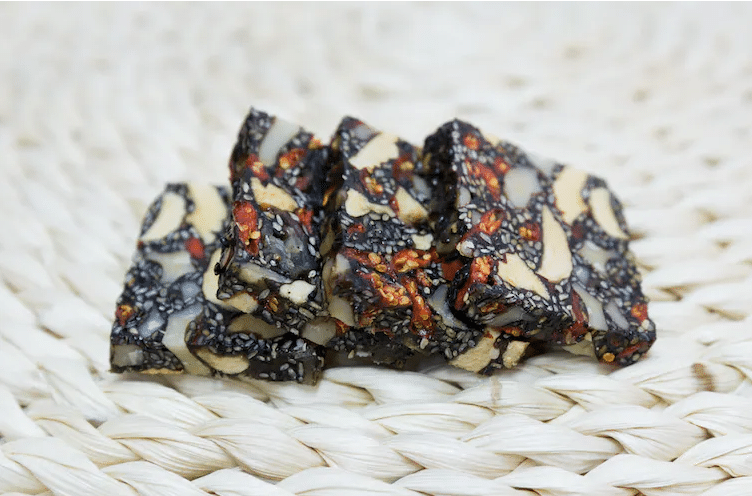
Ejiao | HelloRF Zcool/Shutterstock

The demand for ejiao has led to a shortage of donkeys in China and increasingly worldwide. Countries in Africa have been particularly affected.

Africa is home to the highest number of donkeys in the world: about two-thirds of the estimated global population of 53 million donkeys in 2020. Exact figures on how many hides are exported to China aren’t available due to a growing illicit trade, but there are indications.

A study of South Africa’s donkey population, for instance, suggests that it went from 210,000 in 1996 to about 146,000 in 2019. This was attributed to the export of donkey hides.

ADVERTISEMENT

In a recent paper I examined the trends, issues and prospects for the Africa–China donkey trade. My information came from interviews, literature and news reviews in English and Chinese.

My findings are that the scale of the donkey trade, both illicit and legal, poses a challenge for many countries in Africa, especially in terms of its impact on the most marginalized communities. Besides donkey welfare, a big part of the challenge is how affordable donkeys are locally. Donkeys have a valuable, ancient role as a workhorse and losing access to them creates a huge problem for poor households. The other part of the challenge is regulatory. Only when the donkey hide trade is fully regulated – and export numbers are able to be very limited – might the trade work without adverse consequences for the poor.

This was also highlighted by a recent survey of the East African Community which found that the region was not ready for the mass slaughter and unregulated trade of donkeys. Millions of vulnerable East Africans rely on donkeys for a living and are at risk of losing out through the donkey skin trade.

Value of donkeys

Donkeys are estimated to support about 158 million people in Africa. In rural areas, the presence of a donkey in a household helps to alleviate poverty and frees women and girls from household drudgery.

Donkeys are one of the simplest, most sustainable and affordable means of transporting people, goods and farm inputs and outputs from home to farm to market and vice versa, as well as to water wells and other places. Even in harsh environments donkeys can travel long distances with a heavy load, limited fluids, and without showing signs of fatigue. They are a durable household asset.

ADVERTISEMENT

Donkey ownership increases productivity and lessens hard work by, for example, reducing the loads women must otherwise carry themselves. In Ghana, for instance, owning a donkey was found to save adults about five hours of labor a week, and children 10 hours a week. The presence of a donkey also freed girl children to go to school.

Donkeys can also carry heavy loads of firewood and water. This means people need to make fewer trips. This frees up labour and time for other income generating activities, such as sowing someone’s farm for money.

The value of having a donkey in the household is evident. The loss of a donkey to a household in rural Kenya is associated with an increased risk of poverty – children drop out of school, and there’s less water security and more economic fragility. This makes the donkey trade a sensitive topic. 

Government responses

Rising Chinese demand for donkeys has elicited a variety of responses by governments across Africa.

Tanzania, for example, attempted to create a formal donkey industry and trade. But, in 2022, authorities banned it because legal supply couldn’t keep up with demand. Female donkeys typically produce only a few foals each in a lifetime.

In Kenya, public outrage – largely due to the rise of donkey prices and diminishing supply – led to a ban on exports in February 2020. Kenya’s donkey exporters, however, took their case against the ban to Kenya’s High Court in June 2020, and won.

Elsewhere, countries such as Botswana, Burkina Faso, Mali, Niger, Senegal and Tanzania banned donkey exports. Others, such as South Africa, banned or limited the donkey trade with requirements for established slaughterhouses and related quotas.

However, the implementation of donkey bans varies according to the strength of the regulatory capacity in each country – and how easy it is to smuggle things across borders.

In South Africa’s case, export quotas have merely sent the trade underground. This leads to more donkey theft. Illicitly traded hides from South Africa are typically from donkeys that are slaughtered inhumanely in the bush or in sub-standard slaughterhouses in Lesotho. Then they are exported to China.

Poverty also fosters the trade, which in turn can lead to further impoverishment. Donkey owners, needing a short-term income windfall, will sell their animal. It may then be slaughtered and traded illegally and lead to diminished income-earning opportunity in the medium and long run. 

What needs to be done

A recent Pan-African Donkey Conference called for a 15-year continent-wide moratorium on the trade to allow supply to recover and regulatory capacity to be enhanced.

The ejiao industry in China is well organized and resourced. A handful of major firms and one province dominate the industry in China, and they are represented by the Shandong Ejiao Industry Association.

A China-Africa donkey hide trade may be possible if African countries get organized, form associations and establish a dialogue with the Shandong Ejiao Industry. The aim would be to work out sustainable mechanisms, prevent damage to local interests and help to counter the illicit trade.

In parallel to this, it would be important for animal welfare agencies in China to raise awareness of the illicit and damaging impact of the illicit donkey hide trade.

For now, I believe that the trade is premature. Better regulatory standards are needed by China’s ejiao industry such that illegally traded and stolen donkey hides are not part of the industry. Deeper cooperation across African countries would also help to preserve the ancient role of the donkey in supporting trade and the continent’s most vulnerable and geographically isolated groups.The Conversation

Lauren Johnston, Senior Researcher, South African Institute of International Affairs

This article is republished from The Conversation under a Creative Commons license. Read the original article.


Tags: ChinaDonkeyEthiopiaHealthKenyaLivelihoodsRuralSouth AfricaTanzaniaTradeTraditional MedicineWelfare
Lauren Johnston

Lauren Johnston

Dr Lauren Johnston holds a PhD in Economics from Peking University. She has expertise in and is widely published on the economics and political economy of China-Africa relations, the Belt and Road Initiative and how population ageing impacts China’s economy. Dr Johnston is concurrently an Associate Professor at the China Studies Centre, University of Sydney. She previously worked at the University of Melbourne, Beijing Foreign Studies University, the World Bank, and as an ODI Fellow in the Ministry of Development and Economic Planning of Sierra Leone

Related Posts

Parliament Has Allocated Ksh175.5 Billion To Health, Including Ksh19.1 Billion For The Primary Healthcare Fund And Ksh4.0 Billion For Emergencies.

More Revenue for Health Will Not Be Enough Without Budget Credibility

August 31, 2026
A Collage Of Kenya'S Former Deputy President Rigathi Gachagua And Health Cs Aden Duale. Photo/Courtesy

When Political Insults Become Attacks on Entire Communities

August 31, 2026
Ruto Orders Police To Go After Politicians Funding Goons

Why Kenya Never Finishes a Presidential Election 

August 29, 2026
Kenya Politics And Hate Speech: Institutionalize Communication In Leaders’ Offices

Kenya Hate Speech: Why Political Offices Need Professional Communication Units

August 29, 2026
ADVERTISEMENT

The Kenya Times Facebook

LATEST NEWS

  • Ruto Flies Out of the Country
  • Ruto Announces New Deal to Slash Cancer Treatment Costs From KSh1 Million to Below KSh50,000
  • Gachagua Drops Fresh Bombshell from America, Claims IEBC Has Transferred Rigid Staff
  • Weatherman Reveals 9 Counties Set for Showers and Thunderstorms This Week
  • TSC Advertises 1,631 Promotional Vacancies for Teachers: How to Apply
  • Ministry of Water Announces One-Year Internship with Monthly Pay: How to Apply
  • Kenya Airways Announces Further Flight Delays After End of Strike
  • Kenya Finally Apologizes to the World After JKIA Mess
  • Flight Operations Resume After Aviation Workers Call Off Strike
  • Jane Kere Imbunya: Profile of Only Female Professor in Ruto’s Top Government
  • Cost of Living Rises in Kenya as Food, Transport and Housing Costs Climb
  • Investors Show Confidence in Kenya as Shilling Holds Steady
  • PHOTO STORY: Chemelil Sugar Revival Breathes New Life Into Kenya’s Sugar Belt
  • Full List of SHA-Accredited Health Facilities in Baringo County
  • More Revenue for Health Will Not Be Enough Without Budget Credibility
ADVERTISEMENT

Company

About Us

Our Authors

Our Experts

Social Media

Policies

Privacy Policy

House Rules

Standards and Policies

Terms and Conditions

Subscription

My Account

Contact Us

Contact Us

Join Our Team

Advertise With Us

© Copyright 2026 | The Kenya Times | All Rights Reserved

Welcome Back!

Sign In with Facebook
Sign In with Google
Sign In with Linked In
OR

Login to your account below

Forgotten Password? Sign Up

Create New Account!

Sign Up with Facebook
Sign Up with Google
Sign Up with Linked In
OR

Fill the forms below to register

All fields are required. Log In

Retrieve your password

Please enter your username or email address to reset your password.

Log In
Your Privacy and Cookies
We use cookies on our website to give you the most relevant experience by remembering your preferences and repeat visits. By clicking “Accept”, you consent to the use of ALL the cookies.
Do not sell my personal information.
Cookie settingsACCEPT
Privacy & Cookies Policy

Privacy Overview

This website uses cookies to improve your experience while you navigate through the website. Out of these cookies, the cookies that are categorized as necessary are stored on your browser as they are essential for the working of basic functionalities of the website. We also use third-party cookies that help us analyze and understand how you use this website. These cookies will be stored in your browser only with your consent. You also have the option to opt-out of these cookies. But opting out of some of these cookies may have an effect on your browsing experience.
Necessary
Always Enabled
Necessary cookies are absolutely essential for the website to function properly. This category only includes cookies that ensures basic functionalities and security features of the website. These cookies do not store any personal information.
Functional
Functional cookies help to perform certain functionalities like sharing the content of the website on social media platforms, collect feedbacks, and other third-party features.
Performance
Performance cookies are used to understand and analyze the key performance indexes of the website which helps in delivering a better user experience for the visitors.
Analytics
Analytical cookies are used to understand how visitors interact with the website. These cookies help provide information on metrics the number of visitors, bounce rate, traffic source, etc.
Advertisement
Advertisement cookies are used to provide visitors with relevant ads and marketing campaigns. These cookies track visitors across websites and collect information to provide customized ads.
Others
Other uncategorized cookies are those that are being analyzed and have not been classified into a category as yet.
SAVE & ACCEPT
LOGIN | REGISTER
  • Login
  • Sign Up
  • Cart
No Result
View All Result
  • News
    • Latest News
    • Breaking News
    • Investigations
    • Explainers
    • Fact Check
  • Politics
    • Global Politics
    • Conflicts & Security
    • Elections
    • Diplomacy
    • Government & Policy
    • Political Analysis
  • Business
    • Global Economy
    • Markets
    • Technology
    • Startups
    • Energy
    • Finance
  • World News
    • Americas
    • Asia
    • Asia Pacific
    • Africa
    • Europe
    • Middle East
  • Africa
    • East Africa
    • West Africa
    • Southern Africa
    • Central Africa
  • Health
    • Global Health
    • Public Health
    • Health Policy
    • Medical Research
    • Diseases & Conditions
    • Mental Health
    • Nutrition
    • Climate & Health
    • Health Explainers
  • Sports
    • World Cup 2026
    • Athletics
    • Basketball
    • Boxing
    • Cricket
    • Football
    • Formula 1
    • Golf
    • Rugby
  • Weather
    • Climate Business
    • Climate Change
    • Climate Solutions
    • Living Green
  • Culture
    • Arts
    • Film & TV
    • Food and Recipes
    • Lifestyle
    • Music
    • Travel
  • Opinion
    • Editorials
    • Letters
  • Behind The Brand
  • Contact Us

Not enough quota to unlock this post
Unlock left : 0
Are you sure want to cancel subscription?