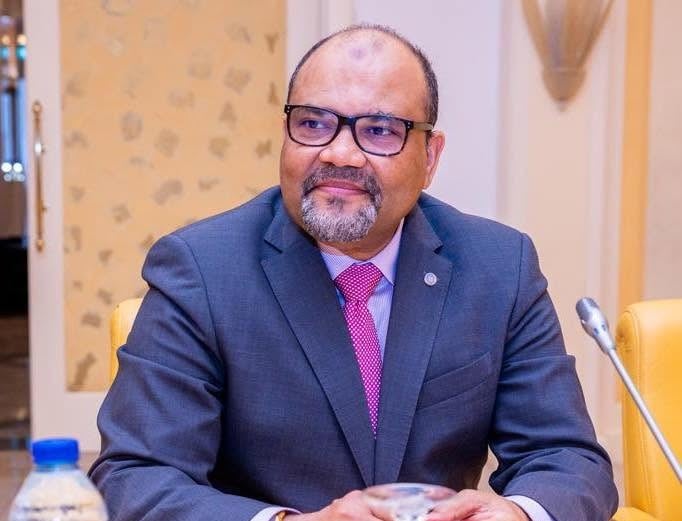
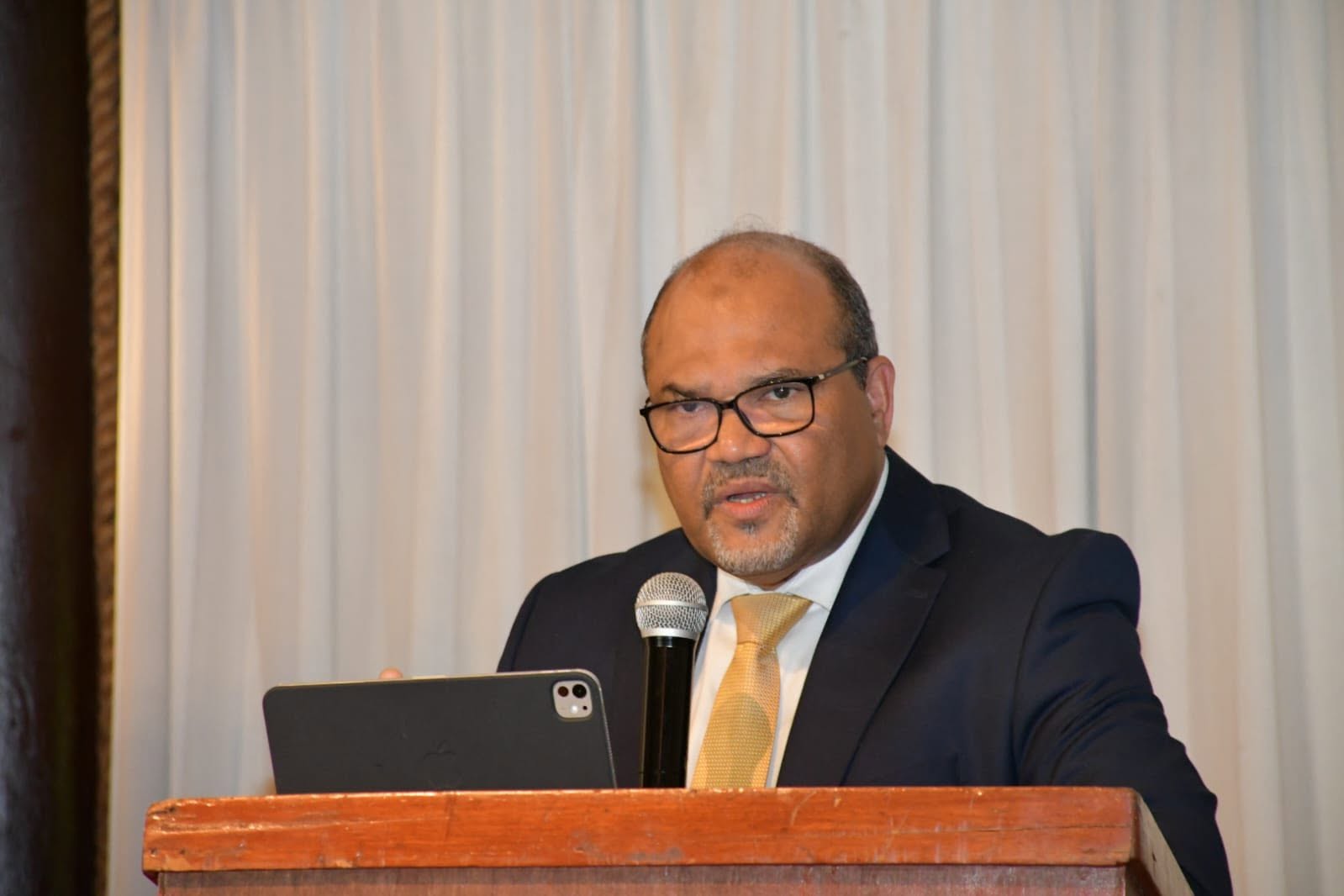
In his latest book, Slow Poison: Idi Amin, Yoweri Museveni, and the Making of the Ugandan State, anthropologist Mahmood Mamdani explains the factors and characters – Idi Amin and Yoweri Museveni – that shaped post-independence Uganda. As he explains to The Conversation Africa, there are striking differences between the two men.
Museveni has been in office for almost four decades. Amin lasted eight years. What explains Museveni’s endurance?
I try to explain in the book some of the most important reasons Museveni has lasted for more than four decades. I think these reasons are both internal and external.
The internal reason is that he has tried to perfect what the British introduced as “divide and rule”, which is to undermine the basis of a unified citizenship in the country. Not just as the British did, taking existing ethnic groups and politicising them into political structures we call tribes. But more than that, taking some sub-ethnic groups and turning them into tribes. So from fewer than 20 tribes, he has created more than 100. It’s an endless process.
And then there is the external. Unlike Amin, who was the sworn enemy of big powers in the west, Museveni is the sworn protégé and the sworn friend of the big powers in the west.
Some analysts seem to suggest that it’s only now, particularly after his son has started making sort of political pronouncements, that Ugandan politics is being militarised. But a theme that comes out clearly in your book is that under both Amin and Museveni, the army has always been a substitute for political organisation in Uganda.
I think that’s a correct reading of the book. Now, within that very broad comparison, there are some important differences in the route taken by Amin.
Amin was recruited as a child soldier by the British at the age of 14 or so. He was trained in what they call the arts of counter insurgency, which is really a polite term for state terrorism. He used to publicly demonstrate, particularly to African heads of state, for example, at their meeting in Morocco, how he could suffocate with a handkerchief.
And Amin went through some kind of a transformation in the first year after he had gained power.
He gained power through the direct assistance of the British and the Israelis. The Israelis, in particular, advised Amin that he could not just overthrow Uganda’s first post-independence president Milton Obote and think that that was the end of the story. He would have to deal with his cohorts, the people he had brought to key positions, and the reckoning would be around the corner.
Also Read: Yoweri Museveni: From Military Leader to Ugandan President
So the only way he could avoid the reckoning was to annihilate them. And his first year in power was brutal. I mean, he killed hundreds of people in different army barracks. These were massacres. There’s no other word to describe it.
And then, after that, he went to Israel and to Britain with sort of a list of what he wanted. He thought he had gone forward for the Israelis and the British, and now it was time for them to do him a favour. And they were amused, and he was humiliated. He looked for an alternative, and that is how he, through the then Egyptian president Anwar Sadat, met Libyan leader Muammar Gaddafi, and that is how, through Gaddafi, he met Sudanese leader Gaafar Muhammad Nimeiry. Amin, along with Ethiopian emperor Haile Selassie, played a key role in the Addis Ababa agreement of 1972 which brought the first civil war in Sudan to an end.
After the second year of his coming to power, I don’t know of any massacres. He still killed opponents, but he did not generalise the killing to either family or friends or clans or just groups that the person was identified with or associated with. His killing was much more that of a dictator who uses violence to deal with his opposition.
It’s very different in Museveni’s case. Museveni came to power with the sense that violence is critical to politics, and especially critical to liberation politics. Museveni is an avid devotee of Frantz Fanon, particularly The Wretched of the Earth. And the key lesson he takes from Fanon is the essentiality of violence in any emancipatory politics.
And so I try to trace the path whereby Museveni begins by thinking of violence as central to dismantling an oppressive state and ends up with the notion that violence is central to building a state. He arrives at exactly the opposite conclusion. And this is long before his son comes into the picture.
There’s a whole chapter I have in the book on the first few decades after 1986 when Museveni comes to power in his operations in the north and in successive massacres and killings, claiming that what he was fighting in the north was a continuation of the war on terror, which had begun after the 11 September 2001 attacks in the US.
And these claims were just accepted at face value by the international community, which is the name we give to western powers.
So would you say the war on terror was a godsend for Museveni in helping him advance his agenda?
Definitely. Ever since the structural adjustment programme of the late 1980s, he understood that if he was going to stifle opposition at home, he would need support overseas, and this support would come to him if he claimed to be central to waging the war on terror.
Museveni was smart enough to realise that American foreign policy, American military involvement, had political limitations. And those limitations were: how many Americans could be killed? And when these killings took place in Somalia, the Black Hawk Down incident, Museveni offered his services.
He took his soldiers to Somalia. You remember that slogan, African solutions for African problems. Museveni offered that African solution in South Sudan, in Rwanda, in eastern Congo. The African solution was just a fancy name for Africans massacring Africans in the service of imperial powers. And that’s what happened at the end.
You recommend a federation as the most likely to succeed in post-Museveni Uganda. Is there a political base for it at the moment? Or would something need to happen for the proposed federation to succeed?
Those of us who are militant nationalists and independents understood federation as a British project. We understood that it was the right wing, it was those who were interested in creating tribal fiefdoms, who used federation as a fig leaf to describe their agenda. We understood that this was their way of undercutting any attempt to build a strong nationalist state.
But since then, with a strong state having been built, we have understood the conditions have changed and the times have changed. Local organisation, local autonomy, has come to have a very different significance.
It is a way of resisting a development of autocracy in the centre and I think people are beginning to draw lessons from this.
Now, the thing is what kind of federation, because Museveni has also promoted something resembling a federation. But he has, as in Ethiopia, promoted what you can call an ethnic federalism. So in each single unit, he has divided the majority from the minority, the majority belonging to the ethnic group living in the country, and the minority having descended from other ethnic groups, even though living in the country, even though born in that place, still deprived of rights.
This is what’s happened in Ethiopia. If you look at Ethiopia, if you look at Sudan, you will see that the British politicised ethnic groups and turned them into tribes. And then after colonialism, what we have done is to militarise these tribes. So we have created tribal militias. That’s what they have done in Ethiopia. That’s the fighting between different tribal militias. That’s what they did in Sudan. They created tribal militias, starting in Darfur and then in other places. It is the state military which led the systems in creating these tribal militias. Then it is the tribal militias which have begun to swallow the state.
So this current civil war we have going on is between the state army and the tribal militias. It’s the same process you see in Uganda. We have not gone to the point of creating tribal militias, but we have been manufacturing tribe after tribe after tribe in order to fragment the country.
Some of these trends that you describe about Uganda can be found in most African countries. What are the lessons about the way forward for the rest of the African continent?
Broadly, we can see these trends in many African countries. The British model of colonialism became the general colonial model. Even the French, known for their assimilationist preferences, adopted indirect rule when they moved from assimilation to what they called association in the 1930s. And the Portuguese followed the French.
South Africans were the last ones in – they called it apartheid. But it was the same thing, the creation of homelands, the tribalisation of local differences. So that’s one trend in much of the thinking on the continent.
The alternative to that trend has been described as centralisation, so we’ve been moving between beefing up autocratic, centralised power and then opposing with fragmented, tribal powers.
I’m proposing a third way. I’m proposing a federation which is more ethnic. I’m proposing a federation which is more based on territory, more based on where you live. So it doesn’t matter where you’re from, but just the fact that you live there means that you have cast your lot with the rest of the people there in creating a common future.
Also Read: The Story of Bobi Wine, Ugandan Musician Eyeing the Presidential Seat for Second Time
And what matters in politics, more than where you came from, is the decision to make a common future. Migration is characteristic of human society. Human society has not come into being through homelands. So homeland is a colonial fiction.
The idea that Africans did not move, that they were tied to a particular piece of territory, is absurd, because Africans moved more than anybody else. We know that humanity began in Africa and spread to the rest of the world. So where is the homeland? You can have a homeland for this generation, for the previous few generations, but all African people have a story of migration. This is, I think, central.
So the way forward: one is a federation which consolidates democracy rather than eroding it.
The second way forward is to critically think through the whole neoliberal economic model and the empowering of elites, whether they are racial or ethnic or whatever.
I think we have to find a different economic model. But as you say, the book is not dedicated to looking for solutions. The book is dedicated to the proposition that we need to understand the problem before rushing to solutions.
And each country will have its own nuances. Different to Uganda.
Mahmood Mamdani, Herbert Lehman Professor of Government, Department of Anthropology, Columbia University
This article is republished from The Conversation under a Creative Commons license. Read the original article.