Tuesday, June 9, 2026
  • News
    • Latest News
    • Breaking News
    • Fact Check
    • Investigations
    • Explainers
  • Politics
    • Global Politics
    • Elections
    • Government & Policy
    • Diplomacy
    • Conflicts & Security
    • Political Analysis
  • Business
    • Global Economy
    • Markets
    • Technology
    • Startups
    • Energy
    • Finance
  • World News
    • Americas
    • Asia
    • Asia Pacific
    • Africa
    • Europe
    • Middle East
  • Africa
    • Central Africa
    • East Africa
    • West Africa
    • Southern Africa
  • Health
    • Global Health
    • Public Health
    • Health Policy
    • Medical Research
    • Diseases & Conditions
    • Mental Health
    • Nutrition
    • Climate & Health
    • Health Explainers
  • Sports
    • Athletics
    • Basketball
    • Boxing
    • Cricket
    • Football
    • Formula 1
    • Golf
    • Rugby
  • Weather
    • Climate Business
    • Climate Change
    • Climate Solutions
    • Living Green
  • Culture
    • Arts
    • Film & TV
    • Food
    • Music
    • Lifestyle
    • Travel
  • Opinion
    • Editorials
    • Letters
  • Behind The Brand
REGISTER
LOGIN
No Result
View All Result
The Kenya Times
  • News
    • Latest News
    • Breaking News
    • Fact Check
    • Investigations
    • Explainers
  • Politics
    • Global Politics
    • Elections
    • Government & Policy
    • Diplomacy
    • Conflicts & Security
    • Political Analysis
  • Business
    • Global Economy
    • Markets
    • Technology
    • Startups
    • Energy
    • Finance
  • World News
    • Americas
    • Asia
    • Asia Pacific
    • Africa
    • Europe
    • Middle East
  • Africa
    • Central Africa
    • East Africa
    • West Africa
    • Southern Africa
  • Health
    • Global Health
    • Public Health
    • Health Policy
    • Medical Research
    • Diseases & Conditions
    • Mental Health
    • Nutrition
    • Climate & Health
    • Health Explainers
  • Sports
    • Athletics
    • Basketball
    • Boxing
    • Cricket
    • Football
    • Formula 1
    • Golf
    • Rugby
  • Weather
    • Climate Business
    • Climate Change
    • Climate Solutions
    • Living Green
  • Culture
    • Arts
    • Film & TV
    • Food
    • Music
    • Lifestyle
    • Travel
  • Opinion
    • Editorials
    • Letters
  • Behind The Brand
  • News
    • Latest News
    • Breaking News
    • Fact Check
    • Investigations
    • Explainers
  • Politics
    • Global Politics
    • Elections
    • Government & Policy
    • Diplomacy
    • Conflicts & Security
    • Political Analysis
  • Business
    • Global Economy
    • Markets
    • Technology
    • Startups
    • Energy
    • Finance
  • World News
    • Americas
    • Asia
    • Asia Pacific
    • Africa
    • Europe
    • Middle East
  • Africa
    • Central Africa
    • East Africa
    • West Africa
    • Southern Africa
  • Health
    • Global Health
    • Public Health
    • Health Policy
    • Medical Research
    • Diseases & Conditions
    • Mental Health
    • Nutrition
    • Climate & Health
    • Health Explainers
  • Sports
    • Athletics
    • Basketball
    • Boxing
    • Cricket
    • Football
    • Formula 1
    • Golf
    • Rugby
  • Weather
    • Climate Business
    • Climate Change
    • Climate Solutions
    • Living Green
  • Culture
    • Arts
    • Film & TV
    • Food
    • Music
    • Lifestyle
    • Travel
  • Opinion
    • Editorials
    • Letters
  • Behind The Brand
No Result
View All Result
The Kenya Times ~ Trending, Breaking News and Videos
No Result
View All Result
ADVERTISEMENT

How Punitive Taxation is Driving Capital to Asia and The Case for A Somali Industrial Revolution

The Kenya Times - Opinion DeskbyThe Kenya Times - Opinion Desk
June 9, 2026
Reading Time: 6 mins read
How Punitive Taxation Is Driving Industrial Capital To Asia From Africa And The Case For A Somali Industrial Revolution

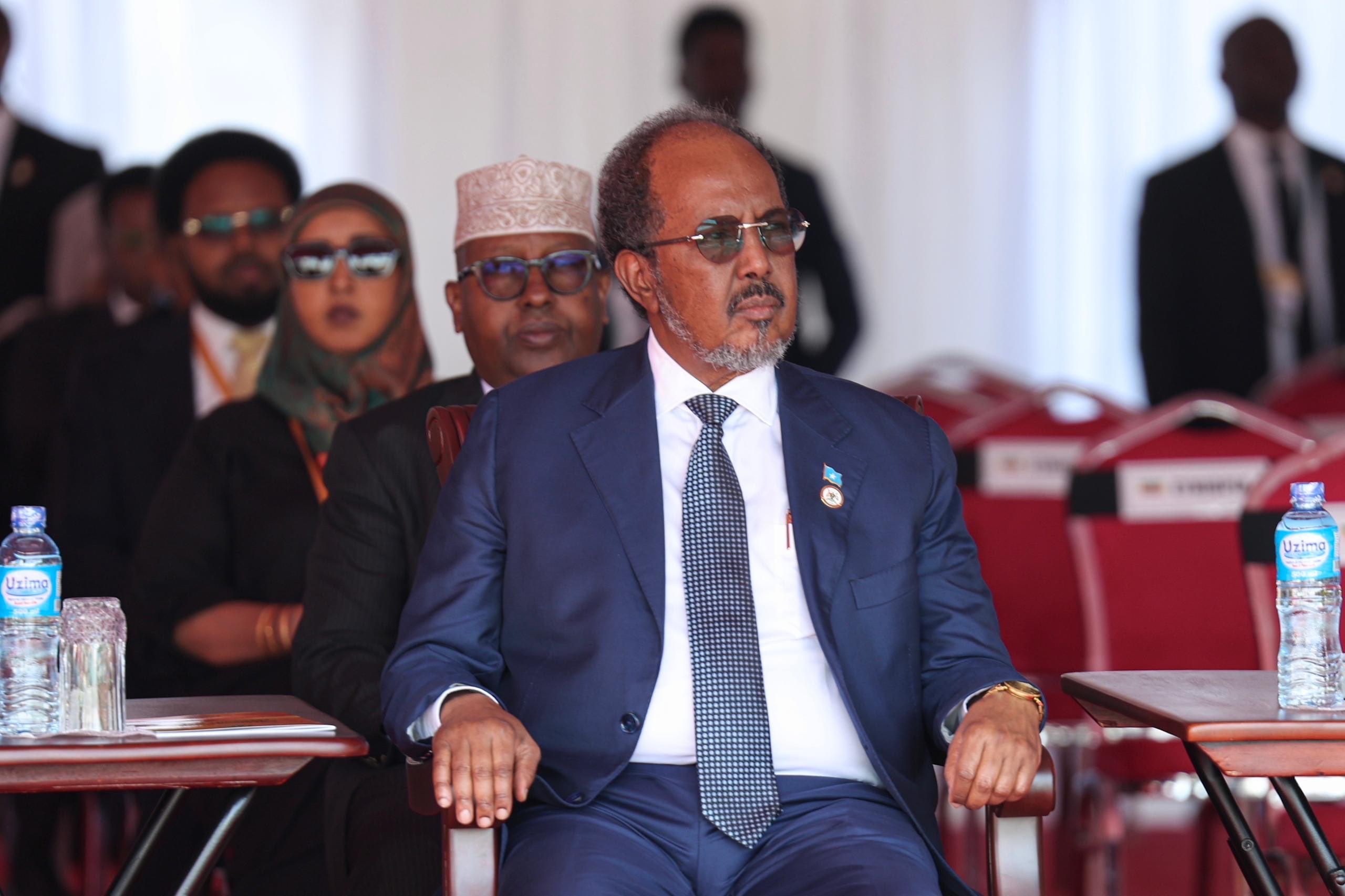
Somali President Hassan Mohamud during the swearing-in ceremony of President Yoweri Kaguta Museveni in Kampala, Uganda. PHOTO/Villa Somalia.

FacebookTwitterLinkedInRedditWhatsApp
Advertisement

The global race for manufacturing dominance is won on the spreadsheets of corporate chief financial officers, and right now, mainstream African fiscal policy is losing. For decades, economists have highlighted Africa’s massive demographic potential, its young workforce, and its unparalleled access to raw materials as the foundation for an impending industrial boom. Yet, when global corporations seek to establish new factory floors, light manufacturing hubs, or assembly plants, they repeatedly bypass African coastal nexuses in favor of Southeast Asian nations. This systematic bypass is driven by an oppressive and short-sighted tax architecture that effectively erases Africa’s natural competitive advantage of low labor costs, turning the continent into an environment that actively repels long-term foreign direct investment.

The Asian Advantage vs. African Tax Burden

When a corporate conglomerate evaluates where to deploy capital for a new manufacturing facility, it weighs statutory tax burdens against operational risks. In this arena, Southeast Asia operates with a highly sophisticated understanding of capital preservation. Nations like Vietnam offer a highly stable standard corporate income tax rate of 20 percent, frequently paired with multi-year tax holidays, accelerated depreciation schedules, and streamlined profit repatriation laws. India has similarly adjusted its fiscal borders, offering a competitive corporate rate of roughly 25.2 percent for existing companies and even lower rates for newly incorporated manufacturing entities. These rates are designed to let corporations accumulate capital, reinvest in infrastructure, and scale their local operations.

In stark contrast, the dominant economic heavyweights in Sub-Saharan Africa impose some of the most punitive corporate tax regimes in the global market. Within regional integration blocs like the East African Community, major economies have locked themselves into an aggressive fiscal posture. Kenya, Tanzania, and Uganda operate as a club with a standard 30 percent corporate income tax rate. This statutory disadvantage means that before an industrial plant even begins production, its baseline fiscal liability is 50 percent higher in East Africa than it would be in Southeast Asia. This baseline difference instantly cancels out any financial savings an investor might gain from lower local wages, driving capital out of the region.

Why African Governments Maintain High Taxes

To understand why African governments continue to enforce these high tax rates, one must examine their relationship with international financial institutions and multilateral lenders. Over the past decade, a significant portion of the continent has become trapped in a destructive cycle of sovereign debt accumulation. When these governments face looming default or seek emergency restructuring, international lenders demand intense domestic revenue mobilization as a non-negotiable condition for assistance. To satisfy these external bodies and demonstrate their capacity to repay debt, African states are forced to either introduce new levies or aggressively raise existing statutory rates.


Also Read:  How New Taxes on Bank Card Transaction Charges Will Raise the Costs for Ordinary Kenyans if Adopted by Parliament


This counterproductive economic dynamic demonstrates that international lending mechanisms often encourage developing states to lock themselves into a permanent economic depression by imposing aggressive taxation to service unpayable debt. Rather than allowing local economies to breathe and build wealth, African governments are pressured to function as collection agents for foreign banks. They systematically choke off the private sector to service public liabilities, destroying any hope of building a sustainable, long-term internal revenue base.

ADVERTISEMENT

Beyond the pressures of external debt, internal structural inefficiencies and an over-reliance on rent-seeking behaviors continue to plague many African administrations. Instead of investing tax revenue back into organic industrial enablers such as reliable high-capacity energy grids, optimized deep-water ports, and synchronized rail networks, governments frequently treat the formal corporate sector as a direct cash register to fund bloated state machineries and political patronage networks. Because the informal economy across Sub-Saharan Africa remains largely untaxed due to administrative limitations, the entire fiscal burden falls squarely on a tiny group of formal, law-abiding enterprises. This creates a deeply punitive environment that starves local companies of the liquidity needed to innovate or scale.

The Devastating Impact on Local Markets

The microeconomic reality becomes even more devastating when consumption taxes and personal income brackets are factored into the equation. In Tanzania, for example, the top-tier 30 percent personal income tax rate applies to individuals earning as little as $475 of monthly income, which is then immediately compounded by a heavy 20 percent Value-Added Tax on everyday purchases. When a state taxes an underdeveloped workforce at these severe thresholds, it completely destroys the purchasing power of its own domestic consumer market. A factory operating in such an environment cannot find local buyers for its products, and the high tax rates prevent it from exporting competitively, leaving the business entirely stranded.

Somalia’s Radical Alternative: The 5% Tax Model

As the rest of the continent struggles under the weight of fiscal exhaustion, a disruptive macroeconomic alternative is emerging along the Horn of Africa. By implementing a highly competitive, baseline 5 percent tax structure, Somalia has established the lowest tax footprint on the entire African continent. This ultra-lean fiscal framework represents a total rejection of the continental debt-extractive model. Instead of taxing businesses at the point of entry or starving corporations of early-stage liquidity, the Somali model keeps capital directly in the hands of the operators, allowing for instant reinvestment and rapid scaling.


Also Read: African Businesses Push for Affordable Financing, Stable Policies at Nairobi Summit


This 5 percent baseline completely changes the dynamic of African manufacturing economics. If the federal government can successfully pair this hyper-competitive tax rate with absolute structural guarantees in security and an aggressive deregulation campaign to optimize the ease of doing business, Somalia is uniquely positioned to leapfrog its regional neighbors. With its strategic coastline, expanding logistics networks, and an ultra-low fiscal burden, the nation possesses the exact ingredients required to displace traditional supply chains and emerge as the premier production hub of Africa. While regional heavyweights continue to tax their industries into obsolescence, Somalia’s lean tax architecture offers global manufacturers a high-yield safe haven to accumulate capital and anchor continental manufacturing operations.

ADVERTISEMENT
The Path Forward for Africa

If African nations want to stop this industrial capital flight and compete with Asian markets, their governments must completely re-engineer their fiscal strategies. They must move away from an extractive taxation mindset and move toward a model of economic enablement. This requires a sweeping simplification of the tax code, a complete dismantling of duplicate municipal levies, and a willingness to lower corporate tax baselines to mirror competitive international benchmarks.

African states must stop viewing the private sector as an infinite source of short-term revenue to patch up state budget deficits. Public revenue must be strictly reinvested in high-capacity infrastructure that lowers the cost of doing business, such as specialized industrial zones with guaranteed logistics links. Only by lowering the cost of capital accumulation can Africa transform its demographic potential into a functioning industrial reality, ensuring that the factories of tomorrow are built in the industrial zones of the continent rather than the industrial parks of Asia.

About the Author

Abdiqani Abdullahi Ahmed is a geopolitical analyst and the Senior Strategic Consultant for the Somali National News Agency (SONNA). Serving as a Senior Advisor on Communication and International Relations, he directs state-level media strategy for the Federal Government. He is Somalia’s lead representative to the East African Community’s Kiswahili Commission (EAKC), serves on the jury for the IGAD Media Awards, and is an expert in global energy markets, regional economic integration, and digital governance.

Follow our WhatsApp Channel and X Account for real-time news updates.

Opinion. How Punitive Taxation Is Driving Industrial Capital To Asia And The Case For A Somali Industrial Revolution In Africa
Somali President Hassan Mohamud welcoming the Çağrı Bey oil drilling vessel at the Port of Mogadishu on April 10, 2026. PHOTO/Villa Somalia.
Tags: African TaxSomali Industrial RevolutionSomalia Tax Rate
The Kenya Times - Opinion Desk

The Kenya Times - Opinion Desk

The Kenya Times Opinion Desk publishes independent commentary and analysis from contributors and invited voices. Views expressed are those of the authors and do not represent the newsroom’s reporting or editorial positions.

Related Posts

A Nuclear Power Plant Photo/ Construction Kenya

Kenya’s Nuclear Future: The Site, The Technology, and The Questions That Matter

June 6, 2026
Social Justice Netherlands Announces Fully Funded Scholarship For Kenyan Students

Teaching Social Justice in African Universities: Challenges, Opportunities, and the Road Ahead

June 5, 2026
How Rights Without Responsibility Is Fueling Burning Of Schools In Kenya

Opinion | Human Rights Without Responsibility Are Burning Our Schools

June 5, 2026
Leaders In Dar-Es-Salaam, Tanzania During The Mission 300 Africa Energy Summit. Photo/State House Nigeria.

Africa Cannot Fight Ebola or Build Resilient Health Systems Without Strong Disease Surveillance – Here’s Why

June 4, 2026

Leave a Reply Cancel reply

Your email address will not be published. Required fields are marked *

ADVERTISEMENT

The Kenya Times Facebook

LATEST ARTICLES

  • How Punitive Taxation is Driving Capital to Asia and The Case for A Somali Industrial Revolution
  • KCAA Releases Updated List of Approved Aviation Training Institutions
  • TSC Mulls Major Changes to Teacher Promotion Pathways: What It Entails
  • Requirements for Operating and Owning a Drone in Kenya
  • NTSA Announces System Downtime Affecting All Services
  • Two NSE-Listed Companies Announce Five Appointments in New Leadership Changes
  • New Report Reveals How Kenyans Can Check Stolen Motorcycles and Recover Lost Vehicles
  • WPP Scangroup Shareholders Decide Fate of Chairman and Eight Directors in Heated AGM Vote
  • Kenya Railways Unveils Major Nairobi Commuter Rail Upgrade Project with 10 Targets
  • 2026 World Cup Ball, TRIONDA, The Smart Ball Set to Transform the Tournament
  • Govt Confirms Mid-Term Dates Amid Pressure for Early Break
  • Teargas Lobbed as Nanyuki Residents Turn Up for Second Anti-Ebola Protests
  • World Cup 2026 Opening Match: Mexico vs South Africa Date, Time, Players to Watch and Prediction
  • Former Harambee Starlets Star Lands Prestigious FIFA World Cup Appointment
  • Meet Erick Mutwiri, Kenyan Scholar With Two PhDs and No Job
ADVERTISEMENT

Company

About Us

Our Authors

Our Experts

Social Media

Policies

Privacy Policy

House Rules

Standards and Policies

Terms and Conditions

Subscription

My Account

Contact Us

Contact Us

Join Our Team

Advertise With Us

© Copyright 2026 | The Kenya Times | All Rights Reserved

Welcome Back!

Sign In with Facebook
Sign In with Google
Sign In with Linked In
OR

Login to your account below

Forgotten Password? Sign Up

Create New Account!

Sign Up with Facebook
Sign Up with Google
Sign Up with Linked In
OR

Fill the forms below to register

All fields are required. Log In

Retrieve your password

Please enter your username or email address to reset your password.

Log In
Your Privacy and Cookies
We use cookies on our website to give you the most relevant experience by remembering your preferences and repeat visits. By clicking “Accept”, you consent to the use of ALL the cookies.
Do not sell my personal information.
Cookie settingsACCEPT
Privacy & Cookies Policy

Privacy Overview

This website uses cookies to improve your experience while you navigate through the website. Out of these cookies, the cookies that are categorized as necessary are stored on your browser as they are essential for the working of basic functionalities of the website. We also use third-party cookies that help us analyze and understand how you use this website. These cookies will be stored in your browser only with your consent. You also have the option to opt-out of these cookies. But opting out of some of these cookies may have an effect on your browsing experience.
Necessary
Always Enabled
Necessary cookies are absolutely essential for the website to function properly. This category only includes cookies that ensures basic functionalities and security features of the website. These cookies do not store any personal information.
Functional
Functional cookies help to perform certain functionalities like sharing the content of the website on social media platforms, collect feedbacks, and other third-party features.
Performance
Performance cookies are used to understand and analyze the key performance indexes of the website which helps in delivering a better user experience for the visitors.
Analytics
Analytical cookies are used to understand how visitors interact with the website. These cookies help provide information on metrics the number of visitors, bounce rate, traffic source, etc.
Advertisement
Advertisement cookies are used to provide visitors with relevant ads and marketing campaigns. These cookies track visitors across websites and collect information to provide customized ads.
Others
Other uncategorized cookies are those that are being analyzed and have not been classified into a category as yet.
SAVE & ACCEPT
LOGIN | REGISTER
  • Login
  • Sign Up
  • Cart
No Result
View All Result
  • News
    • Latest News
    • Breaking News
    • Investigations
    • Explainers
    • Fact Check
  • Politics
    • Global Politics
    • Conflicts & Security
    • Elections
    • Diplomacy
    • Government & Policy
    • Political Analysis
  • Business
    • Global Economy
    • Markets
    • Technology
    • Startups
    • Energy
    • Finance
  • World News
    • Americas
    • Asia
    • Asia Pacific
    • Africa
    • Europe
    • Middle East
  • Africa
    • East Africa
    • West Africa
    • Southern Africa
    • Central Africa
  • Health
    • Global Health
    • Public Health
    • Health Policy
    • Medical Research
    • Diseases & Conditions
    • Mental Health
    • Nutrition
    • Climate & Health
    • Health Explainers
  • Sports
    • Athletics
    • Basketball
    • Boxing
    • Cricket
    • Football
    • Formula 1
    • Golf
    • Rugby
  • Weather
    • Climate Business
    • Climate Change
    • Climate Solutions
    • Living Green
  • Culture
    • Arts
    • Film & TV
    • Food
    • Lifestyle
    • Music
    • Travel
  • Opinion
    • Editorials
    • Letters
  • Behind The Brand
  • Contact Us

Not enough quota to unlock this post
Unlock left : 0
Are you sure want to cancel subscription?