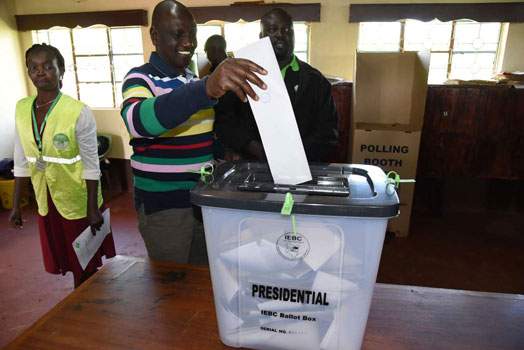
On 23 June 2026, IEBC publicly launched a Strategic Plan whose implementation began in 2024, along with its Election Operations Plan 2025–2027. The second document is the one that should interest anyone who remembers what happened when voter-identification devices failed in 2013, result transmission became disputed in 2017, and commissioners separated into opposing camps before the presidential declaration in 2022.
An election plan can list activities, deadlines, budgets, and responsible departments. The real test begins when events refuse to follow that plan. A voter-identification device rejects a registered voter, a mobile network stops carrying forms, an uploaded image cannot be read, or a returning officer reports figures that do not agree. At that moment, the country needs more than a technician who can restart equipment. Someone must establish what happened, which fallback procedure applies, what evidence must be preserved, and who has authority to speak for the commission.
When One Failure Crosses Every Office
Institutionally, IEBC has full-fledged departments. It has commissioners who make policy and exercise constitutional authority, a secretariat that administers elections, an ICT directorate responsible for technology, an operations team overseeing polling, lawyers interpreting electoral rules, procurement officers managing suppliers, and communications officials explaining events to the public. The difficulty arises when one failure crosses several of those offices at once.
Consider a KIEMS kit that fails to identify voters at a polling station. An ICT officer may treat the incident as a defective device. The presiding officer sees a queue growing restless. A lawyer must determine when to use the printed register. A security officer sees the possibility of disorder, while political agents suspect that the failure is targeting their supporters. If each official acts within a separate professional box, the polling station may receive technically correct advice that arrives too late to protect the vote.
Also Read: Before 2027 IEBC Must Explain What KIEMS Can and Cannot Do
The same problem becomes more serious during presidential-result transmission. Suppose images of Forms 34A stop reaching the public portal from several constituencies. ICT officials must establish whether the cause lies in the polling devices, network, receiving server, storage system, or publication platform. Operations officers must confirm that the original forms are secure and still moving physically to constituency tallying centers. Lawyers must protect the finality of results declared through the lawful forms. Communications officers must tell the country what has failed without mistakenly implying that the vote count itself has collapsed.
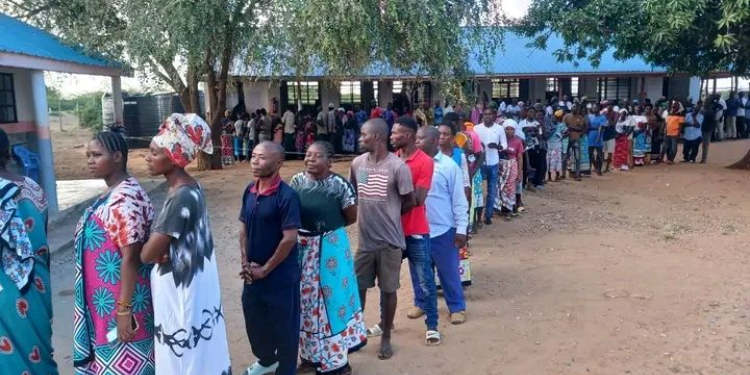
Who coordinates those answers?
The country usually discovers the answer while the failure is already happening. In 2013, IEBC’s provisional transmission system stopped after receiving results from about 14,000 of 32,613 polling stations. The commission returned to the manual tally, which the Supreme Court later upheld as the legally recognized process. The paper record survived, but the public system through which citizens had been following the count disappeared without an equally visible replacement.
During the 2017 presidential petition, failures of transmission, document handling and compliance with court-ordered access converged. No single technical explanation could resolve the dispute because the problem had already moved across ICT, legal compliance, returning-officer conduct and institutional accountability. The Supreme Court annulled the election after finding that IEBC had not conducted it in accordance with the Constitution and electoral law.
In 2022, the numbers survived judicial scrutiny, but IEBC’s leadership did not survive declaration day as one body. Four commissioners left Bomas and rejected what they called the opaque nature of the final stage. Chairperson Wafula Chebukati declared the result without them. Their disagreement concerned institutional authority as much as arithmetic: which parts of national verification belonged to the chairperson, which required collective consideration, and when the other commissioners were entitled to see the final aggregation.
A New IEBC Cannot Inherit Old Ambiguity
The Supreme Court upheld the result, but its judgment could not repair a command dispute that IEBC should have settled before polling day. Seven commissioners had reached the most sensitive moment in the election without an agreed method for recording their approval or objections against particular constituency figures.
The present commission should not inherit that ambiguity. Chairperson Erastus Ethekon and the commissioners appointed in 2025 are preparing for their first General Election together. The secretariat has also changed leadership following the departure of Chief Executive Marjan Hussein Marjan in February 2026 and the appointment of Moses Ledama Sunkuli as acting chief executive. Those changes make a written command system more important because institutional memory cannot be assumed to reside in particular individuals.
The Election Operations Plan should therefore do more than assign tasks to departments. It should identify the official who commands the response to each class of failure. That person must have named deputies, a time limit for acting and a written threshold for escalating the matter to commissioners. The document should also distinguish an operational decision from a policy decision that requires commission approval.
One Record, One Story, One Authority
Every serious incident should generate one record shared across departments. It should state where the failure occurred, when it began, which equipment or document was affected, who first reported it, what evidence was secured and which official authorized the response. If a fallback procedure was used, the record should show the legal rule permitting it and the agents or observers who witnessed its use. Later explanations from ICT, legal affairs and operations should lead back to the same incident number rather than produce competing institutional stories.
Also Read: Can IEBC Alter Constituency Presidential Results in 2027?
Vendor responsibility also requires transparent and accountable transactions. IEBC may purchase or lease equipment and obtain specialist services from private companies, but it cannot outsource constitutional accountability. A contractor may explain why software stopped responding, yet only IEBC can authorize a change in election procedure. The commission must know where its data is held, which accounts possess administrative access, who can alter system configurations, and how vendor activity will be recorded. If IEBC must telephone a supplier abroad before it can understand what its own election system is doing, then the country acquired technology without acquiring control.
Test Command Before Polling Day
Public communication must be a disciplined command arrangement. The spokesperson should not wait for rumors to harden before receiving technical information. A first statement can say what is known, what remains unknown, which lawful process continues and when the next update will be issued. That is more credible than immediate reassurance that everything is working when polling officials and party agents can see that something has failed.
IEBC should test this structure publicly before 2027 through simulations involving commissioners, the secretariat, returning officers, vendors, security agencies, political parties and observers. One exercise should begin with widespread failure of voter-identification devices. Another should interrupt transmission while physical forms continue moving. A third should present commissioners with disputed constituency returns hours before the declaration deadline. The value of those exercises will lie in exposing uncertainty about authority while there is still time to correct it.
Kenya does not need an election plan that assumes every department will perform its assigned task. It needs one that anticipates the moment when several departments confront the same failure, and none can solve it alone. Before the first presidential ballot is issued in 2027, IEBC should publish who takes command, who may authorize each fallback, and where every decision will be recorded. Otherwise, when the system fails, the country will again watch officials debate authority while citizens debate whether the result can still be trusted.
This article was written by George Nyongesa, a lecturer in philosophy and logic at the University of Nairobi and Chuka University.
Follow our WhatsApp Channel and X Account for real-time news updates.