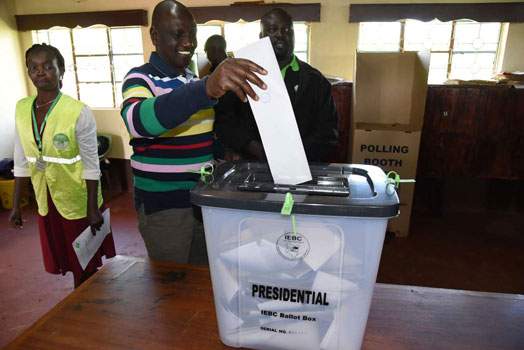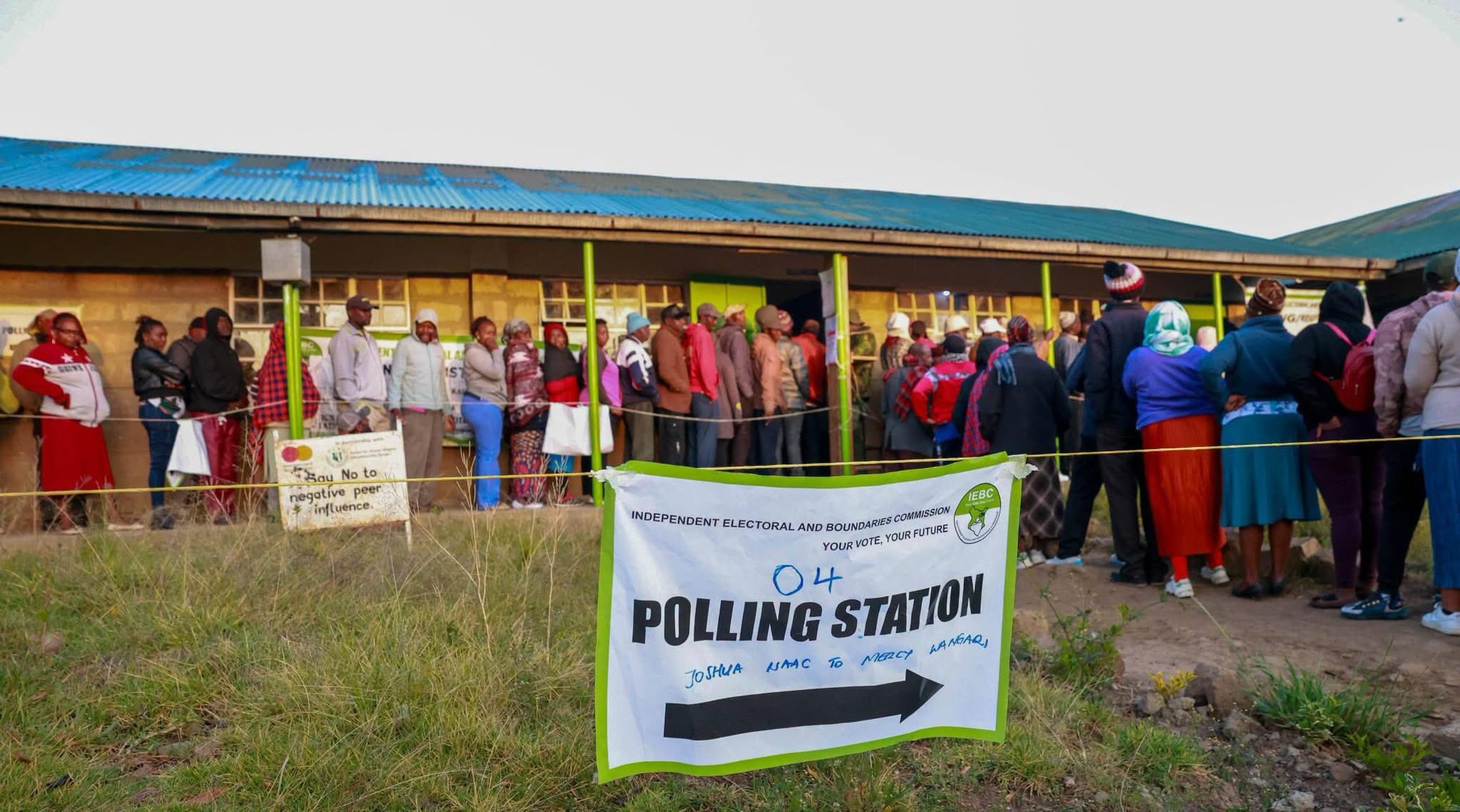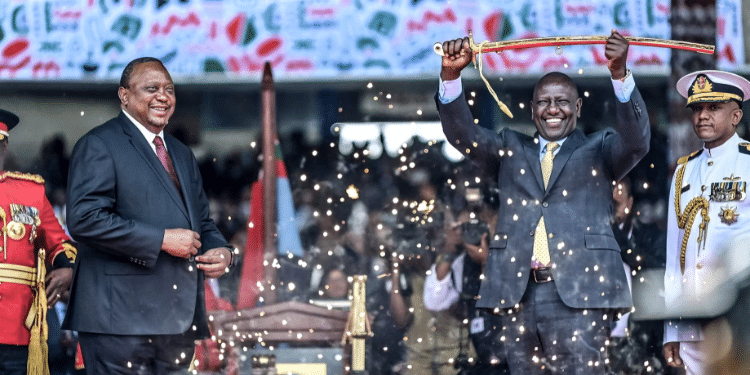
After presidential ballots are counted at a polling station, the presiding officer records each candidate’s votes on Form 34A. Candidate agents may sign the form, receive copies and record any objection. One copy is displayed at the station, while the original moves to the constituency tallying center. Kenya’s presidential result begins with thousands of these public records, not with the figures eventually announced at Bomas of Kenya.
Most citizens encounter only the final national totals. Those totals do not emerge from another count conducted in Nairobi. They are assembled through a chain in which the results on Forms 34A are added into Form 34B at each constituency, after which the totals from 290 constituencies are entered on Form 34C.
That chain determines whether the declared result can be checked. Every transfer of figures creates an opportunity for an arithmetic mistake, an unexplained correction or a dispute about which document controls. Another person should be able to begin with Form 34C and retrace every candidate’s total to the polling stream where voters watched their ballots being counted.
How Forms 34A, 34B and 34C Work
Form 34A records the presidential result from one polling stream. The presiding officer enters each candidate’s votes, rejected ballots and other required figures, then signs the return. Candidate agents present may also sign, although their absence or refusal does not automatically invalidate the result. Any correction should remain visible so that a later reviewer can distinguish an acknowledged mistake from an altered result.
At the constituency tallying center, the returning officer receives Forms 34A from every polling station within the constituency. The officer adds those results, records the constituency totals on Form 34B, announces them and forwards the prescribed documents for the national declaration. Form 34B is therefore a summary whose reliability depends upon whether its candidate totals agree with the Forms 34A beneath it.
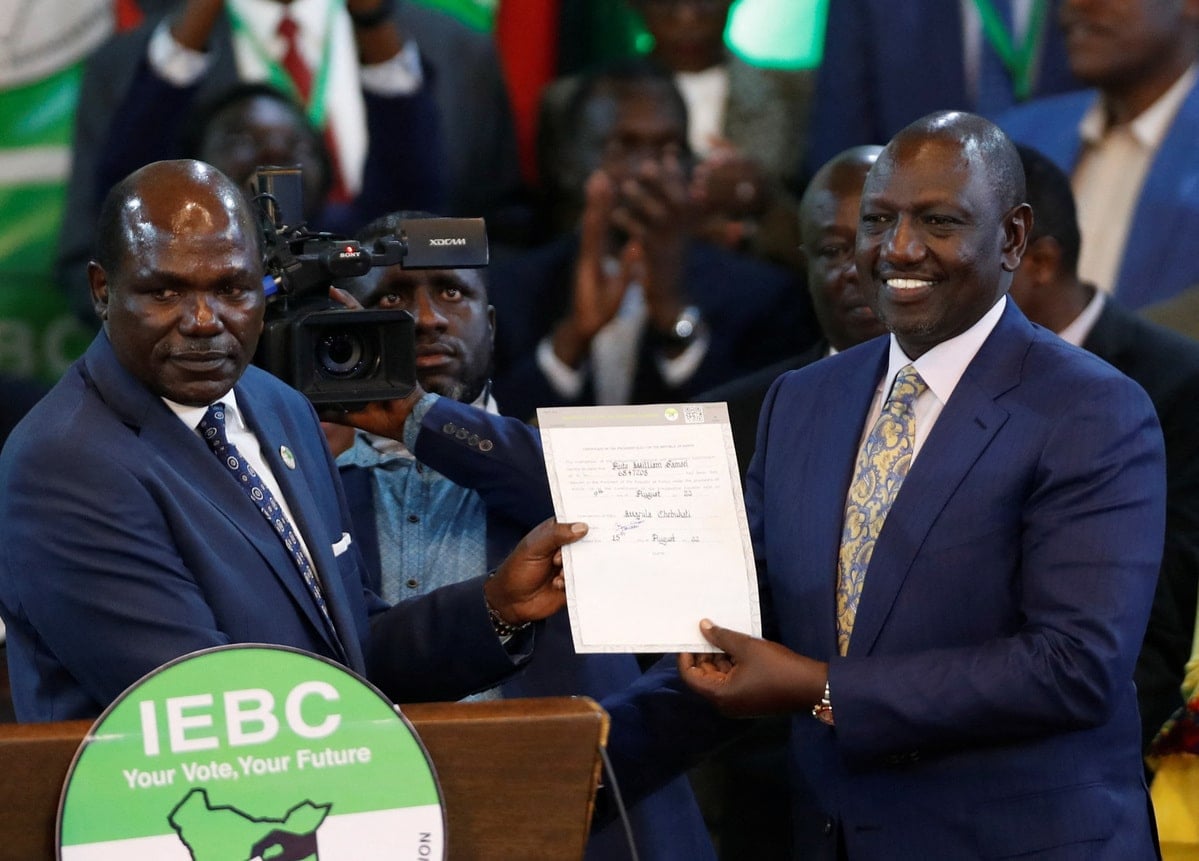
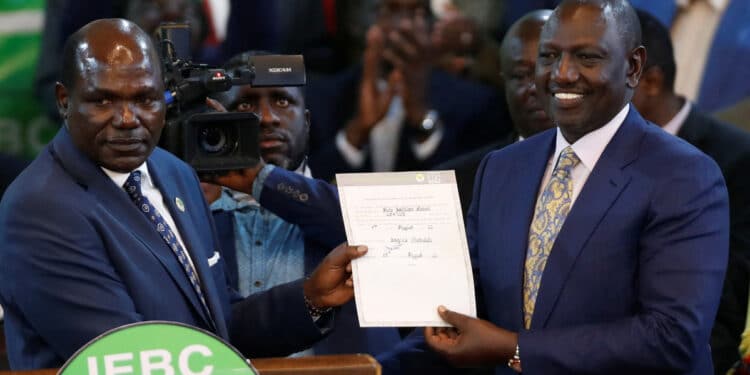
The IEBC Chairperson, acting as the national returning officer, uses the constituency results to complete Form 34C and declare the presidential outcome. The Commission is not counting ballots again at this stage. It is receiving, verifying and adding results already counted publicly and declared within the constituencies. This process must detect arithmetic discrepancies without quietly replacing results that the law treats as final.
What the Maina Kiai Case Decided
The Court of Appeal confronted this danger in the Maina Kiai case before the 2017 election. It held that presidential results declared at constituency level are final and cannot be altered by the Chairperson at the national tallying center. The decision prevented polling-station and constituency declarations from becoming provisional figures that officials in Nairobi could revise after agents and voters had left the places where the ballots were counted.
The Constitution does not establish Bomas of Kenya, or any other named venue, as a national tallying center with authority to reopen constituency results. Article 138 requires IEBC to tally and verify the count, while the Chairperson must declare the final result within seven days. Bomas is therefore an administrative venue where the Chairperson receives constituency returns, confirms that the Forms 34B have been submitted, adds their totals, checks the constitutional thresholds and declares the winner.
Also Read: Before 2027 IEBC Must Explain What KIEMS Can and Cannot Do
It is not a second counting center where constituency results remain provisional until one official approves them. By turning this last stage into a prolonged national spectacle, IEBC has encouraged the country to behave as though presidential votes are decided at Bomas, although the result should already have been established through public counting and declaration across the constituencies.
The Maina Kiai decision does not reduce national verification to a ceremony. IEBC must confirm that the prescribed returns have arrived, compare the relevant records, add the figures correctly and determine whether a candidate has satisfied the constitutional thresholds. Verification cannot, however, become an undisclosed power to substitute new candidate totals. Where Form 34B contains an apparent error, IEBC needs a lawful and visible procedure to identify the discrepancy, record the objection, and show how it was resolved.
Lessons From the 2017 Petition
The August 2017 election showed what happens when the supporting record cannot answer reasonable questions. During the presidential petition, the Supreme Court examined election forms and evidence concerning transmission and verification. The scrutiny identified documents without expected security features, signatures, or standard formatting, while IEBC did not fully comply with orders granting access to the information needed to examine its servers and results system. The Court annulled the election after finding that IEBC had not conducted it in accordance with the Constitution and electoral law.
The failure to provide full access also left a question that IEBC has never answered in language ordinary voters can test: where were the results servers hosted, who controlled them and through whose infrastructure did a transmitted Form 34A pass before reaching the Commission? Because IEBC leased key election technology from private companies, some Kenyans came to believe presidential results were first received through vendor-controlled systems, and that transmission was interrupted after figures began appearing directly on screens at Bomas. That account should not be treated as established fact without contracts, transmission logs and incident reports that prove it. However, IEBC cannot dismiss the suspicion while keeping the system’s ownership and routing obscure. Before 2027, the Commission should disclose the hosting jurisdiction, ownership, administrative control, vendor-access rights and route followed by transmitted results. Security may justify concealing passwords and network addresses, but it does not justify secrecy about who controls the infrastructure carrying Kenya’s presidential returns.
The 2017 findings did not establish that every questioned form was fraudulent, while an unstamped or irregular form does not prove that its figures are false. Such documents become politically dangerous when IEBC cannot produce the original, identify the officer who completed it and compare it with copies held by agents. A form becomes credible through its agreement with other independently held records, rather than through its paper color or stamp alone.
What IEBC Should Publish Before 2027
Before the 2027 election, IEBC should publish the rules it will use to reconcile Forms 34A and 34B. During tallying, it should create a reconciliation file for every constituency showing each polling stream, its presidential totals, the time its Form 34A was received and the corresponding entry on Form 34B. Any difference should carry an explanation, the responsible officer’s name and copies of the relevant documents. Once constituency tallying is complete, the totals in those files should add precisely to the candidate figures declared on Form 34C.
Agents and observers also need equal access during verification. Every objection should identify the polling stream, disputed figure, supporting form and decision taken by the returning officer. IEBC should publish unresolved objections before the national declaration instead of allowing them to survive as rumors. The record should show whether an objection concerned arithmetic, authenticity, a missing form or conduct during counting.
Also Read: Ahead of 2027, IEBC Must Account for Every Voter Added or Transferred
The country spends billions of shillings conducting elections, yet the central numerical task remains ordinary arithmetic. Results recorded on Forms 34A from the polling streams are added to produce Form 34B at the constituency, after which the totals from all 290 constituencies are added to produce Form 34C. Every figure declared nationally should therefore lead backwards through Form 34B to the Form 34A displayed where the ballots were counted.
When that chain breaks, IEBC must identify the polling stream, disputed document, responsible officer and decision taken. Kenya cannot continue paying heavily for elections only to watch simple addition acquire the mystery of astrophysics and advanced calculus. If IEBC cannot preserve and explain the route from every Form 34A to Form 34C, the problem will not be mathematical difficulty. It will be the failure of the institution entrusted with protecting the count.
This article was written by George Nyongesa, a lecturer in philosophy and logic at the University of Nairobi and Chuka University.
Follow our WhatsApp Channel and X Account for real-time news updates