For several hours after voting ended on 9 August 2022, Kenyan television stations displayed different presidential totals from the same election. William Ruto led on one screen while Raila Odinga led on another. Figures circulating on social media varied further, and supporters naturally preferred whichever tally put their candidate ahead.
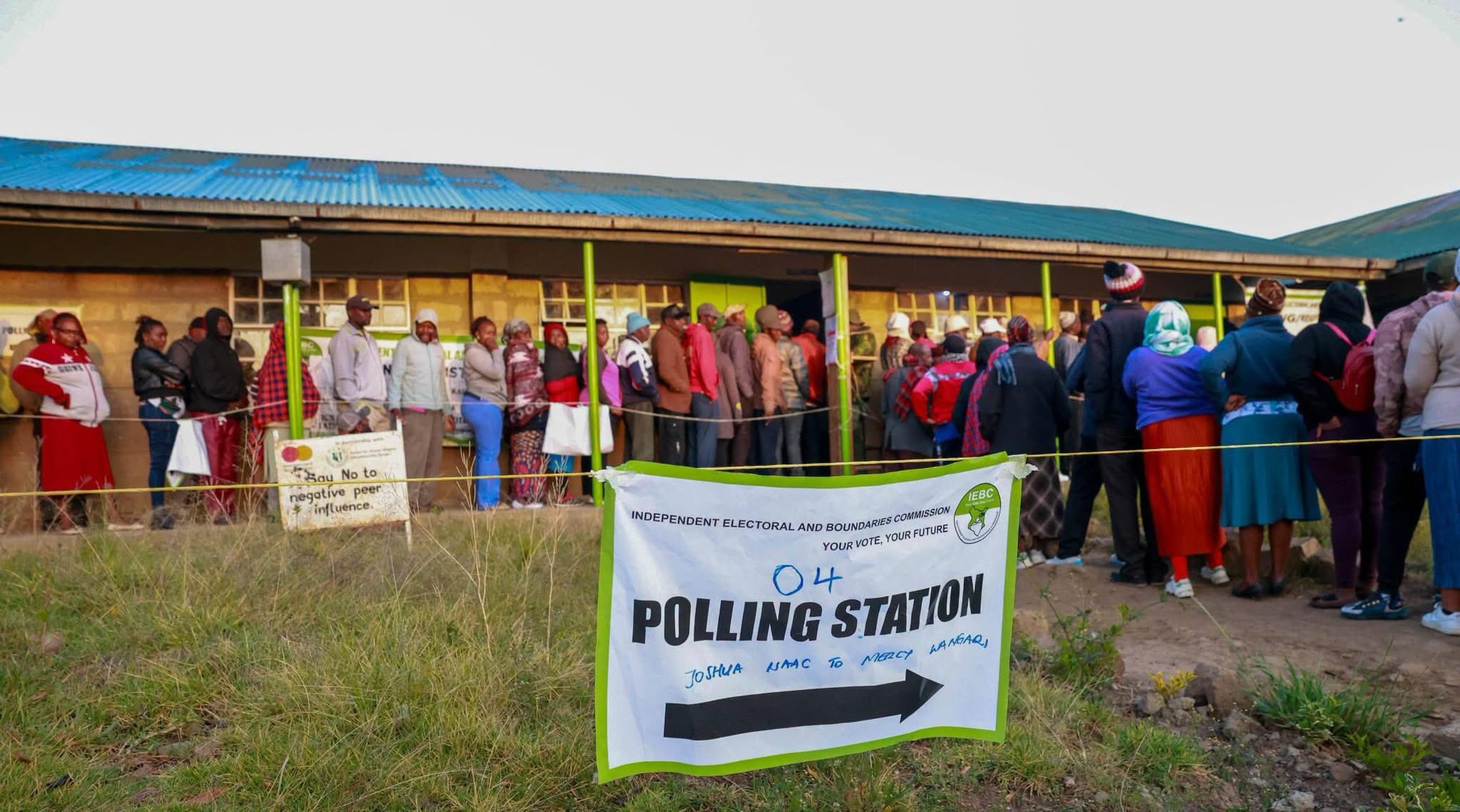
The television stations were reading Forms 34A uploaded to the IEBC portal. They were not processing those forms in the same order or at the same speed. A newsroom that had entered more forms from Rift Valley could show Ruto leading, while one that had processed more forms from Nyanza could place Odinga ahead. The gap between their tallies should have narrowed as both moved towards all 46,229 polling stations.
That explanation was reasonable, but many Kenyans heard it too late. Some media houses slowed or stopped displaying their totals without properly telling viewers why. Rumors moved into the space left by the missing explanation. Kenyans had been invited to watch independent tallies, but nobody had told them whether the newsrooms intended to finish the work, what checks they were applying, or what would happen if their final figures differed from the IEBC result.
Different checkers, different jobs
The same confusion could return in 2027. IEBC will declare the presidential winner, but several other institutions will claim to have checked the result. Political parties will collect forms through their agents. Election observers will release reports. Newsrooms may conduct their own tallies. Civil-society organizations will examine the voter register, election technology and result forms. Citizens will download documents from the portal, while lawyers wait for evidence that might support a presidential petition.
We should stop calling all these activities “independent verification” as though they amount to the same work. They do not.
A party agent may know exactly what happened at one polling station but have no idea what occurred in the next constituency. A statistician can use a representative sample to estimate the national vote without examining every Form 34A. A newsroom can add thousands of publicly available forms, although it has no authority to declare the president. The Supreme Court can determine whether an allegation has been proved under the law, but even the Court cannot recover a form, server record or agent’s copy that nobody preserved.
What a sample can and cannot prove about the IEBC result
In 2022, the Elections Observation Group used parallel vote tabulation to independently estimate the presidential result. Its observers recorded results from a representative sample of polling stations and sent the figures to a central database. ELOG estimated Ruto’s vote at about 50.7 percent and Odinga’s at about 48.7 percent, with a margin of error of 2.1 percentage points. The result declared by IEBC fell within those ranges.
That was strong evidence that the national result was statistically plausible. It was not a certificate covering every part of the election. ELOG’s estimate could not prove that every form on the portal was authentic, that every returning officer followed the law, or that the commissioners handled their final disagreement properly. A sample answers a national statistical question. It does not inspect every document.
Party agents have the strongest paper trail
Political parties can go further because they can place agents at polling stations. Those agents can witness the count, sign Form 34A, record an objection, and obtain a copy. A presidential campaign with trained agents across the country can build an almost complete tally from records collected where the ballots were counted.
That gives political parties more than a right to complain; it gives them work to do.
When a candidate claims that IEBC changed the presidential result, the first evidence should be the forms collected by the candidate’s own agents. Which polling-station result differs from the portal copy? What figure did the candidate enter on Form 34B? How many votes does the disputed station contribute to the alleged national difference?
A campaign that failed to recruit enough agents, did not train them to send usable copies, or lost the documents afterward should admit that failure before announcing that the election was stolen. A candidate’s anger cannot replace records that the campaign had both the right and the opportunity to collect.
Also Read: Before 2027 IEBC Must Explain What KIEMS Can and Cannot Do
Agent copies are not automatically reliable simply because they belong to a political party. An agent may photograph the wrong page, send the same form twice, or miss an amended entry. People entering figures at a party tally center can also make mistakes. Worse, they work for organizations whose purpose is to make one candidate president.
Every serious campaign should therefore publish its tallying rules before election day. How will it treat an unsigned form? Who will decide between two images from the same polling station? Will a second person check an entry? If a figure is corrected, will the public be able to see what was changed?
These rules should be published before anybody knows which correction might cost their candidate votes.
Media tallies need rules, not just graphics
In our media, newsrooms will face their own test. They want to give viewers fresh results, but the pressure to update television graphics quickly can produce bad entries. A newsroom that checks every form twice will look slow. One that treats the tally as a television race may publish figures it has not properly checked.
National media tallies caused confusion in 2022 because different outlets processed forms at different speeds, while several stopped displaying totals before completing their work. I do not object to media houses tallying presidential results. They should, but the problem is inviting the country to follow a count and then quietly abandoning it when the numbers become politically uncomfortable, or the work proves more expensive than expected.
Before the next election, participating media houses should tell viewers whether they intend to process all available forms. They should explain how many people check each entry, how corrections will appear on screen, and whether their figures come from Forms 34A or Forms 34B. A viewer should also be able to search for the form behind any polling-station total.
Showing a large national number without preserving the entries beneath it creates excitement, but it does not provide an audit trail.
Observers should state the limits of what they saw
Election observers have a narrower role than many of their public statements suggest. A mission that visits a sample of polling stations may report whether those stations opened on time, used the required identification procedure, and counted votes in the presence of agents. It cannot assume that the stations it did not observe behaved in exactly the same way.
That limitation on scope and the timing of observer reports also matters. Preliminary statements are often released while constituency tallying continues and before disputes over missing forms or system access have been examined. An observer mission may accurately describe voting at the stations it visited, only for politicians and journalists to convert that limited finding into the much larger claim that the entire election was credible.
Observers should state plainly what they saw, where they saw it, and what remained unfinished when they issued their statement. A report released before the presidential tally is complete cannot settle a dispute that has not yet occurred.
Civil society and citizen tallies must meet their own test
According to media, civil-society organizations are already preparing for 2027. ELOG describes its work as covering election preparations, polling, counting and the period after voting. Its public platforms now include election data and reform-tracking resources. Kenya National Interest Team has also placed the path from voter registration to declaration at the center of its electoral-integrity work.
That attention is welcome, but civil society must submit its own material to the same accuracy test it demands from IEBC. A KNIT diagram of the presidential results chain, for example, includes county verification and aggregation. That stage does not fit the prescribed presidential forms. Presidential results move from polling-station Forms 34A to constituency Forms 34B and finally to the national Form 34C. Civic educators cannot afford to insert an extra stage into the chain while accusing election officials of confusing it.
Ordinary citizens will conduct their own tallies as soon as IEBC uploads the forms. Some will work carefully while others will download images, type figures into a spreadsheet, and announce a winner before checking whether they have entered the same polling station twice.
A spreadsheet containing thousands of rows may look impressive on social media, but its size proves nothing. The person who created it should show how polling stations were identified, how duplicate forms were removed, what happened to unreadable images, and whether later corrections replaced earlier entries. If those rules remain secret, the citizen tally asks for the same blind trust that it claims IEBC does not deserve.
The Court cannot rescue missing records
The Supreme Court provides the final legal examination when a petition is filed. The role of the court in general elections should not be inflated either. The Court works within fourteen days, considers the allegations brought before it and decides whether they have been proved to the required standard. It does not operate a permanent election audit, and it cannot rescue a political party that failed to collect its own forms. A scrutiny order is useful only when the records still exist and the people holding them obey the order.
No single verifier can answer every question about a presidential election. The country therefore needs several, but their findings must fit together. Otherwise, 2027 will give us competing institutions waving different pieces of evidence and calling each piece the whole election.
IEBC should bring political parties, ELOG, other accredited observers, the Media Council, the Editors Guild, statisticians and civic groups together before polling day. They do not need to agree about the likely winner or surrender their independence. They need common polling-station codes, downloadable result formats, clear publication times and a method for referring disputed forms back to IEBC.
Every Form 34A uploaded by IEBC should connect to the correct polling station and later to the corresponding Form 34B. If an image is replaced, the original should remain available beside the new version, together with the time and reason for the change. Newsrooms, parties and citizens would then spend less time cleaning station names and more time checking whether the arithmetic agrees.
Also Read: Can IEBC Alter Constituency Presidential Results in 2027?
The independent checkers also have to show their hands. ELOG should publish its sampling method and explain what its estimate cannot prove. Political parties should disclose how many polling stations they did not attend. Media houses should tell the viewers whether their tallies will continue to the end. Civic groups should release their data rules and correction records to accompany their pronouncements.
On declaration day, Kenyans should not be forced to choose between the word of the IEBC chairperson and the press conference of a losing candidate. A result from a polling station should appear in IEBC’s records, in the copies held by party agents and in any serious independent tally. If the figures differ, the argument should begin with the name of the polling station and the forms from that station.
The country spends billions of shillings conducting elections, yet after every close presidential contest the country is asked to believe somebody’s national total before seeing the records beneath it. That is no longer good enough, especially in 2027; a candidate disputing the result should identify the forms and figures that were changed. IEBC should keep a similar occurrence book and answer those questions based on records. Anyone claiming to have checked the result must tell Kenyans what was checked, how it was checked, and what remained beyond the checker’s reach.
If we fail to set those rules before voting begins, the country will once again have plenty of people claiming to verify the presidential election and no common body of evidence to settle the argument.
This article was written by George Nyongesa, a lecturer in philosophy and logic at the University of Nairobi and Chuka University.
Follow our WhatsApp Channel and X Account for real-time news updates.