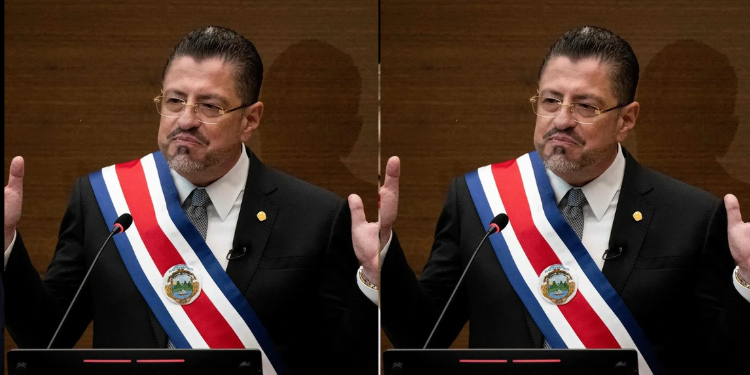
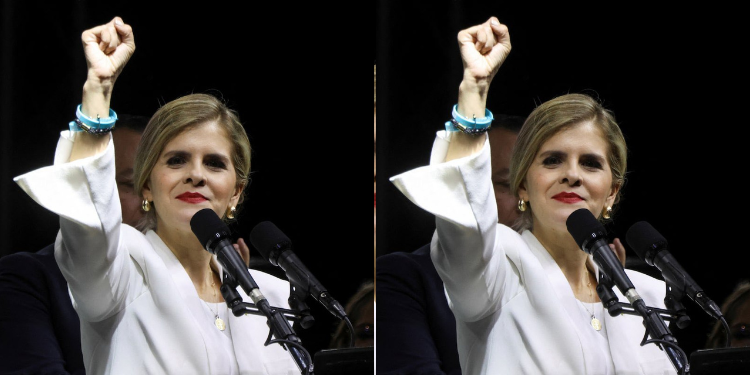
Laura Fernández, a 39-year-old conservative backed by outgoing President Rodrigo Chaves, won Costa Rica’s presidential election on February 1, 2026, with over 50% of the vote in the first round.
Fernández transitions from her role as Minister of the Presidency to leader of the eco-tourism-dependent nation, and the victory marks a continuation of Rodrigo’s right-wing Partido Progreso Social Democrático agenda, which stresses security reforms and anti-corruption measures.
This outcome reflects a regional shift toward conservative governance in Latin America and highlights Fernández as one of the youngest elected presidents in the hemisphere, drawing international attention to Costa Rica‘s stable democracy.
Fernandez’s Campaign Policies
Laura, whose inauguration is set for May 8, 2026, campaigned clearly and in detail as the handpicked successor to outgoing President Rodrigo Chaves.
Her platform, often called the “Plan de la Continuidad”, translating to Continuity Plan, focuses on extending and deepening his right-wing populist agenda and highlights tough security measures, economic liberalization, institutional reforms, and a stronger executive role amid rising concerns over drug-related violence and organized crime.
Security and Crime Fighting
This was her top priority, adopting a hardline approach that was inspired by El Salvador’s President Nayib Bukele, whereby
- A complete high-security mega-prison was constructed, modeled after El Salvador’s CECOT facility to house gang members and high-risk offenders.
- In high-crime zones, the declaration of states of emergency allows the temporary suspension of certain civil liberties to enable rapid operations against criminals.
- increase operations against airstrips and drug offloading points through the expansion of cargo scanners at ports, airports, and borders
Judicial and Institutional Reforms
Pursue judicial reform, including term limits for judges, faster proceedings, performance-based sanctions for judicial officials, and anti-corruption reporting requirements.
Also Read: Shooting of Alex Pretti in Minneapolis Has Put America’s Gun Lobby at Odds With the White House
Laura aimed for a legislative supermajority of at least 40 seats in the 57-seat assembly to pass these changes and appoint Supreme Court justices aligned with her vision.
Economic and Fiscal Policies
The former minister promised to continue fiscal austerity, reduce public-sector employment, and promote economic growth through deregulation and the attraction of foreign investment.
Modernize infrastructure, such as ports, cut red tape, and support free enterprise and prosperity.
Her vision also included the building of a Chaves-era achievements like lower unemployment, reduced public debt, and economic recovery.
She also envisioned modernizing education, enhancing social inclusion and social safety nets, and maintaining a populist style with direct appeals to voters, positioning her administration as one of “deep and irreversible change” toward greater prosperity and security.
Laura Fernandez Background
Laura Virginia Fernández Delgado will be inaugurated on May 8, 2026, becoming the country’s 50th president and only the second woman to hold the office, after Laura Chinchilla, who ruled between 2010 and 2014.
At 39, she is one of the youngest presidents in Costa Rican history.
Early Life and Personal Background
The president-elect was born on July 4, 1986, in Puntarenas, on Costa Rica’s Pacific coast, and describes herself as a true daughter of deep, rural Costa Rica, having roots in a modest, community-oriented upbringing.
Virginia is married and a mother to a young daughter named Fernanda, and often portrays herself as an everyday working mom who balances family life with public service.
Education
She earned a bachelor’s degree in political science with Honors from the University of Costa Rica (UCR) and a master’s degree in public policy and Democratic Governability from the same university.
Also Read: Another American Internet Company Licensed to Operate in Kenya and Rival Starlink
The university recognised her as an outstanding student and awarded her twice, consecutively, for the highest average in the postgraduate system.
Professional Career
The 39-year-old began working in the Ministry of National Planning and Economic Policy (MIDEPLAN) around 2010, holding various roles that focused on state reform, public employment and investment projects, and international cooperation.
She served in high-level advisory and managerial positions in the Executive and Legislative Branches and in municipal governments, and worked as a researcher, consultant, university lecturer, and specialist in governance and policy analysis.
Political Rise
Laura joined the Chaves administration in 2022 as Minister of National Planning and Economic Policy (MIDEPLAN), a role she held until 2025.
In June 2024, she was appointed Minister of the Presidency, serving until her resignation in early 2025 to pursue her presidential bid.
She gained prominence as a loyal implementer of Chávez’s agenda, including economic reforms, infrastructure projects, and the controversial proposed referendum package.
Between 2018 and 2025, she was affiliated with the Alianza Demócrata Cristiana, switching to the Sovereign People’s Party (PPSO) in 2025 to run as Rodrigo’s endorsed successor.
Follow our WhatsApp Channel and X Account for real-time news updates.