The Kenya Broadcasting Corporation (KBC) will air the 2026 FIFA World Cup live and free to millions of Kenyans after the government approved funding to secure the broadcast rights.
Treasury Cabinet Secretary John Mbadi confirmed the development, saying the National Treasury had facilitated the acquisition of free‑to‑air rights for the global football showpiece set to be held from June 11 to July 19, 2026, in the United States, Canada and Mexico.
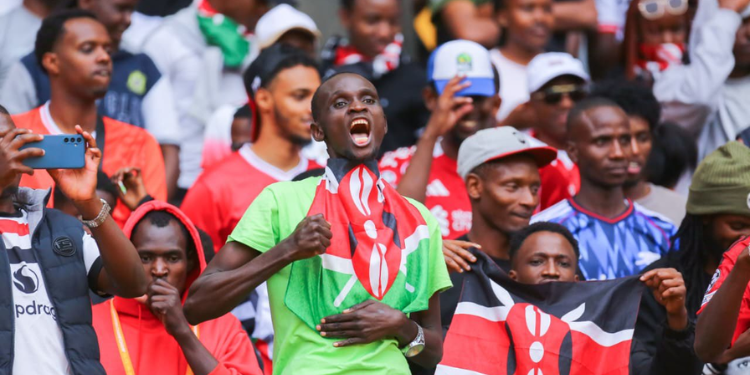
The announcement brings relief to football fans across the country who had faced uncertainty about access to the tournament, following delays in negotiations and rising broadcast rights costs.
“We are pleased to inform the Kenyan public that through the National Treasury, a directive was issued approving funds to acquire free‑to‑air broadcasting rights for KBC,” KBC stated.
The deal means viewers will be able to watch matches without paying subscription fees, restoring a long‑standing tradition of free World Cup coverage on public television.
KBC to Air World Cup Matches
According to KBC, the acquisition highlights the critical role played by government in enabling public broadcasters to access premium global sports content.
Also Read: Govt Clarifies FKF Status After Viral Suspension Reports
KBC said the rights were made possible through direct financial support from the Treasury, following high‑level intervention that ensured funds were released in time to secure the package.
The broadcaster noted that internal teams are now finalizing the process to ensure all agreements are in place ahead of the tournament kickoff.
In recent weeks, concerns have grown that Kenya could miss out on free-to-air coverage due to delays and the high cost of rights, which have increased significantly for the expanded 2026 tournament.
The new format will feature 48 teams and 104 matches, making it the largest World Cup in history and raising the value of global broadcast deals.
For broadcasters, acquiring these rights involves complex negotiations, either directly with FIFA or through regional rights holders who control distribution across multiple countries.
In Africa, such rights are often held by major regional networks, which then sub-license them to national broadcasters like KBC, making timing and funding crucial.
How the Rights System Works
FIFA controls all broadcasting rights for the World Cup and sells them to media companies across the world under a structured system.
Also Read: Another Kenyan Top-Flight Footballer Banned for 2 Years in Anti-Doping Crackdown
Broadcasters cannot air matches without a license, as FIFA owns all live feeds, highlights, and clips from the tournament.
The process begins with a formal bidding system.
FIFA invites broadcasters to submit proposals through a tender, where companies indicate how much they are willing to pay and how they plan to deliver coverage.
Rights are sold on a territory‑by‑territory basis. This means each country, including Kenya, must secure its own deal, either directly from FIFA or through a regional partner.
In Africa, large media companies often acquire rights covering multiple countries.
They then sub‑license part of those rights to local broadcasters such as KBC, allowing them to air selected matches.
There are also different categories of rights.
Pay‑TV broadcasters usually buy full coverage of all matches, while free‑to‑air stations acquire limited packages, often including key games such as the opening match, knockout rounds, and the final.
Once a deal is secured, broadcasters must meet strict technical and contractual requirements, including quality standards, audience reach, and compliance with FIFA’s content and advertising rules.
The 2026 FIFA World Cup will be played across 16 cities in three countries, the United States, Canada and Mexico, marking the first time the tournament is hosted by three nations.
Matches will be spread across multiple time zones, meaning fans in Africa should expect late-night and early-morning kickoffs.
Follow our WhatsApp Channel and X Account for real-time news updates.