
Wednesday, September 23, 2026
  • News
    • Latest News
    • Breaking News
    • Fact Check
    • Investigations
    • Explainers
  • Politics
    • Global Politics
    • Elections
    • Government & Policy
    • Diplomacy
    • Conflicts & Security
    • Political Analysis
  • Business
    • Global Economy
    • Markets
    • Technology
    • Startups
    • Energy
    • Finance
  • World News
    • Americas
    • Asia
    • Asia Pacific
    • Africa
    • Europe
    • Middle East
  • Africa
    • Central Africa
    • East Africa
    • West Africa
    • Southern Africa
  • Health
    • Global Health
    • Public Health
    • Health Policy
    • Medical Research
    • Diseases & Conditions
    • Mental Health
    • Nutrition
    • Climate & Health
    • Health Explainers
  • Sports
    • World Cup 2026
    • Athletics
    • Basketball
    • Boxing
    • Cricket
    • Football
    • Formula 1
    • Golf
    • Rugby
  • Weather
    • Climate Business
    • Climate Change
    • Climate Solutions
    • Living Green
  • Culture
    • Arts
    • Film & TV
    • Food and Recipes
    • Music
    • Lifestyle
    • People
    • Travel
  • Opinion
    • Editorials
    • Letters
  • Behind The Brand
REGISTER
LOGIN
No Result
View All Result
The Kenya Times
  • News
    • Latest News
    • Breaking News
    • Fact Check
    • Investigations
    • Explainers
  • Politics
    • Global Politics
    • Elections
    • Government & Policy
    • Diplomacy
    • Conflicts & Security
    • Political Analysis
  • Business
    • Global Economy
    • Markets
    • Technology
    • Startups
    • Energy
    • Finance
  • World News
    • Americas
    • Asia
    • Asia Pacific
    • Africa
    • Europe
    • Middle East
  • Africa
    • Central Africa
    • East Africa
    • West Africa
    • Southern Africa
  • Health
    • Global Health
    • Public Health
    • Health Policy
    • Medical Research
    • Diseases & Conditions
    • Mental Health
    • Nutrition
    • Climate & Health
    • Health Explainers
  • Sports
    • World Cup 2026
    • Athletics
    • Basketball
    • Boxing
    • Cricket
    • Football
    • Formula 1
    • Golf
    • Rugby
  • Weather
    • Climate Business
    • Climate Change
    • Climate Solutions
    • Living Green
  • Culture
    • Arts
    • Film & TV
    • Food and Recipes
    • Music
    • Lifestyle
    • People
    • Travel
  • Opinion
    • Editorials
    • Letters
  • Behind The Brand
  • News
    • Latest News
    • Breaking News
    • Fact Check
    • Investigations
    • Explainers
  • Politics
    • Global Politics
    • Elections
    • Government & Policy
    • Diplomacy
    • Conflicts & Security
    • Political Analysis
  • Business
    • Global Economy
    • Markets
    • Technology
    • Startups
    • Energy
    • Finance
  • World News
    • Americas
    • Asia
    • Asia Pacific
    • Africa
    • Europe
    • Middle East
  • Africa
    • Central Africa
    • East Africa
    • West Africa
    • Southern Africa
  • Health
    • Global Health
    • Public Health
    • Health Policy
    • Medical Research
    • Diseases & Conditions
    • Mental Health
    • Nutrition
    • Climate & Health
    • Health Explainers
  • Sports
    • World Cup 2026
    • Athletics
    • Basketball
    • Boxing
    • Cricket
    • Football
    • Formula 1
    • Golf
    • Rugby
  • Weather
    • Climate Business
    • Climate Change
    • Climate Solutions
    • Living Green
  • Culture
    • Arts
    • Film & TV
    • Food and Recipes
    • Music
    • Lifestyle
    • People
    • Travel
  • Opinion
    • Editorials
    • Letters
  • Behind The Brand
No Result
View All Result
The Kenya Times ~ Trending, Breaking News and Videos
No Result
View All Result
ADVERTISEMENT

Indian House Crow: Why the Invasive Bird Is a Growing Threat in Kenya

Annah Nanjala WekesabyAnnah Nanjala Wekesa
August 6, 2026
Reading Time: 7 mins read
Indian House Crow: Origin, Habitat And Why It Is A Threat To Kenya'S Biodiversity

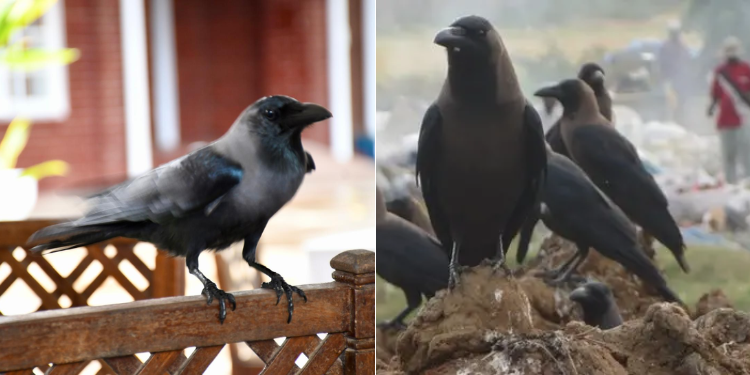
A photo of Indian House crows. Photo/ KWS

FacebookTwitterLinkedInRedditWhatsApp
Advertisement

The Indian house crow has become one of Kenya’s most problematic invasive bird species, with conservationists warning that its rapid spread threatens native wildlife, tourism, public health and aviation safety.

The warning comes after researchers from the National Museums of Kenya confirmed the first sightings of the birds in Nairobi, raising concerns that the species is expanding beyond its long-established range along the Kenyan coast.

Researchers say the birds were recently spotted around Nairobi City Stadium and Burma Market after a resident photographed them before chasing them away. Traders in the area also reported seeing the birds flying and perching nearby.

According to research scientist John Musina, the birds are believed to have followed major transport corridors such as Mombasa Road and the Standard Gauge Railway (SGR), allowing them to move inland from the coast.

How Indian House Crow Landed in Kenya

The Indian house crow (Corvus splendens) is native to the Indian subcontinent but has spread to several countries through maritime trade and shipping.

In East Africa, researchers say Indian house crows were introduced intentionally around 1890 in order to control rubbish.

ADVERTISEMENT

In 1947, the house crow reached Kenya, and since then its numbers have exploded, thanks to the growing human population and the accompanying mounds of garbage, which provide the birds’ main source of food.

Since then, it has become one of Kenya’s most persistent invasive species along the coast, where its population is now estimated in the millions.

Over the years, the birds have gradually expanded beyond the coastal region, with researchers now confirming their presence in Nairobi.

How to Identify the Indian House Crow

The Indian house crow is a medium-sized bird measuring about 40 to 42 centimetres in length.

It has a glossy black head, wings and tail, while its neck and upper breast are grey, giving it a distinctive two-tone appearance.

ADVERTISEMENT

The bird has a slender black beak, dark eyes and strong legs. It is highly social and is often seen moving in noisy groups, communicating through loud, harsh calls.

Unlike Kenya’s native crows, the Indian house crow lives almost exclusively around human settlements where food is readily available.

Habitat and Feeding Habits

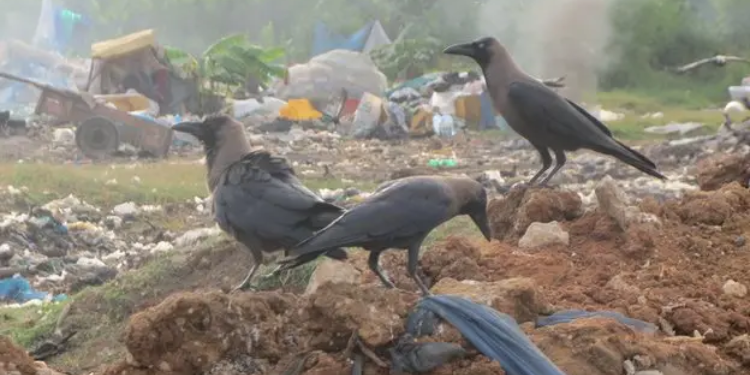
House crows thrive in urban areas, including markets, residential estates, hotels, restaurants, ports, farms and garbage disposal sites.

They are opportunistic feeders with an extremely varied diet, consuming insects, fruits, grains, rodents, reptiles, fish, eggs, chicks, food waste and dead animals.

The birds are also known to snatch food from people in restaurants and outdoor eating areas, making them a nuisance in many tourist destinations along the Kenyan coast.

Scientists say their ability to survive on almost any food source has allowed them to establish large populations in towns and cities.

Musina cautioned that Nairobi’s abundant organic waste could allow the crow population to multiply rapidly if breeding begins before control measures are implemented. 

“One of the things that makes their population explode is the availability of supplemental food sources, like what we have at the dump sites. So, if we don’t act quickly and they start breeding, then the population can explode because they will not be deprived of food sources in a city like this, especially when we have areas where garbage, organic waste, is easy to access,” he said.


Also Read: Migratory Bird with Russian Identification Tag Captured in Kenya


Why the Bird Is Considered Invasive

Conservationists say the Indian house crow poses a serious threat to Kenya’s biodiversity because it competes directly with indigenous bird species.

The birds raid nests, feeding on eggs and chicks of native birds, reducing breeding success and contributing to declining populations.

They also compete with local birds for food and nesting sites, making it difficult for indigenous species to survive.

According to researchers, one of the biggest concerns is the bird’s ability to reproduce rapidly where food is abundant.

They have warned that Nairobi’s numerous garbage dumps and organic waste sites could provide ideal breeding conditions if the birds establish permanent populations.

“One of the things that makes their population explode is the availability of supplemental food sources, like what we have at the dump sites. If we don’t act quickly and they start breeding, then the population can explode because they will not be deprived of food sources in a city like this, especially where organic waste is easy to access,” Musina said.

Threat Beyond Wildlife

The impact of the Indian house crow extends beyond conservation.

The Kenya Wildlife Service (KWS) says the species threatens biodiversity, degrades urban and rural environments, undermines food security and poses public health risks.

The birds thrive around waste disposal sites, where they can carry disease-causing organisms and contaminate food and water sources.

However, the crows do not eat just rubbish or leftovers – they also have a nose for delicacies.

Hotels and restaurants along the coast have also reported frequent incidents of house crows snatching food from guests and leaving droppings around tourist facilities, affecting visitor experiences.

Risk to Aviation

Wildlife experts have also raised concerns about aviation safety.

Researchers warn that if the birds establish large populations near Jomo Kenyatta International Airport (JKIA) and Wilson Airport, they could increase the risk of bird strikes involving aircraft.

They have also warned that expanding populations near Nairobi National Park could disrupt native birdlife and other wildlife.


Also Read: Kenya Airways Confirms Service Disruption After Bird Strike Hits Cape Town Flight


Efforts to Control the Birds

Researchers are preparing an early eradication programme in Nairobi using methods already deployed on the coast.

“The only method that is at our disposal is to use a particular chemical that targets them, and this has to be done in a very controlled way with experts at the helm. The ‘Crows No More’ programme has been tremendously successful, and that is what we are going to learn from,” Musina said.

More than 140,000 house crows were eliminated along the Kenyan coast during the first four months of this year under the ongoing ‘Crows No More’ campaign.

The Kenya Wildlife Service has called for an all-of-society approach to controlling the invasive species, urging county governments to strengthen waste management, local communities to support control measures and institutions to coordinate long-term eradication efforts.

Follow our WhatsApp Channel and X Account for real-time news updates.
Indian House Crow: Origin, Habitat And Why It Is A Threat To Kenya&Amp;Apos;S Biodiversity
The crows are a common sight wherever rubbish is dumped. Photo / Ferdinand Omondi
Tags: Indian House Crow
Annah Nanjala Wekesa

Annah Nanjala Wekesa

Annah Nanjala Wekesa is a journalist at The Kenya Times, with a passion for crafting news-worthy stories that leave a lasting impact. She holds a Bachelor of Arts in Communication and Media from Kisii University. She has honed her skills in the art of storytelling and journalism. Her passion lies in the art of storytelling that resonates with audiences, driving a commitment to delivering news-worthy stories through the lens of integrity and precision. She can be reached at [email protected]

Related Posts

Kenyan 5G Users Consume 53.5Gb Of Data Monthly Compared To 15.1Gb For Standard Mobile Users

What Kenyan 5G Users Are Doing With 53.5GB of Data Every Month

September 23, 2026
:Quickmart Announces Nse Listing With 2 Billion Shares Up For Sale

Quickmart to Sell Half of Company to Investors in Major NSE Listing

September 23, 2026
How Equity Bank’s Internship Programme Helps Graduates Secure Jobs At Leading Global Organizations

How Equity Group’s Internship Programme Helps Graduates Secure Jobs at Leading Global Organizations

September 23, 2026
A Starlink Satellite Internet System And Phone Page. Photo/Starlink.

Starlink Enters Kenya’s Top 5 ISPs as Satellite Connections Surge 54%

September 23, 2026

Leave a Reply Cancel reply

Your email address will not be published. Required fields are marked *

ADVERTISEMENT

The Kenya Times Facebook

LATEST NEWS

  • Cheapest Places to Live in Nairobi in 2026
  • What Kenyan 5G Users Are Doing With 53.5GB of Data Every Month
  • Quickmart to Sell Half of Company to Investors in Major NSE Listing
  • How Much Do Kenyan Footballers Earn From Transfers and Signings?
  • How Equity Group’s Internship Programme Helps Graduates Secure Jobs at Leading Global Organizations
  • Why Your Phone Shows 4G but the Page Still Won’t Load
  • Equity Online for Business Offers Traders a Single Platform for Payments, Collections and Cash Management
  • Starlink Enters Kenya’s Top 5 ISPs as Satellite Connections Surge 54%
  • Benni McCarthy Reveals Why He Does Not Stay in Kenya
  • Why Kenyans Cannot Afford House Loans Despite Cheaper Mortgage Rates
  • KMA Issues Advisory as Dangerous Waves and Winds Intensify
  • Mutahi Kahiga Accuses Deputy Governor’s Driver of Using Govt Car to Ferry Women at Night
  • Sakaja Announces Waiver on Minor Building Repairs for Property Owners
  • What Ruto Secured at UNGA as Kenya Lands New AI, Energy and Trade Partnerships
  • How to Join the National Police Reserve in Kenya: Requirements, Training and Salary
ADVERTISEMENT

Company

About Us

Our Authors

Our Experts

Social Media

Policies

Privacy Policy

House Rules

Standards and Policies

Terms and Conditions

Subscription

My Account

Contact Us

Contact Us

Join Our Team

Advertise With Us

© Copyright 2026 | The Kenya Times | All Rights Reserved

Welcome Back!

Sign In with Facebook
Sign In with Google
Sign In with Linked In
OR

Login to your account below

Forgotten Password? Sign Up

Create New Account!

Sign Up with Facebook
Sign Up with Google
Sign Up with Linked In
OR

Fill the forms below to register

All fields are required. Log In

Retrieve your password

Please enter your username or email address to reset your password.

Log In
Your Privacy and Cookies
We use cookies on our website to give you the most relevant experience by remembering your preferences and repeat visits. By clicking “Accept”, you consent to the use of ALL the cookies.
Do not sell my personal information.
Cookie settingsACCEPT
Privacy & Cookies Policy

Privacy Overview

This website uses cookies to improve your experience while you navigate through the website. Out of these cookies, the cookies that are categorized as necessary are stored on your browser as they are essential for the working of basic functionalities of the website. We also use third-party cookies that help us analyze and understand how you use this website. These cookies will be stored in your browser only with your consent. You also have the option to opt-out of these cookies. But opting out of some of these cookies may have an effect on your browsing experience.
Necessary
Always Enabled
Necessary cookies are absolutely essential for the website to function properly. This category only includes cookies that ensures basic functionalities and security features of the website. These cookies do not store any personal information.
Functional
Functional cookies help to perform certain functionalities like sharing the content of the website on social media platforms, collect feedbacks, and other third-party features.
Performance
Performance cookies are used to understand and analyze the key performance indexes of the website which helps in delivering a better user experience for the visitors.
Analytics
Analytical cookies are used to understand how visitors interact with the website. These cookies help provide information on metrics the number of visitors, bounce rate, traffic source, etc.
Advertisement
Advertisement cookies are used to provide visitors with relevant ads and marketing campaigns. These cookies track visitors across websites and collect information to provide customized ads.
Others
Other uncategorized cookies are those that are being analyzed and have not been classified into a category as yet.
SAVE & ACCEPT
LOGIN | REGISTER
  • Login
  • Sign Up
  • Cart
No Result
View All Result
  • News
    • Latest News
    • Breaking News
    • Investigations
    • Explainers
    • Fact Check
  • Politics
    • Global Politics
    • Conflicts & Security
    • Elections
    • Diplomacy
    • Government & Policy
    • Political Analysis
  • Business
    • Global Economy
    • Markets
    • Technology
    • Startups
    • Energy
    • Finance
  • World News
    • Americas
    • Asia
    • Asia Pacific
    • Africa
    • Europe
    • Middle East
  • Africa
    • East Africa
    • West Africa
    • Southern Africa
    • Central Africa
  • Health
    • Global Health
    • Public Health
    • Health Policy
    • Medical Research
    • Diseases & Conditions
    • Mental Health
    • Nutrition
    • Climate & Health
    • Health Explainers
  • Sports
    • World Cup 2026
    • Athletics
    • Basketball
    • Boxing
    • Cricket
    • Football
    • Formula 1
    • Golf
    • Rugby
  • Weather
    • Climate Business
    • Climate Change
    • Climate Solutions
    • Living Green
  • Culture
    • Arts
    • Film & TV
    • Food and Recipes
    • Lifestyle
    • Music
    • People
    • Travel
  • Opinion
    • Editorials
    • Letters
  • Behind The Brand
  • Contact Us

Not enough quota to unlock this post
Unlock left : 0
Are you sure want to cancel subscription?