Thailand has announced that it reached an agreement with Iran to allow Thai vessels safe passage through the Strait of Hormuz.
Speaking at the Meet the Press Forum, Thai Prime Minister Anutin Charnvirakul said Iran has agreed to allow Thai oil tankers to transit safely through the Strait of Hormuz.
“An agreement has been reached to allow Thai oil tankers to transit safely through the Strait of Hormuz.”
He added that through the agreement, there is greater confidence that disruptions like those seen in early March will not recur.
Iran Removes Ban on Thailand’s Oil Tankers’ Passage at Strait of Hormuz
Anutin Charnvirakul highlighted that over 80% of the crude oil and liquefied natural gas (LNG) passing through the Strait of Hormuz is directed toward Asia.
He explained that Southeast Asia has been bearing the brunt of fuel supply difficulties, with long lines at petrol stations in Thailand becoming increasingly frequent.
The Prime Minister further noted that the government will continue to adapt to evolving situations and adjust measures to minimize the impact on the public.
Also Read: Iran-Backed Rebels Threaten to Disrupt Another Key Global Shipping Lane
This comes after the successful passage of the first Thai vessel through the strategic waterway.
The Thai oil tanker safely passed through the strait after diplomatic coordination between Thailand and Iran. It was also not required to pay to escape the blockade.
The Bangchak Corporation-owned tanker crossed the strategic waterway on Monday after successful talks between Thai Foreign Minister Sihasak Phuangketkeow and Iran’s ambassador to Thailand, Nassereddin Heidari.
Thailand Cargo Carrier Attacked at the Strait of Hormuz
Earlier, the maritime security firm Vanguard Tech announced that the Mayruree Naree, a large bulk carrier registered in Thailand and owned by the Bangkok-based Precious Shipping, was among the three commercial vessels attacked in the Strait of Hormuz.
According to reports, 20 crew members evacuated the vessel during the emergency, while three remained on board to assist with rescue and stabilisation efforts.
Admiral Thadawut Thatpitakkul, Chief of Staff of the Royal Thai Navy, stated that the Navy had received a report that a Thai commercial vessel was fired upon in the Strait of Hormuz, in waters off Oman.
He said Thai naval personnel stationed in Bahrain used their contacts to coordinate with the Omani authorities to assist the entire crew.
Meanwhile, the Islamic Revolutionary Guard Corps (IRGC) claimed that the vessel ignored warnings before attempting to pass through the strategic chokepoint.
Iran Allows Five Nations to Pass Through the Strait of Hormuz
Following the growing conflict in the Middle East, Iran previously said it would not block ships from five friendly countries, including India, from passing through the Strait of Hormuz.
Also Read: Trump Scrambles Another Aircraft Carrier as Iran War Escalates
Ships from Russia, China, Pakistan, and Iraq are also allowed to move safely through the important waterway.
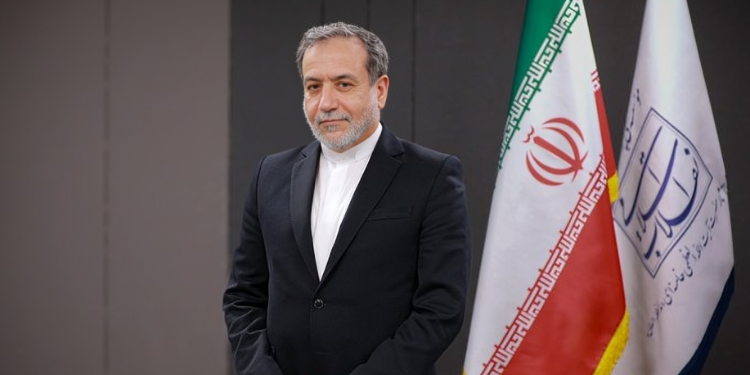
According to Iran’s Foreign Minister Abbas Araghchi, the Strait of Hormuz is not completely closed. He explained that ships from friendly countries are still being allowed to pass.
“Many of the shipowners, or the countries that own these vessels, have contacted us and requested that we ensure their safe passage through the strait. For some of these countries that we consider friendly, or in cases where we have decided to do so for other reasons, our armed forces have provided safe passage,” said Araghchi.
However, Araghchi made it clear that ships from the United States, Israel, and Gulf countries involved in the Middle East conflict will not be allowed to pass through the strait.