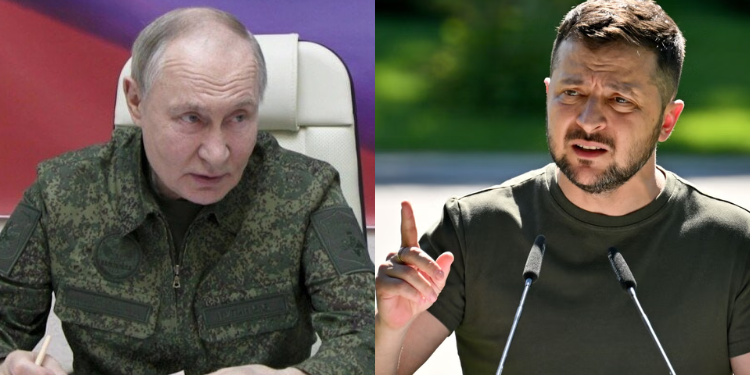
The President of Russia, Vladimir Putin, has announced a 32-hour ceasefire in the war with Ukraine to mark Orthodox Easter. Ukrainian President Volodymyr Zelenskyy has confirmed that Kyiv will respect the temporary ceasefire.
Kremlin said in a statement on Thursday that the ceasefire was ordered by President Vladimir Putin in his role as Supreme Commander‑in‑Chief of the country’s armed forces.
The pause in fighting is set to begin at 4:00 p.m. Moscow time (13:00 GMT) on April 11 and will remain in effect until the end of April 12.
“By the decision of the Supreme Commander‑in‑Chief of the Armed Forces of the Russian Federation, V.V. Putin, in connection with the approaching Orthodox feast of Easter (the Resurrection of Christ), a ceasefire is declared from 16:00 (13:00 GMT) on 11 April until the end of the day on 12 April, ” stated the Kremlin.
Ukraine Agrees to Brief Easter Truce as Russia Halts Operations
Putin directed Defense Minister Andrei Belousov to instruct the Chief of the General Staff, Valery Gerasimov, to halt combat operations on all fronts during the ceasefire.
The Kremlin said Russian troops must remain alert and ready to respond to any provocations or hostile actions. It added that Moscow expects Ukraine to follow Russia’s lead and honor the truce.
Also Read: Russian Drone Strike Hits Civilian Minibus After Failed Easter Ceasefire
The ceasefire will run until midnight on April 12, the day Orthodox Christians in both Russia and Ukraine celebrate Easter.
The move offers a brief pause to allow religious services, family gatherings, and limited humanitarian relief after more than 4 years of continuous fighting.
President Zelenskyy welcomed the announcement, noting that Ukraine had previously called for a ceasefire during the Easter holiday.
In a Telegram statement, Zelenskyy said Ukraine was prepared to take reciprocal steps and would act in line with the truce. He added that people deserve to celebrate Easter without fear and that Russia had an opportunity to avoid resuming attacks after the holiday.
“People need an Easter without threats and a real move towards peace, and Russia has a chance not to return to attacks even after Easter,” wrote Zelenskyy.
The 32-hour ceasefire is akin to 2025’s Easter truce, which lasted about 30 hours and was declared by Russia alone.
That 2025 pause was followed by accusations from both sides of violations, including shelling and drone attacks, that weakened the effect of the truce.
Russia–Ukraine Easter Ceasefire Offers Brief Calm as Talks Remain Stalled
Peace negotiations remain largely stalled, and diplomatic initiatives, including those involving the United States, have produced little progress, with both Moscow and Kyiv continuing to insist on their own terms for any lasting agreement.
Also Read: Russia’s Major Oil Port Set Ablaze After Second Ukrainian Drone Strike in Days
Short holiday ceasefires allow each side to show goodwill for religious and humanitarian reasons without making deeper military or political concessions.
Russia has rejected longer ceasefire proposals from Ukraine, including a 30‑day unconditional pause, arguing that a broader political settlement must first address its key security concerns.
Ukraine has pushed for longer pauses, especially to halt attacks on energy infrastructure, viewing such steps as a way to build trust and revive meaningful negotiations.
Despite the truce, both sides are expected to remain on high alert along the front lines. Experience suggests that claims of violations could emerge quickly once the ceasefire ends late on Sunday.
Still, with the war continuing as a battle marked by heavy losses, drone attacks, and territorial fighting, it brings a doubt whether the truce will lead to any real or lasting reduction in hostilities.