The Government of South Africa has dismissed reports suggesting it is considering a shift to work-from-home arrangements as a response to rising fuel prices.
In a statement on March 25, the Department of Mineral and Petroleum Resources said comments attributed to the Director of Fuel Pricing had been misinterpreted and do not reflect government policy.
“The Department categorically states that these remarks were made in response to a question from the floor during a workshop on fuel pricing mechanisms,” read part of the statement by the Department of Mineral and Petroleum Resources.
South Africa on Workshop Remarks on Remote Working
According to the department, the remarks were made during a workshop on fuel pricing mechanisms and were in response to a question from participants. Working from home was cited only as one of several examples of measures that individuals or organisations could consider to manage increased transport costs.
Also Read: How Middle East War is Pushing Oil Prices up and Is Hurting Kenya, Nigeria and South Africa Scholars
The department stressed that the comments were not presented as a directive, recommendation, or policy proposal, and should not be reported as an official government position.
“It is incorrect to interpret the response given during the workshop as an official policy stance,” the department said, adding that the discussion formed part of a broader engagement on fuel pricing.
The South African government said it remains engaged on issues related to fuel supply, fuel pricing, and the wider cost pressures affecting South Africans. Any changes to policy or official decisions, the department noted, would be communicated through established government channels.
The clarification follows media reports that linked the workshop comments to a possible government-backed move toward remote working as fuel costs continue to rise.
Fuel Pricing Workshop Engagement
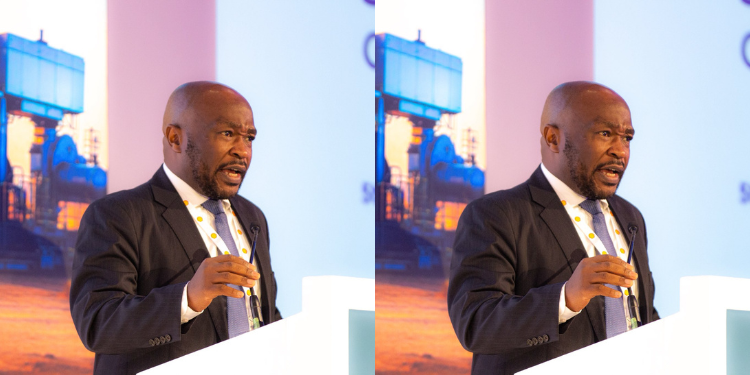
During a workshop on fuel pricing mechanisms, Robert Maake, the Director of the Fuel Pricing Mechanism at South Africa’s Department of Mineral and Petroleum Resources (DMPR), addressed questions from participants on how individuals or organisations could manage the impact of rising fuel and transport costs.
Also Read: New Cost for Americans? USPS Delivery Fees Plan Could Hit Millions Amid Fuel Surge
In responding, Maake cited working from home as one possible fuel‑saving measure, rather than a government intervention or policy position.
“One fuel‑saving tip or recommendation is working from home to reduce demand and save on the cost,” Maake said during the discussion.
Citizens of South Africa are paying more for petrol and diesel because fuel prices have been rising around the world, which is linked to the war in the Middle East, which has disrupted the movement of oil tankers through the Strait of Hormuz, an important route for global oil transport. As a result, the price of oil on the international market has gone above $100 a barrel.
Since South Africa imports most of its fuel, global price increases have led to higher fuel prices at local petrol stations. The government has said that changes in fuel prices are mainly driven by international events, while households and businesses are facing higher travel and operating costs due to the global fuel situation.