The White House on Wednesday, June 24, sent Congress an $87.6 billion supplemental funding request that allocates the bulk of the money to cover the costs of the four-month war in Iran, even as the Trump administration negotiates a possible end to the conflict.
White House Seeks Billions for Iran War as Peace Talks Continue
The package, formally transmitted in a letter from Office of Management and Budget Director Russell Vought to House Speaker Mike Johnson, totals just under $88 billion.
It includes $67 billion for the Defense Department, along with smaller amounts for the Coast Guard, State Department, and other agencies tied to the operation known as Epic Fury.
The request comes as U.S. and Iranian officials have already signed a memorandum of understanding and are discussing Tehran’s nuclear program after the deal started with the reopening of the Strait of Hormuz. Trump has signaled that a major peace deal could be close.
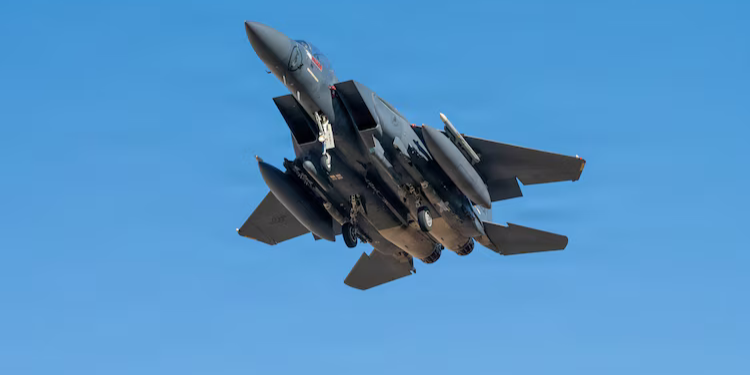
Defense spending accounts for the largest share, with the Pentagon portion including $21 billion to buy more munitions and rebuild stockpiles that were drawn down during the fighting.
Also Read: Trump Praises Iran After Tehran Bends on U.S. Demands
Another $17.3 billion would fund operational costs, $1.7 billion for military readiness, and $1.5 billion for fuel.
The proposal also sets aside $2.4 billion for drones, $5.1 billion for cybersecurity and autonomy programs, and $12.1 billion for classified efforts.
Additional war-related funds will go to other agencies, with the Coast Guard getting $2 billion. The FBI would receive $40 million, and the Energy Department $95.5 million.
The State Department request totals more than $1.5 billion, much of it for diplomatic security, counter-drone systems, and embassy protection.
That includes $300 million to repair or secure U.S. facilities damaged in Bahrain, Dubai, Karachi, Lahore, and Riyadh.
Democrats and Republicans Split over Funding Package
Lawmakers from both parties have grown uneasy about pouring more money into the Iran-U.S. conflict. Many Democrats oppose the war outright and call it illegal.
Sen. Chris Murphy of Connecticut said the package “seems designed to repel Democratic votes” and amounts to “paper over the massive mistake of the Iran war.”

Sen. Mazie Hirono of Hawaii said she cannot support funding what she views as an illegal conflict, especially with domestic programs facing cuts.
Sen. Chris Coons of Delaware noted that only a small slice of the bill holds much appeal for Democrats, such as infrastructure projects.
Also Read: U.S. Lifts Iran Oil Restrictions as Tehran Returns to Global Energy Markets After 8 Years
On the Republican side, Sen. Roger Wicker of Mississippi, chairman of the Senate Armed Services Committee, backed the request.
He said it would help restore readiness, speed up production of munitions, hypersonics, strike weapons, and drones, and keep U.S. forces in top shape. “I urge Congress to act without delay,” Wicker said in a statement.
The supplemental lands on top of the administration’s separate push for a $1.5 trillion base defense budget next year, which would mark a roughly 40 to 50 percent increase over current levels.
Earlier internal discussions had floated war-related supplemental figures as high as $200 billion before the final ask came in lower.
Farm Aid and Ebola Response Included in Proposal
In what appears to be an effort to increase support, the White House bundled several domestic priorities. It seeks $11.1 billion in aid for farmers in Florida hit by tariffs, higher costs, and weather-related damage.
Farm-state Republicans had pushed for even more, around $17 billion. The bill also includes $1.4 billion to fight the Ebola outbreak in Central Africa, covering medical evacuations, protective equipment, surveillance, and efforts to keep the virus from reaching the United States. Another $550 million would go towards global health security.
Funds for Infrastructure, Pensions, and Fuel Policy Changes
Non-war items include $500 million for restoration and construction projects in Washington, D.C., $1 billion for the modernization of Penn Station in New York City, and $600 million for the General Services Administration. The package would also increase pension benefits by $1 billion.
The administration also wants to revise rules for hemp-derived cannabinoid products to allow “appropriate full-spectrum CBD products” while closing loopholes that let some sellers skirt regulations.
It also calls for year-round sales of E15 fuel, a move long sought by farm-state lawmakers to help corn producers.