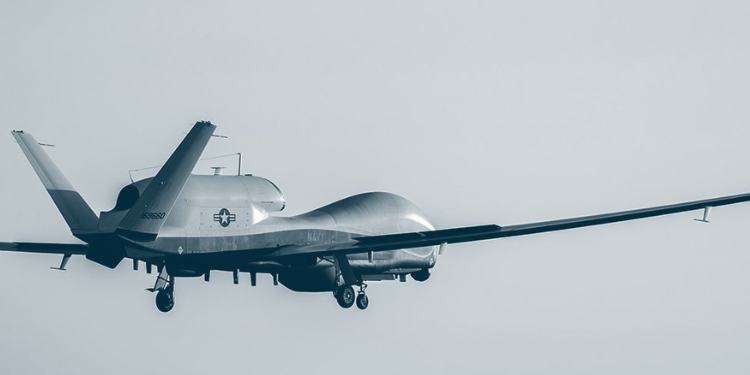
The U.S. Navy has confirmed that it lost a $240 million valued MQ‑4C Triton reconnaissance drone last week, following reports that the aircraft disappeared over the Persian Gulf after declaring an in‑flight emergency.
According to a Navy aviation mishap brief, the incident occurred on April 9, 2026, at an undisclosed location. The MQ‑4C crashed with no injuries to personnel.
The confirmation comes five days after flight tracking data showed the drone squawking code 7700, an international emergency signal, while descending rapidly from 50,000 feet to below 10,000 feet before disappearing from public tracking systems.
The aircraft had been conducting surveillance over the Strait of Hormuz for nearly three hours and was returning toward its base at Naval Air Station Sigonella in Italy when the emergency occurred.
MQ‑4C Triton capabilities
The Navy did not specify whether the drone was shot down or suffered a technical failure. The MQ‑4C Triton is one of the most advanced unmanned surveillance aircraft operated by the U.S. Navy.
Developed by Northrop Grumman under the Broad Area Maritime Surveillance program, the drone is designed for persistent maritime intelligence, surveillance, and reconnaissance missions.
The Triton can operate at altitudes above 50,000 feet for more than 24 hours, with a range of 7,400 nautical miles and a top speed of approximately 368mph.
It is equipped with advanced sensors, including an active electronically scanned array radar, electro‑optical and infrared systems, and electronic intelligence equipment.
The aircraft can track vessels, capture high‑resolution imagery, and relay communications across the battlefield. It has a length of 47.6 feet (14.5 meters), a wingspan of 130.9 feet (39.9 meters), a height of 15.4 feet (4.7 meters), and weighs approximately 32,250 pounds (14,628.4 kilograms).
Also Read: Trump Sends More Troops and Jets to Middle East Despite Iran Ceasefire
The platform achieved initial operational capability in 2018 and has been deployed in the Indo‑Pacific and the Middle East. It works in coordination with the Boeing P‑8 Poseidon, providing real‑time intelligence over large maritime zones.
While the Triton flies autonomously, it’s operated by a five-person crew safely on the ground at each station (Air Vehicle Operator, Tactical Coordinator, 2 Mission Payload Operators, SIGINT Coordinator).
“This system allows us to have a powerful presence anywhere in the world, gathering critical information to protect our forces, without putting our pilots in harm’s way,” the U.S. Navy describes the autonomously operated system.
“The MQ-4C Triton is more than just a drone; it represents the future of naval aviation, extending our vision and securing our maritime interests around the clock.”
Rising costs of the Iran war
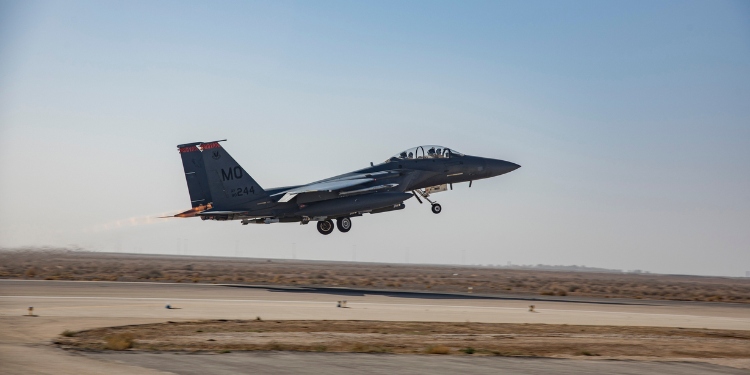
The loss of the Triton adds to mounting U.S. military costs in the war against Iran. Since the launch of Operation Epic Fury on February 28, thirteen service members have been killed and 365 injured. The Pentagon reports that 46 aircraft have been damaged or destroyed.
The hardware replacement cost for destroyed assets is estimated at $1.45 billion, while the Center for Strategic and International Studies (CSIS) places the broader figure, including infrastructure damage and munitions expenditure, at more than $3 billion. Overall, the war has cost between $25 billion and $30 billion to date.
Also Read: Russia Lifts Lid on How Trump and Netanyahu May Plan Iran Ground Operation
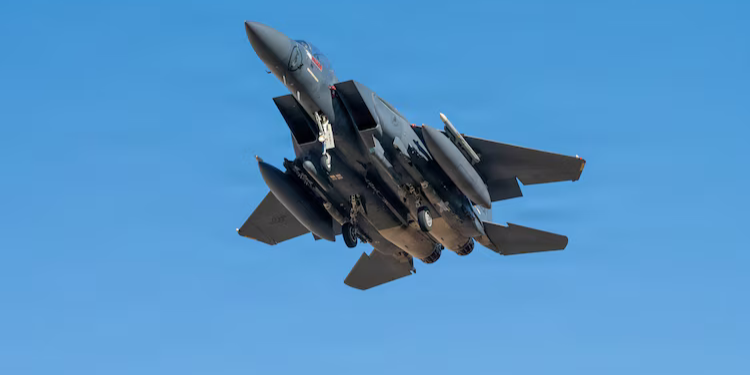
Among the losses are four F‑15E Strike Eagles, at least 17 MQ‑9 Reaper drones, KC‑135 refueling tankers, an E‑3 Sentry airborne warning aircraft, and an F‑35A Lightning II stealth fighter that sustained combat damage for the first time in its operational history.
The single costliest day came on March 1, when three F‑15E Strike Eagles were shot down by Kuwaiti air defenses in a friendly fire incident. Six U.S. service members were killed the same day in an Iranian drone attack on the Port of Shuaiba in Kuwait.
On March 12, a KC‑135 Stratotanker crashed over Iraq during a refueling operation, killing all six crew members. On March 19, an F‑35A was struck by Iranian air defense fire, forcing an emergency landing.
Iran also launched a coordinated strike on Prince Sultan Air Base in Saudi Arabia on March 27, destroying an E‑3 Sentry AWACS aircraft and a KC‑135 Stratotanker, and damaging several others.
On April 3, Iran shot down an F‑15E Strike Eagle over southwestern Iran. A complex rescue operation involving Delta Force and Navy SEAL Team Six recovered the weapons officer after nearly 48 hours, at a cost estimated at $300 million.