Gov. Mikie Sherrill said Friday that two New Jersey residents are being monitored after possible exposure to hantavirus linked to a deadly outbreak on a cruise ship.
The New Jersey Department of Health received notice from the Centers for Disease Control and Prevention regarding possible exposures.
The two residents were not passengers on the MV Hondius, but came into contact with an infected person during air travel abroad after that person left the ship.
Both individuals show no symptoms so far but remain under the monitoring of local health officials. The governor says the risk to the general public in New Jersey stays very low. There are no confirmed hantavirus cases in the state.
Sherrill’s office released a statement that aligns with the health department’s update, notifying the public that there were no confirmed cases as of Friday, May 8.
“The New Jersey Department of Health has been notified by the CDC that two New Jersey residents were potentially exposed to a person infected with hantavirus after that individual departed from the cruise ship MV Hondius,” it reads.
“The residents were not passengers on the ship, and the potential exposure occurred during air travel abroad.”
The governor added that officials will keep residents informed as more details emerge.
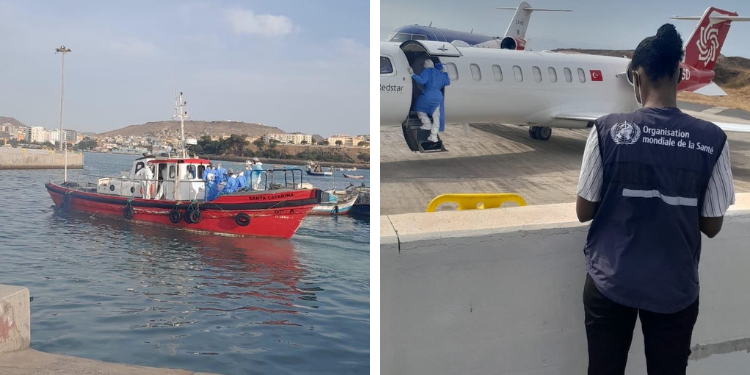
The situation originates from an outbreak on the Dutch-flagged MV Hondius, which left Argentina on April 1 for an expedition cruise that included stops in Antarctica and remote islands.
At least three passengers have died, and several others have fallen ill. The ship now sits off the coast of Cape Verde with about 150 people still aboard.
It is expected to head toward the Canary Islands off Spain’s coast for evacuations and further health checks.
Health authorities identified the Andes virus as the strain involved. This hantavirus is carried by rodents in South America.
It stands out as the only known hantavirus with documented person-to-person transmission, though such spread remains rare and usually needs close, prolonged contact or exposure to body fluids.
Most hantaviruses are transmitted when people inhale dust or particles from the droppings, urine, or saliva of rodents.
Signs of Hantavirus
Symptoms usually start like the flu and may include fever, fatigue, muscle aches, headaches, and dizziness.
They can quickly worsen into severe breathing problems and hantavirus pulmonary syndrome, which carries a high death rate without early hospital care.
So far, there is no specific cure. Doctors provide supportive treatment to help patients breathe and manage fluid levels.
International health agencies, including the World Health Organization, are tracking passengers who left the ship earlier and coordinating contact tracing across at least 12 countries.
Several countries have reported cases or placed people under watch. In the United States, officials in states like Georgia, Arizona, and Texas also monitor returning travelers who show no symptoms.
New Jersey health leaders emphasized that everyday contact does not easily spread this virus.
The two local residents had close contact with a confirmed infected person on a flight or in travel settings.
They are now isolated under medical watch while officials check for any signs of illness. The incubation period can last up to 45 days, so monitoring will continue.
Hantavirus cases remain uncommon in the U.S., and person-to-person spread of the Andes strain has never led to large epidemics.
The governor’s announcement comes as the cruise ship crisis draws global attention. Spanish authorities are currently preparing to handle passengers and the crew members once they arrive.
Meanwhile, residents with questions are being urged to contact their local health department.
Anyone who has traveled recently and develops flu-like symptoms followed by shortness of breath should seek medical care right away and report any possible exposure.
Sherrill’s office said the state will continue to work closely with the CDC and follow all recommended protocols.