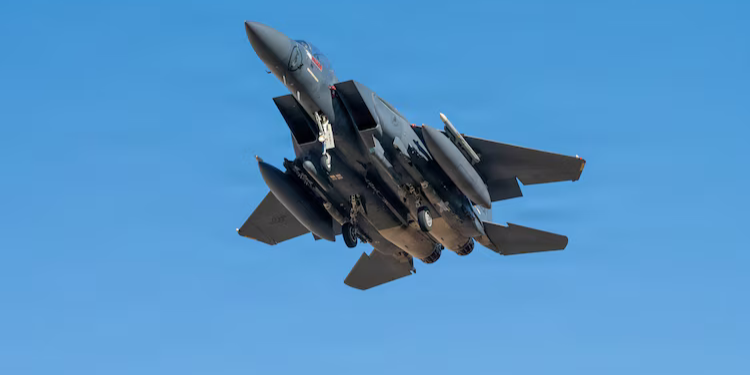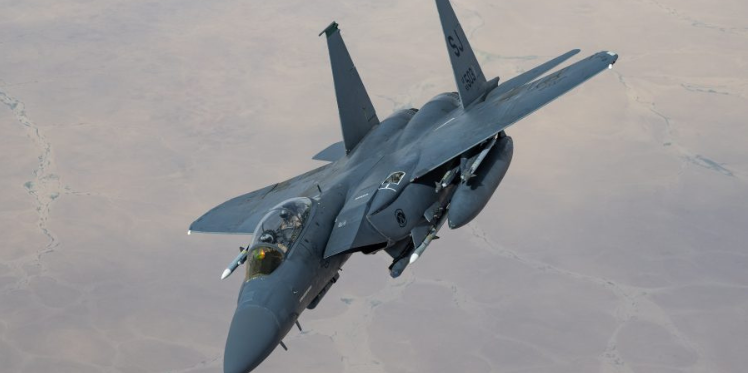
Armed Iranian tribesmen opened fire on low-flying American search-and-rescue helicopters on Friday, April 3, as U.S. forces hunted for two missing pilots whose F-15 fighter jet was shot down over Iranian territory earlier in the day.
The Tehran Times released footage showing men with bolt-action rifles aiming and shooting upward at a helicopter passing overhead in a rugged area.
Iranian media described the shooters as local tribes actively trying to bring down the rescue aircraft during the operation.
A U.S. official confirmed that a mission to locate the two aircrew members is underway. The Pentagon and U.S. Central Command have not issued any public comment on the shoot-down or the ongoing search.
Iranian state media said the F-15 Strike Eagle was brought down during combat operations, releasing several images of the wreckage, including images of what they described as an ejection seat and dispersed debris from the aircraft.
Civilians were urged to hand the pilots over to the authorities.
The two pilots ejected and are believed to be evading capture somewhere inside Iran.
Daily Mail reports that Iranian television channels have been making appeals to civilians, pledging a “valuable reward” to anyone who captures the pilots and hands them over to authorities, dead or alive.
Some broadcasts even went further, telling viewers to shoot at any low-flying U.S. aircraft spotted in the region.
Also Read: Zelensky Details How Ukraine Can Help Trump Reopen Strait of Hormuz
Videos circulating on social media showed what appeared to be U.S. helicopters, likely UH-60 Black Hawks, operating at low altitude deep inside Iran, sometimes accompanied by a C-130 aircraft.
The low flights are typical for combat search-and-rescue missions but leave the aircraft exposed to ground fire from small arms and other weapons.
This incident signifies the first time Iranian forces have successfully shot down a U.S. warplane since the conflict started in late February.
The war started on a high note with American and Israeli strikes on Iranian military sites, air defenses, and nuclear facilities.
Earlier in the war, three F-15s were lost in a friendly-fire incident over Kuwait, but those crews were recovered without Iranian involvement.
U.S. officials take.
U.S. officials have routinely denied many previous Iranian claims of aircraft shoot-downs, pointing to thousands of successful sorties flown without losses to enemy action.
In this case, however, American sources acknowledged that a search-and-rescue effort is active inside Iran.
The downed jet was part of the ongoing air campaign that has included hundreds of strikes. Iran has hit back with missiles, drones, and attempts to disrupt shipping through the Strait of Hormuz, which carries about one-fifth of the world’s oil and LNG in normal times.
Interruptions have pushed oil prices higher and forced the rerouting of tankers.
President Trump has responded to the shipping crisis with bold statements suggesting the U.S. could take control of the strait and its oil resources if needed, calling it a potential source of profit.
Also Read: Trump Floats Seizing Hormuz Oil as Iran Claims Downed U.S. Jet, Pilot Search Intensifies
‘With a little more time, we can easily open the Hormuz Strait, take the oil, and make a fortune. Would it be a “gusher” for the world?” Trump posted on Truth Social
The search for the pilots has become a tense operation across Iranian territory. Local tribes and civilians, encouraged by state media, are actively looking for the Americans.
The combination of ground fire directed at rescue helicopters and public calls to capture or shoot at U.S. aircraft raises the risks for everyone involved in the mission.
Until this article is published, no confirmation has come in on whether the pilots made contact via radio or emergency beacons.
Iranian forces and armed locals are still going on with their hunt, while American helicopters kept flying low in attempts to locate and extract the crew.
Meanwhile, diplomatic talks have been happening behind the scenes, especially after President Trump threatened to strike power plants in Iran if the deal is not reached, including if the crucial Strait of Hormuz is not opened on or before April 6, 2026.