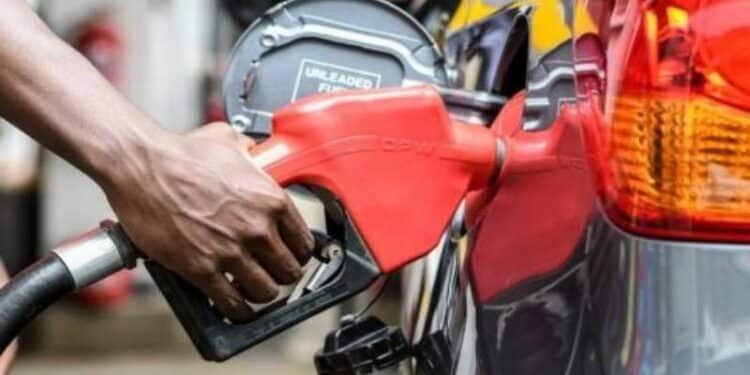
The Energy and Petroleum Regulatory Authority (EPRA) has announced a reduction in fuel prices following a Treasury directive lowering VAT on petroleum products from 13% to 8%.
In a press release issued on Wednesday, April 15, EPRA announced that Super Petrol and Diesel prices in Nairobi will drop by Ksh9.37 per liter, while Diesel drops by Ksh10.21 per liter.
Kerosene prices remain unchanged, though the subsidy level has been reduced from Ksh108.10 per liter to Ksh96.56 per liter. The recalculated maximum retail pump prices will apply from April 16 until May 14, 2026.
“Pursuant to Legal Notice No. 70 dated April 15, 2026, the Cabinet Secretary for National Treasury has revised the Value Added Tax rate from 13% to 8%,” EPRA announced.
In Nairobi, Super Petrol, Diesel, and Kerosene will now retail at Ksh197.60, Ksh196.63, and Ksh152.78. On the other hand, Super Petrol, Diesel, and Kerosene will retail at Ksh194.32, Ksh193.35, and Ksh149.49 in Mombasa.
The move follows President William Ruto’s announcement of a temporary VAT cut earlier on Wednesday, though legal experts warn the measure may exceed statutory limits without parliamentary approval.
EPRA issues clarification
Speaking after the notice, Engineer Edward Kinyua, Director of Petroleum and Gas at EPRA, explained the adjustment:
“The prices we published yesterday were based on 13% VAT, which was a reduction of 3%. Today, as per the directive from his excellency, VAT has been reduced again from 13% to 8%, and that is why you have seen that press release which has just come out, reducing the price of petrol by KShs.9.37 and reducing the price of diesel by 10 shillings to retail at KShs.196. It will be effective from midnight today,” he told Citizen TV.
The announcement comes just hours after President Ruto’s public address in Kisii County, where he declared that VAT on fuel would be lowered from 16% to 8% for three months to cushion Kenyans against high pump prices.
Also Read: Ruto Defends G-to-G Fuel Deal After Outrage Over Increased Fuel Prices
Ruto framed the move as part of a broader Ksh6.5 billion intervention to shield consumers from rising global oil costs. However, legal experts have raised concerns about the statutory framework governing VAT.
A reduction to 8% falls outside the legal band. It would require a parliamentary amendment, as Kenya’s Value Added Tax Act sets the standard rate at 16%, with Section 6(1) allowing the Cabinet Secretary for the Treasury to vary the rate by up to 25%—effectively permitting a minimum of 12%.
This means that while EPRA has implemented the directive, questions remain about its enforceability under existing law.
Nyoro’s alternative proposals
The VAT cut coincides with growing political pressure to ease fuel costs. Kiharu Member of Parliament Ndindi Nyoro had proposed a wider fiscal package, including a Ksh5 billion subsidy top-up, the removal of the Ksh7-per-liter fuel levy introduced in 2024, and a five-percentage-point VAT reduction.
Nyoro argued that combined measures could reduce pump prices by up to Ksh27 per liter, largely through tax and levy adjustments rather than global oil price shifts. His proposal reflects mounting calls to roll back recent tax increases that have fueled public discontent.
Also Read: Ndindi Nyoro Outlines 5 Urgent Measures to Bring Fuel Prices Down to KSh 179
The EPRA review released on April 14 showed that fuel prices had increased sharply. Super Petrol rose by Ksh28.69 per liter, Diesel by Ksh40.30 per liter, while Kerosene remained unchanged.
In Nairobi, pump prices had climbed to Ksh206.97 for Super Petrol, Ksh206.84 for Diesel, and Ksh152.78 for Kerosene, effective for 30 days, while in Mombasa, the same were to retail at Ksh203.69, Ksh203.56, and Ksh149.49 respectively.
These increases fed into transport and logistics costs, adding inflationary pressure across the economy.
EPRA had on Tuesday announced that the government will further cushion the consumers through the Petroleum Development Levy (PDL) Fund by utilizing approximately Ksh6.2 billion to stabilize the pump prices.