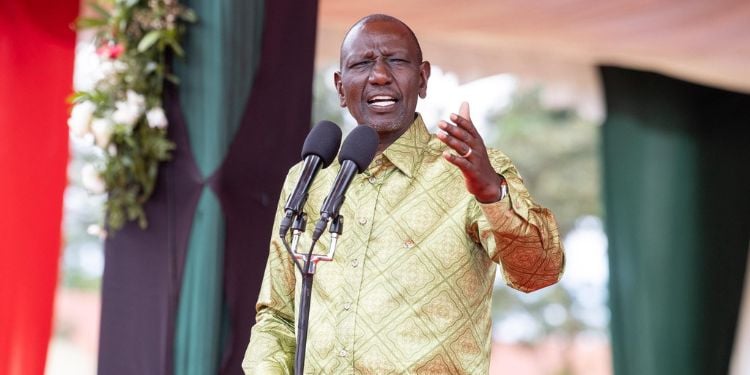
President William Ruto has defended the government-to-government (G-to-G) fuel import arrangement, saying it has helped make Kenya one of the most competitive fuel markets in the region and ensured a steady supply.
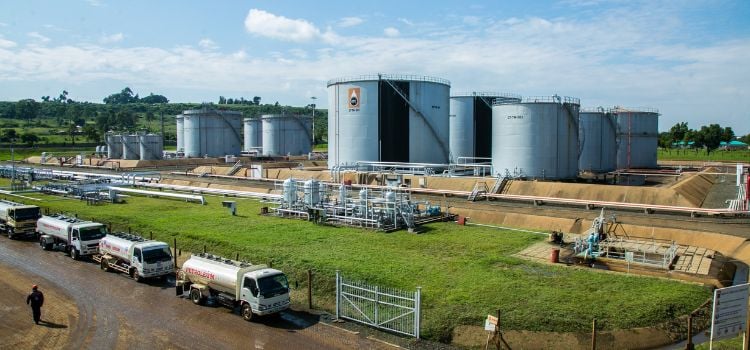
Addressing the fuel saga at a roadside gathering in Kisii County, President Ruto said the arrangement has secured enough fuel for the country at a time when some nations are struggling with shortages.
Ruto noted that Kenya’s fuel situation cannot be compared with that of other countries, citing the “stability” created by the G-to-G framework.
“There are countries that do not have fuel, but in Kenya we have enough fuel, but in Kenya we have enough fuel,” the President said in his tour on Wednesday, adding that the G-to-G deal has strengthened Kenya’s position as a reliable fuel destination.
Ruto Defends KSh6.5bn Fuel Subsidy Plan
President Ruto also revealed that the government has spent KSh6.5 billion to cushion consumers from high fuel costs.
He said the funds were used to subsidize fuel prices to protect Kenyans from sharp price increases and keep pump prices within reach.
Also Read: Ruto Announces Ksh10Million Allocation for New University Project in Nyamira County
The President said that the global fuel situation remains strained, but Kenya has managed the challenge responsibly.
He emphasized that the country has sufficient fuel at its pumps, unlike some other nations experiencing shortages.
President Ruto noted that the government has taken deliberate steps to prevent fuel prices from rising excessively, including reducing Value Added Tax (VAT) on fuel to ensure that Kenyans are not burdened by high fuel costs.
The President added that the government will continue to closely monitor the situation to safeguard the economy and protect the transport sector.
Ruto stated that his government remains committed to maintaining economic stability and competitiveness while steadily driving the country’s transformation agenda.
Fuel Price Sparks Concern as Operators Face Supply Gaps
His remarks came hours after the Energy and Petroleum Regulatory Authority (EPRA) set the maximum pump prices of petrol at KSh 206.97 per liter and diesel at KSh 206.84 per liter for the period from April 15 to May 14, 2026.
Also Read: Ruto Defends Cooperation Deal with Sakaja, Clears Air on Taking Over Nairobi
Motorists have since expressed concern over a sharp increase in fuel prices, with the Kenya Transporters Association advising members to revise transport charges upwards.
In a press briefing on Wednesday, April 15, the Matatu Owners Association announced a 25% increase in the bus fares, citing the expected rise in operating costs.
Upcountry travel company Ena Coach also became one of the first service providers to adjust its fares after the announcement of new fuel prices.
Earlier on Tuesday, reports indicated that retail costs in some areas had risen to as high as KSh 450 per liter.
Speaking to KBC, motorists and boda boda operators in Ilbissil, Kajiado County, said normal transport activities have been significantly affected, forcing them to adjust fares to cover rising fuel costs.
“We have just witnessed a tanker delivering fuel to one of the petrol stations, but they are not selling it at the pump. Instead, it is being siphoned into small containers and sold along the roadside at an exorbitant price of Ksh 450 per liter,” a matatu operator said in an interview.
The motorists say the situation has severely affected transport operations, forcing them to transfer the high fuel costs to passengers.