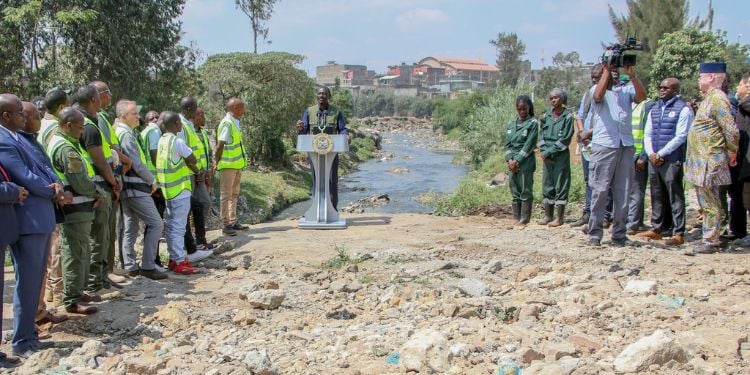
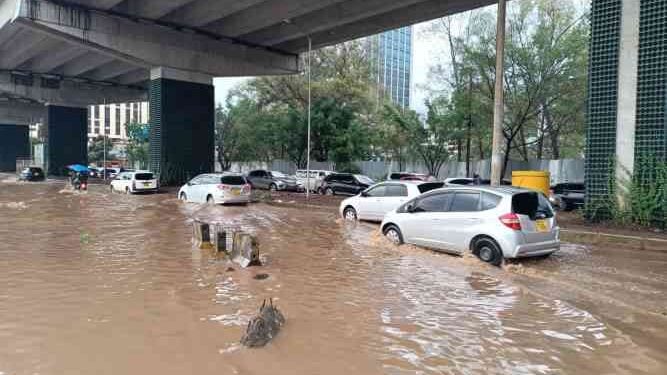
The Commissioner of the Nairobi Rivers Commission, Mumo Musuva, has linked Nairobi’s recurring floods to poor environmental management, noting that more than half of the city lies within floodplain areas.
Speaking on Citizen TV Kenya’s Sauti ya Mwanachi, Musuva added that rapid urbanization has worsened the situation, with nearly 70 per cent of residents living in informal settlements, many of which are located along riverbanks, leaving it highly vulnerable during heavy rains.
He noted that the seasonal floods are compounded by high levels of pollution in Nairobi’s rivers, which contribute to over 40 per cent of diseases in urban areas and more than 30 per cent in rural communities.
The commissioner highlighted that Nairobi’s rivers are part of the larger Athi–Galana–Sabaki system, which stretches 390 kilometres across nine counties, with Nairobi, via the Athi River, being one of them.
“More than half of Nairobi actually sits within floodplain areas. But Nairobi is just one small part of a big picture. And that is the Nairobi rivers are part of what is known as the Athi- Galana Sabaki River system, which is the second largest river system in Kenya,” he said.
Why Nairobi Flooding Is More Than Just Heavy Rains
Musuva also cited rapid urbanization and the growth of informal settlements along riverbanks and wetlands, historically designated floodplains, as key factors driving the city’s vulnerability.
The commissioner raised an alarm over the growing public health risks linked to pollution in Nairobi’s River systems.
He said that contaminated water is driving a significant share of disease cases in both urban and rural areas.
Mumo Musuva noted that more than 30 per cent of diseases recorded in rural areas are attributed to contaminated water, while over 40 per cent of illnesses in cities are linked to polluted rivers.
Also Read: Govt to Build Mega Trunk Sewer as Efforts to Transform Nairobi River Enter Crucial Stage
He explained that while the river system plays a critical role in supporting livelihoods, including supplying over 30 per cent of the country’s food, pollution remains a major concern, with potential links to emerging health challenges.
The Commissioner added that the contamination is affecting not only water quality but also the broader food ecosystem, as produce irrigated with polluted water finds its way back into urban markets.
He urged urgent interventions to address pollution, enforce planning regulations, and protect riparian zones to reduce the impact of future floods.
Also Read: Unpacking Nairobi River Regeneration Project and How it Will Tackle Waste and Flooding
Rivers Commission Launches Projects to Tackle Flooding, Pollution, and Riparian Recovery
Musuva said that the Nairobi Rivers Commission is addressing four key challenges, including sewage management, riparian area reclamation, flooding, and solid waste control, in partnership with county governments.
He noted that the first phase of catalytic projects focuses on the Nairobi River, one of the three rivers that traverse the city, where most pollution originates.
Efforts include constructing new trunk sewer infrastructure on both sides of the river, an initiative nearly 30 years overdue, to tackle sewage pollution.
The projects also integrate the blue-green economy, revitalizing markets such as Gikomba while reclaiming riparian zones along floodplains and upstream highlands to mitigate flooding risks.
Musuva highlighted that these interventions are creating jobs, citing the Climate Works program under the Rivers Regeneration initiative, which employs over 46,000 youth in river clean-up and infrastructure projects.
He said the initiatives are restoring Nairobi’s rivers, improving environmental standards, and correcting decades of neglect, stressing that the projects deliver tangible value for public investment.