Appointing judges to the Kenyan Supreme Court is anchored in the Constitution of Kenya, operationalized through the Judicial Service Act, 2011.
The appointment process is designed to ensure transparency and to select highly qualified individuals to serve in the country’s apex court.
The Judicial Service Commission (JSC) oversees the process, applying structured procedures as outlined in the Judicial Service Act.
Supreme Court Judges Recruitment Process Guided by Law
According to the Judicial Act 2011, the process begins with the formal declaration of vacancy by the Judicial Service Commission when a position arises, such as filling the position of a dead judge or retired judge.
This is then followed by an advertisement from the commission inviting the public to apply, published in a public notice.
Applicants are required to submit detailed documentation, including academic credentials, professional experience records, and references.
Also Read: Katwa Kigen Among 5 Shortlisted for Supreme Court Judge Position
Once applications are received, the Commission undertakes shortlisting, selecting candidates who meet the constitutional and statutory thresholds.
This stage is guided by merit, experience, and compliance with legal requirements. The Judiciary’s recruitment framework emphasizes fairness and equal opportunity.
Shortlisted candidates then undergo background checks and vetting, a rigorous process that examines their professional conduct, integrity, and past legal performance.
This includes scrutiny of their legal practice, judicial record, and adherence to ethical standards as set out in Chapter Six of the Constitution.
The process also incorporates stakeholder engagement, in which members of the public and relevant institutions are invited to submit memoranda on the shortlisted candidates.
Public Interviews and Final Appointment
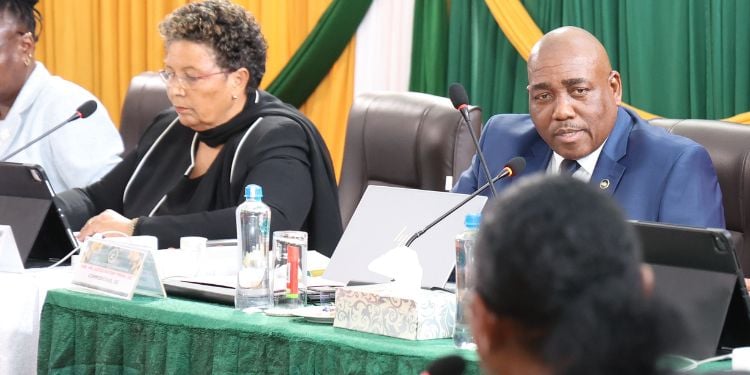
Candidates who pass the vetting stage are invited for interviews conducted by the Judicial Service Commission.
These interviews are held in public, chaired by the Chief Justice, reinforcing openness in the selection process.
Candidates are required to present the following documents during the interview:
Valid original clearance certificates from the Kenya Revenue Authority, the Higher Education Loans Board, the Directorate of Criminal Investigation, the Ethics and Anti-Corruption Commission, a recognized Credit Reference Bureau, and a Certificate of Good Standing from the Law Society of Kenya.
Original copies of National Identity card, testimonials, professional certificates, academic transcripts, and certificate of admission to the roll of Advocates
candidates are assessed on legal knowledge, judicial temperament, communication skills, and overall suitability for service at the highest level of the judiciary.
Following the interviews, the Commission nominates and notifies the successful candidates. The names of the selected individuals are forwarded for formal appointment.
In line with constitutional provisions, the President appoints the judges, completing the process.
For positions such as Chief Justice and Deputy Chief Justice, nominees must also undergo parliamentary approval before appointment.
Qualifications Required for Supreme Court Judges
According to Article 166 (3) of the Constitution, an individual is qualified for appointment to be a judge of the Supreme Court if they meet the following requirements
- Legal Training – the individual should hold a law degree from a recognized university and be an advocate of the High Court of Kenya or possess an equivalent qualification in a common-law jurisdiction.
- Experience – one must have at least 15 years of experience as a superior court judge, or as a distinguished academic, judicial officer, or legal practitioner.
- Integrity – they must demonstrate high moral character, integrity, and impartiality, fulfilling the requirements of Chapter Six of the Constitution on Leadership and Integrity
For Supreme Court judges, specifically the Chief Justice, Deputy Chief Justice, and other judges
- At least 15 years of relevant experience, which can include having worked as a superior court judge,
- Having worked as a distinguished academic, judicial officer, legal practitioner, or in other relevant legal fields
- A combination of the above, totaling 15 years of experience from Kenya or another Commonwealth common-law jurisdiction, counts
Also Read: Meet Anne Waceke, the Only Lady Shortlisted for Supreme Court Judge Position
Salary and Remuneration
Salaries for judicial officers are set by the Salaries and Remuneration Commission (SRC) and reviewed periodically.
Salary for a Supreme Court judge is a consolidated gross monthly pay of KSh 956,192 and a Maximum of KSh 1,268,996.
Functions of the Judge of the Supreme Court
A Judge of the Supreme Court serves in the Supreme Court of Kenya, and the function and jurisdiction of the Court are provided for under Articles 163 and 168 of the Constitution including:
- Have exclusive original jurisdiction to hear and determine disputes relating to the elections to the office of the President arising under Article 140.
- To hear and determine in its appellate jurisdiction, appeals from the Court of Appeal and any other Court or Tribunal as prescribed by national legislation.
- Give an advisory opinion at the request of the National Government, any State organ, or any County Government with respect to any matter concerning County Government.
- Hear and determine an appeal by a judge aggrieved by a decision of a Tribunal formed under Article 168 of the Constitution, to consider the judge’s removal.
- Consider applications emanating from a declaration of a state of emergency.