
Iran has rejected U.S. demands to hand over its enriched uranium shortly after reimposing restrictions on the Strait of Hormuz.
Deputy Foreign Minister Saeed Khatibzadeh on Saturday, April 18, called the proposal a “non-starter” and signaled a major obstacle in ongoing negotiations with Washington.
Speaking to the Associated Press, Khatibzadeh said Tehran would not agree to transfer any enriched nuclear material to the United States, despite recent statements by U.S. President Donald Trump.
“I can tell you that no enriched material is going to be shipped to the United States,” Khatibzadeh said. “This is a non-starter, and I can assure you that while we are ready to address any concerns that we do have, we’re not going to accept things that are non-starters.”
He added that Iran is not prepared to hold a new round of face-to-face talks with U.S. officials as long as Washington maintains what he described as “maximalist” demands regarding Iran’s nuclear program.
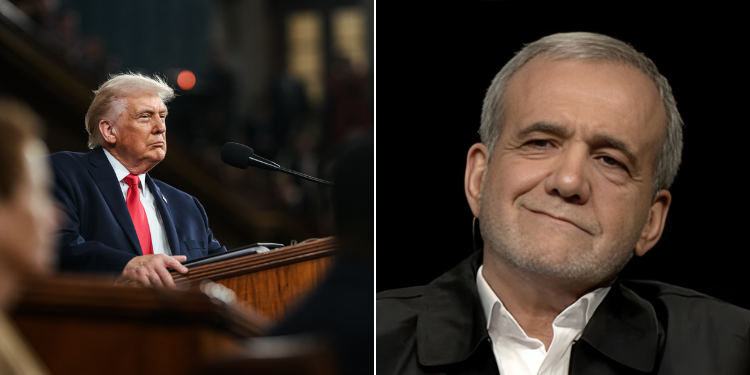
The comments come after President Trump on Friday said the United States was prepared to go into Iran with its counterparts to retrieve enriched uranium, claiming Tehran had “agreed to everything.”
Also Read: Confusion as Iran Rejects Trump Claim It Agreed to Transfer Uranium to U.S
Khatibzadeh disputed that characterization, saying there have been exchanges of messages between the two sides but accusing Washington of holding firm on demands Iran considers excessive.
Hormuz restrictions reimposed
The diplomatic standoff comes alongside renewed tensions in the Strait of Hormuz, where Iran has reimposed restrictions after reversing its earlier decision to reopen the vital shipping lane after the United States said it would maintain its blockade of Iranian ports.
Iranian officials on Saturday said the strait has been restored to its “previous status” and is now under “strict management and control” by the country’s armed forces.
The decision was confirmed by Iran’s Khatam al-Anbiya joint military command and reiterated by officials, including Deputy Foreign Minister Khatibzadeh and the naval command of the Islamic Revolutionary Guard Corps (IRGC).
The move comes amid reports of security incidents in the waterway. On Saturday, the United Kingdom Maritime Trade Operations (UKMTO) said vessels linked to the IRGC had fired at a tanker attempting to transit the strait.
According to the agency, the vessel was approached by two gunboats about 20 nautical miles northeast of Oman before shots were fired.
The tanker and its crew were reported safe, and authorities said investigations were ongoing. Separately, Reuters reported that an Indian-flagged vessel carrying crude oil had also been attacked while in the strait.
Iran links restrictions to U.S. blockade
Iranian officials said the renewed restrictions would remain in place unless the United States ensures “full freedom of navigation” for vessels traveling to and from Iran.
Also Read: Blow to Trump as Iran Closes Strait of Hormuz Again
Speaking on the sidelines of a diplomatic forum in Antalya, Khatibzadeh said Washington could not impose a blockade while Iran sought to facilitate safe passage.
“The U.S. cannot impose their will to do a siege over Iran, while Iran, with good intention, is trying to facilitate safe passage through the Strait of Hormuz,” he said.
On its part, the IRGC said several vessels passed through the strait yesterday, but “due to the violation of the ceasefire conditions, the American enemy did not lift the naval blockade of Iranian vessels and ports.
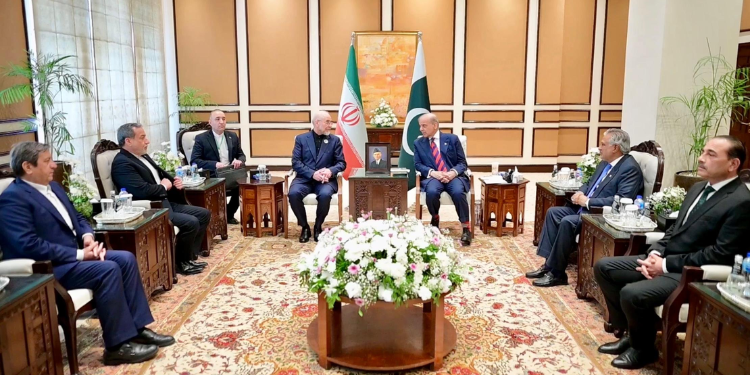
Iran’s parliament speaker, Mohammad Bagher Ghalibaf, has revealed details of behind-the-scenes negotiations with the U.S., describing a tense standoff involving a U.S. minesweeper during talks in Islamabad. He reaffirmed that “the Strait of Hormuz is under the control of the Islamic Republic”.
Speaking in a television interview, Ghalibaf said Iranian officials directly confronted the U.S. delegation over naval movements in the Strait of Hormuz.
Reversal after brief reopening
The speaker added Tehran viewed attempts by Washington to clear mines in the strait as a “violation of the ceasefire”, warning that the situation was close to escalating. He added that both sides were heading towards renewed confrontation, “but the enemy retreated”.
Iran had declared the strait open to commercial shipping just a day earlier, following a ceasefire agreement linked to developments in Lebanon and broader regional negotiations.
The waterway had originally been closed on March 4 in response to U.S.-Israeli airstrikes on Iran. The Saturday reversal comes after U.S. President Donald Trump on Friday said the American blockade of Iranian ports would “remain in full force” until a permanent agreement is reached.
Trump also indicated that the temporary ceasefire — brokered by Pakistan and due to expire midweek — may not be extended.
Despite the renewed tensions, diplomatic efforts are continuing with U.S. and Iranian delegations expected to hold a second round of talks, although no date has been confirmed.
According to Agence France-Presse, Egypt’s foreign minister said there were hopes for an agreement “in the coming days.”