
Fresh details have emerged on how Kenya’s first confirmed Ebola patient sought treatment at several health facilities in the Democratic Republic of Congo (DRC) before travelling through Uganda and arriving in Nairobi without his infection being detected.
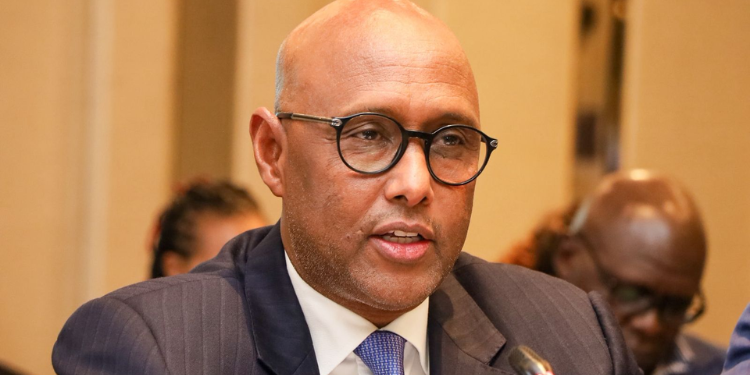
Africa Centres for Disease Control and Prevention (Africa CDC) Emergency Preparedness Director Dr Wessam Mankoula said the 40-year-old businessman was initially treated for other illnesses after developing a fever and a rash in September.
According to Mankoula, doctors suspected a skin infection and prescribed treatment, but the patient’s condition did not improve. Ebola was not suspected during his visits to several health facilities in the DRC.
“We have multiple diagnoses that vary from one station to another. At the beginning, he presented with fever and a rash,” Mankoula explained.
“They suspected it was a staphylococcal infection, and he began getting treatment,” he added.
The businessman had lived in the DRC for seven years. He spent much of late August and early September in Bas-Uélé Province, visiting towns including Buta, Aketi and Likati.
His symptoms reportedly began around September 15, when he was given antibiotics and sent home. Two days later, he was admitted to Tongo Etandi Health Centre in Bondo, where he remained until September 19.
Despite his fever and rash, the illness was not identified as Ebola, and he continued seeking medical care as his condition failed to improve.
How the Patient Travelled From DRC to Kenya
After spending weeks seeking treatment, the businessman travelled through several locations in the DRC before crossing into Uganda and boarding a commercial flight to Nairobi.
He travelled from Buta to Kisangani by road before taking a domestic flight to Beni in North Kivu Province. On October 1, he continued his journey towards Kasindi, a busy border town near Uganda.
Beni and Kasindi are in North Kivu, a province that has been heavily affected by the Ebola outbreak in the DRC.
Uganda imposed restrictions on movement across its border with DR Congo shortly after the outbreak began in May.
However, t he businessman crossed into Uganda later that day and travelled by road to Kampala before proceeding to Entebbe International Airport.
It remains unclear whether the businessman passed through an official health checkpoint when he crossed the border.
On October 3, he boarded a commercial flight to Nairobi, arriving at Jomo Kenyatta International Airport (JKIA).
The journey raised concerns about how the patient moved through different locations and crossed international borders while his infection remained undetected.
Also Read: How Ebola Is Treated and What Happens to Patients After Isolation
Why Airport Screening Did Not Detect Ebola
The patient passed through airport screening in Uganda and Kenya without being identified as a suspected Ebola case.
Ugandan officials said his temperature was normal when he underwent screening before boarding his flight to Nairobi.
Mankoula said investigators were examining whether medication the patient had taken could have suppressed his temperature. He also noted that the patient might not have had a fever at the time of screening.
Temperature checks alone cannot identify every Ebola case, particularly when an infected person does not have a fever at the time of screening.
The patient was also not flagged as a suspected case when he arrived at JKIA. He was able to go through thermal scanners at the airport undetected.
The Ministry of Health said the medication the man had taken during his prolonged illness temporarily masked his symptoms, allowing him to bypass airport thermal scanners.
A relative collected him from the airport and drove him to Nairobi Hospital.
By then, he was reportedly experiencing fever, chills, muscle pain, a sore throat and bleeding.
Also Read: Results Finally Out in Suspected Kenya Ebola Case
Tests Confirm Ebola Infection
Health workers isolated the patient after he reached Nairobi Hospital, where samples were collected for testing.
Laboratory tests conducted by Kenya’s National Virology Reference Laboratory and the Kenya Medical Research Institute confirmed that he had contracted Bundibugyo virus disease, a form of Ebola.
The World Health Organization confirmed that the patient had travelled from the DRC through Uganda before arriving in Nairobi, where he was taken to hospital and isolated.
His condition deteriorated, and he died on the night of October 5, two days after arriving in Kenya.
His burial was conducted on October 6 under strict infection-control measures to reduce the risk of further transmission.
The case prompted health authorities to trace people who might have come into contact with him during his journey and after his arrival in Kenya.
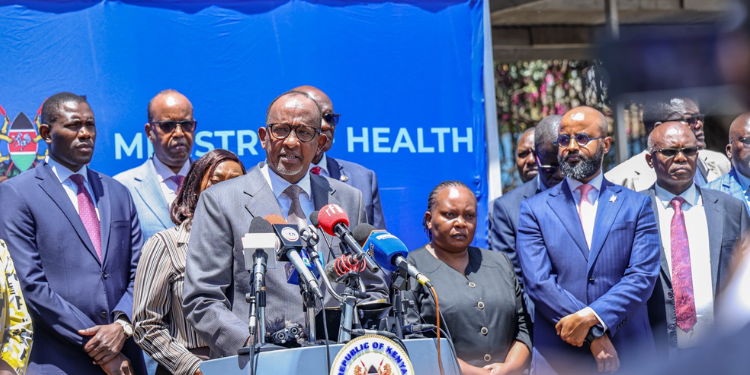
The Ministry of Health has now identified 66 people who may have been in contact with him after he arrived in the country.
“57 contacts have been identified and will keep on increasing, and as of this morning, 66 of those contacts have been accounted for at our National Police Service Hospital, and the number is increasing,” Health CS Aden Duale said.
Follow our WhatsApp Channel and X Account for real-time news updates.