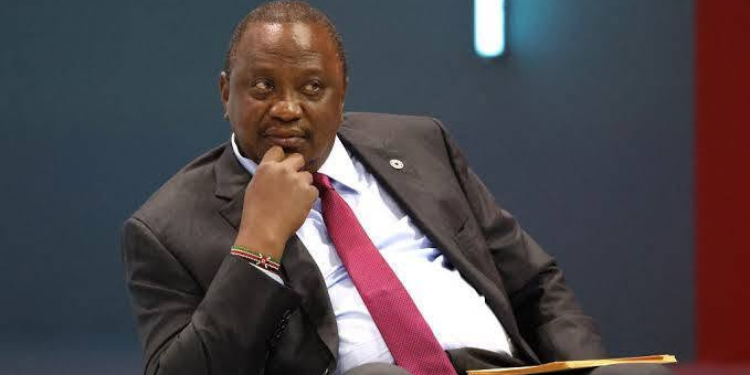
The Kenyatta family’s extensive land ownership has long been a subject of public debate in Kenya’s political and economic history.
From Parliament and election campaigns to court cases and public discourse, questions surrounding how the family accumulated its land continue to generate interest.
While it is accepted that the Kenyatta family ranks among Kenya’s largest private landowners, the exact size of its land portfolio has never been officially established.
Understanding how the family became one of Kenya’s largest landowners requires looking at Kenya’s colonial land policies, the settlement schemes introduced after independence, private land purchases, and the history of land administration in the country.
Colonial Land Policies Set the Stage for the Kenyatta Family’s Land Empire
The story of the Kenyatta family’s landholding begins long before the country attained independence in 1963.
During British colonial rule, millions of acres of fertile agricultural land were alienated from African communities and reserved for European settlers in what became known as the “White Highlands.”
Indigenous communities were displaced from their ancestral lands, creating inequalities that would later shape Kenya’s land politics.
As the country prepared for independence, Britain and the incoming Kenyan government agreed on a market-based land transfer programme.
Instead of confiscating settler farms, the British government provided financial support that enabled the Kenyan government to purchase farms from willing European sellers.
These farms were then transferred through the Settlement Fund Trustees (SFT), a government agency established to finance land purchases and settle Africans on former settler land
Programmes such as the Million-Acre Settlement Scheme were intended to resettle landless Kenyans while maintaining agricultural production.
Also Read: Where Is Uhuru Kenyatta Today? Inside the Former President’s Life After State House
Independence Opened New Opportunities
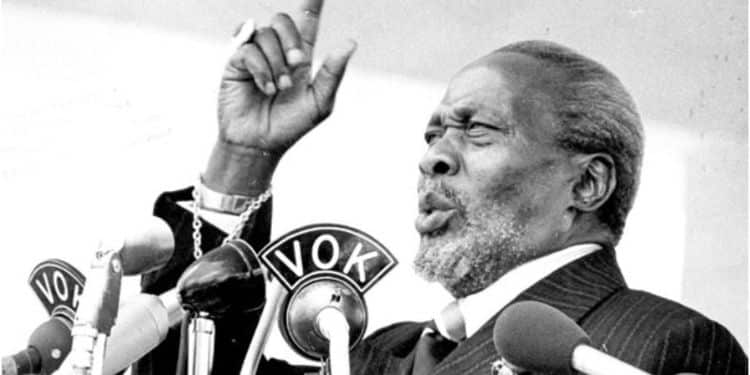
When Kenya gained independence in December 1963, founding President Jomo Kenyatta inherited the responsibility of implementing these settlement programmes.
Thousands of Kenyans acquired land through government settlement schemes, cooperative societies and land-buying companies.
Wealthier individuals, politicians, professionals, and businesspeople also purchased former settler farms through private transactions financed by banks or other sources.
The period witnessed changes in land ownership, particularly in Central Kenya, Rift Valley and parts of the Coast, where former settler farms changed hands.
Historical records show that Jomo Kenyatta also acquired private agricultural land during this period through purchases and farming enterprises.
Over time, members of the Kenyatta family expanded their interests in agriculture, livestock farming and commercial property.
Settlement Schemes Were Meant for the Landless
The primary objective of the settlement schemes was to address historical inequalities by settling landless Africans.
According to later government inquiries, many of the early schemes achieved this objective.
However, over time, concerns emerged that some allocations benefited politically connected individuals, senior government officials, and influential businesspeople rather than the intended beneficiaries.
This marked the beginning of a public debate over whether political influence affected access to land after independence
Also Read: Millions Uhuru Kenyatta Earned as President and What He Gets in Retirement
The Ndung’u Commission Examined Historical Land Allocation
In 2003, President Mwai Kibaki appointed the Commission of Inquiry into the Illegal and Irregular Allocation of Public Land, commonly known as the Ndung’u Commission.
The commission was tasked with investigating how public land had been allocated from independence onwards and recommending corrective measures.
Its 2004 report concluded that illegal and irregular allocation of public land had occurred under successive administrations. The commission found widespread abuse of presidential powers over public land, unlawful allocations involving government institutions, forests, trust land and settlement schemes, and political patronage in land distribution.
Regarding settlement schemes, the commission observed that while many early allocations met their intended objectives, later allocations increasingly favored politicians, public officers, councilors and other influential individuals instead of landless Kenyans.
Over the years, various figures have circulated regarding the amount of land owned by the Kenyatta family.
Some politicians, activists and media reports have claimed the Kenyatta family owns between 200,000 and 500,000 acres of land across counties including Kiambu, Nakuru, Laikipia, Trans Nzoia, Uasin Gishu and the Coast region.
For instance, a 2004 investigation by The Standard estimated that the extended Kenyatta family owned about 500,000 acres of land, citing independent surveyors and unnamed Ministry of Lands officials.
However, the report noted that the land was held under different family members’ names, making it difficult to determine the family’s total holdings with certainty.
As a result, while the family’s extensive landownership is acknowledged, the precise size of its holdings remains unconfirmed.
Business Expansion Beyond Agriculture
Besides farming, the Kenyatta family has over the decades expanded its interests into hospitality, banking, dairy farming, media and real estate through various companies and investments.
The family’s best-known agricultural properties include the Gicheha Farm in Nakuru County, one of Kenya’s largest dairy farms, and extensive ranches in Laikipia County, including Northlands Ranch.
The family also owns Northlands City in Ruiru, Kiambu County, a mixed-use real estate development planned on thousands of acres of land.
Beyond agriculture and real estate, members of the family have interests in several businesses, including Brookside Dairy, Mediamax Network Limited, and have historically held significant shareholding in NCBA Group following the merger of NIC Bank and Commercial Bank of Africa (CBA), which was associated with the Kenyatta family.
Follow our WhatsApp Channel and X Account for real-time news updates.