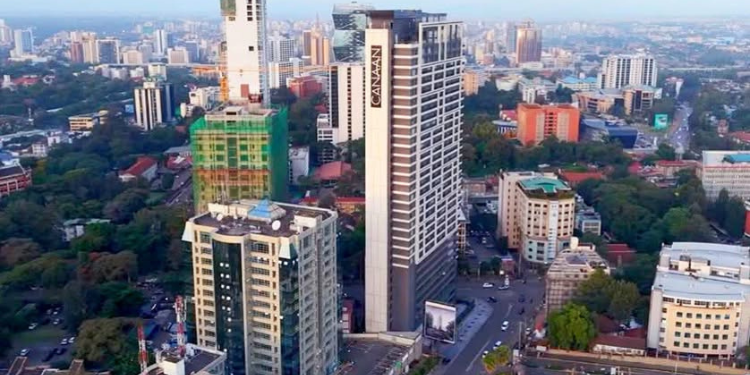

Property prices in Nairobi’s suburbs increased by 0.9 per cent in the second quarter of 2026, pushing the average home price to KSh33.1 million, according to the latest HassConsult House Price Index.
The growth, however, slowed compared to the first quarter when prices increased by 1.1 per cent, indicating a moderation in the pace of recovery.
The house price index quarter 2 report shows that all the 14 Nairobi suburbs surveyed recorded price growth, with Ridgeways, Karen and Lavington leading the increase.
Ridgeways recorded the highest quarterly growth at 3.4 per cent, with average property prices reaching KSh85.2 million.
Karen followed with a 3.2 per cent increase, pushing average prices to KSh113.4 million, while Lavington recorded a 3.1 per cent rise to KSh82.5 million.
Nairobi Suburbs: House Price Changes (Q2 2026)
| Nairobi Suburb | Quarterly Change | Annual Change | Change Since July 2016 |
|---|---|---|---|
| Ridgeways | +3.4% | +9.4% | 1.59 Fold |
| Karen | +3.2% | +14.0% | 1.50 Fold |
| Lavington | +3.1% | +14.0% | 1.33 Fold |
| Runda | +2.8% | +8.4% | 1.21 Fold |
| Loresho | +2.2% | +12.1% | 2.08 Fold |
| Gigiri | +2.0% | +4.0% | 1.20 Fold |
| Lang’ata | +2.0% | +3.0% | 1.69 Fold |
| Westlands | +2.0% | +8.9% | 1.28 Fold |
| Kileleshwa | +1.7% | +5.0% | 1.18 Fold |
| Kitisuru | +1.2% | +1.1% | 1.17 Fold |
| Kilimani | +0.9% | +8.1% | 1.39 Fold |
| Muthaiga | +0.1% | +1.6% | 1.85 Fold |
| Nyari Estate | +1.4% | -1.5% | 1.65 Fold |
| Spring Valley | +2.4% | +8.7% | 1.30 Fold |
Ridgeways recorded the strongest quarterly growth at 3.4 per cent, with average property prices reaching KSh85.2 million.
Karen followed with a 3.2 per cent increase, pushing average prices to KSh113.4 million, while Lavington recorded a 3.1 per cent rise to KSh82.5 million.
On an annual basis, houses in Karen and Lavington recorded the highest growth, both increasing by 14 per cent over the past year.
Satellite Towns Face Falling House Prices
While Nairobi suburbs continued their recovery, satellite towns experienced renewed pressure during the quarter.
Property prices in satellite towns declined by 0.6 per cent to KSh14.52 million, although the drop was smaller compared to the 0.9 per cent contraction recorded in the previous quarter.
The report shows that eight out of 10 satellite towns recorded declining house prices during the period.
Ongata Rongai recorded the largest decline among houses, with prices falling by 2.7 per cent to KSh15.6 million.
Ngong followed with a 2.5 per cent decline, while Kiambu recorded a 1.9 per cent drop.
Other towns that recorded falling prices included Kitengela, Kiserian and Juja.
Satellite Towns Where House Prices Fell or Increased
| Town | Quarterly Change | Annual Change |
|---|---|---|
| Ongata Rongai | -2.7% | -2.3% |
| Ngong | -2.5% | -6.0% |
| Kiambu | -1.9% | -4.8% |
| Kitengela | -1.4% | +2.4% |
| Kiserian | -1.3% | -0.2% |
| Athi River | -0.5% | +3.2% |
| Limuru | -0.3% | +0.5% |
| Juja | -0.1% | +2.6% |
| Ruiru | +0.9% | +5.5% |
| Tigoni | +1.0% | +7.1% |
The apartment market also remained under pressure, with six out of nine satellite apartment markets recording price declines.
Also Read: Kenya Inflation Hits Highest Level in Nearly Two Years as Food, Transport and Housing Costs Rise
Nairobi Apartment Price Trends
| Area | Quarterly Change | Annual Change |
|---|---|---|
| Syokimau | +2.4% | +10.2% |
| Riverside | +1.9% | +3.0% |
| Kilimani | +1.6% | +3.8% |
| Muthangari | +1.2% | +3.3% |
| Thika | +1.0% | +0.3% |
| Kileleshwa | +0.9% | +2.0% |
| Lang’ata | +0.7% | +7.6% |
| Parklands | +0.2% | +0.1% |
| Ruaka | -0.5% | -4.8% |
| Upperhill | -0.6% | -4.4% |
| Lavington | -1.1% | -5.1% |
| Westlands | -1.0% | -6.5% |
Westlands recorded the weakest apartment performance, with prices declining 1.0 per cent during the quarter and 6.5 per cent annually.
Lavington apartments declined by 1.1 per cent quarterly and 5.1 per cent annually, while Upperhill recorded recorded a 4.4 per cent annual decline.
Rising Costs Put Pressure on Buyers
HassConsult attributed the weaker performance in satellite towns to rising household costs and tighter economic conditions.
During the quarter, inflation increased from 4.4 per cent in March to 6.7 per cent in May, before easing slightly to 6.4 per cent in June.
The higher cost of living affected household purchasing power, making buyers more sensitive to property prices.
“Despite resilient occupier demand, satellite towns continue to face greater price pressure than Nairobi’s suburbs, reflecting the sensitivity of their buyer base to rising household costs and tighter economic conditions,” HassConsult Co-CEO and Creative Director Sakina Hassanali said.
Also Read: How Nairobi’s Mlango Kubwa Estate Got Its Name
Rental Market Remains Strong Across Nairobi
Despite changes in property sale prices, demand for rental housing remained steady in both Nairobi suburbs and satellite towns.
Rental prices in Nairobi suburbs increased by 1.4 per cent during the second quarter, while satellite town rents grew by 1.1 per cent.
In Nairobi suburbs, Runda recorded the highest quarterly rental growth at 3.4 per cent, followed by Ridgeways at 3.2 per cent.
Among satellite towns, apartments in Ongata Rongai recorded the strongest rental growth at 3.5 per cent, followed by Athi River at 3.2 per cent and Mlolongo at 3 per cent.
The report noted that continued rental demand reflects Kenya’s housing shortage, rapid urbanization and low mortgage access.
Property Returns Continue to Attract Investors
Property yields in Nairobi suburbs remained unchanged at 7.4 per cent, while satellite town yields increased slightly from 5.3 per cent in the first quarter to 5.4 per cent.
HassConsult noted that some property markets continued to record double-digit annual returns, competing favourably with government securities such as Treasury bills and bonds.
The report showed that long-term property values have continued to rise despite short-term market differences.
In Nairobi suburbs, property values have increased 2.09 times since December 2007, while satellite town property values have grown 3.10 times over the same period.
Satellite Towns Still Offer Lower Entry Prices
Despite recent declines, satellite towns remain cheaper compared to Nairobi suburbs.
The average property price in satellite towns stood at KSh14.52 million, less than half the average price of homes in Nairobi suburbs.
The lower prices continue to attract buyers seeking larger homes at more affordable rates, although developers and sellers face challenges from changing demand patterns.
HassConsult said the slowdown should be viewed as part of the normal property cycle rather than a collapse in housing demand.
“The softening of sale prices in satellite towns should be viewed within the context of the property cycle rather than as a weakening of underlying housing demand,” Hassanali said.
Follow our WhatsApp Channel and X Account for real-time news updates.