


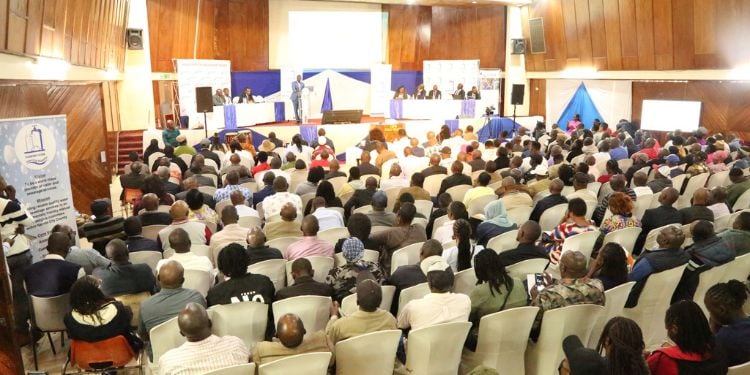
The Nairobi Water and Sewerage Company (NWSC) has received the approval to review water and sewerage charges for customers across the city. The Water Services Regulatory Board (WASREB) has approved a revised tariff structure for the Nairobi City Water and Sewerage Company Limited (NCWSC), paving the way for changes to bills.
According to WASREB, the approval follows NCWSC’s application, stakeholder participation, and public consultations conducted under the Water Act, 2016.
The changes were officially published in the Kenya Gazette notice dated February 27, which sets the new tariff structure for the financial years 2025/2026 to 2028/2029.
According to the notice, the regulator reviewed NCWSC’s application, considered public input, and concluded that the tariff adjustment is necessary to help the company improve service delivery, strengthen its operations, upgrade aging infrastructure, and ensure the water supply remains reliable for Nairobi residents.
Also Read: Nairobi Water Supply Restored After 26-Hour Shutdown
Increase in Water New Tariffs
These rates help readers understand how different groups will be billed under the new structure.
“WASREB has determined that an upward tariff review is justified for NCWSC to improve service delivery, operate sustainably, and protect consumer interests by meeting the tariff conditions attached to the tariff,” read part of the gazette.
| Consumer Categories | Consumption Block (m3) | Approved Tariff (Ksh/M3) |
| Domestic/Residential | 1-6 | 68 |
| Domestic | 7-20 | 85 |
| Domestic | 21-50 | 91 |
| Domestic | 51-100 | 101 |
| Domestic | 101-300 | 109 |
| Domestic | >300 | 117 |
| Gated Communities | Per cubic meter | 85 |
| Public Schools, Colleges, and Universities | 1-600 | 78 |
| Public Schools, Colleges, and Universities | 600-1200 cubic meters | 94 |
| Commercial/ industrial | 1-50 | 91 |
| Commercial | 51-100 | 101 |
| Commercial | 101-300 | 109 |
| Commercial | 300 | 117 |
Sewerage charges have also been updated. Customers connected to the sewer system will now be billed based on 75% of their total water consumption, using the sewerage rates assigned to their category. This means that the more water a customer uses, the higher the sewerage cost will be.
In addition, the gazette outlines how billing will be handled for customers with faulty or non-functional water meters. These customers will be charged using the average of their last three months of water usage until their meter is fixed or replaced.
These changes matter because they directly affect how much Nairobi households and businesses will pay every month for essential water and sewerage services.
Also Read: City Residents to Pay More as Nairobi Water Seeks Upward Tariff Review
Sewerage charges are calculated based on 75% of the water a customer uses, and different categories have different rates. The table below shows the key sewerage charges under the new system.
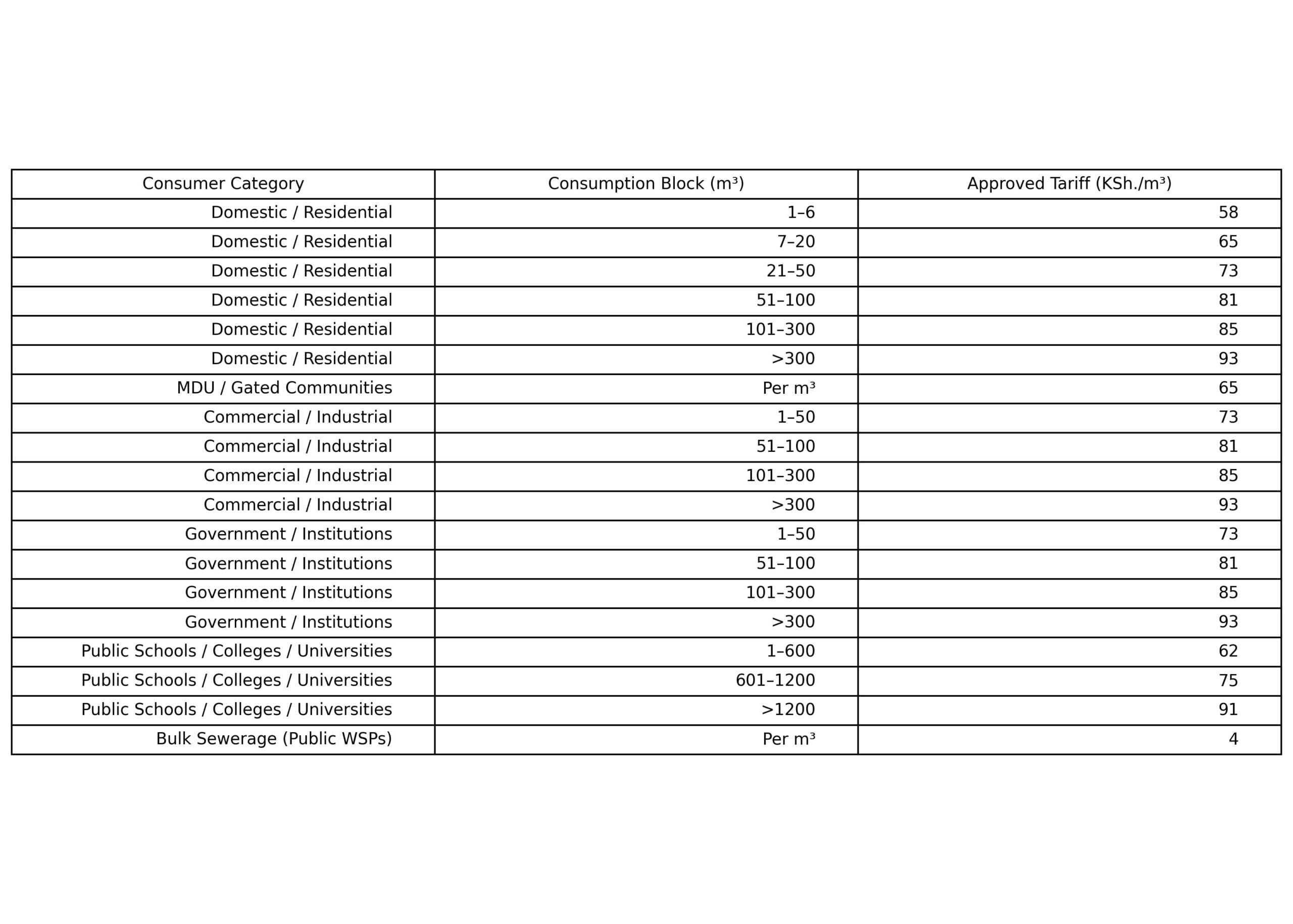
What the Nairobi Water New Tariff System Means for Customers
The revised tariffs introduce a system where customers pay based on how much water they use, and the rates vary depending on the type of consumer.
Households using small amounts of water will pay less per unit, while those using higher volumes will fall into more expensive billing brackets.
Different groups, including residential homes, apartments, and gated communities, businesses, government offices, public schools, universities, and special users such as water kiosks, each have specific rates.
These categories help ensure that every consumer group pays fairly based on their usage levels and the cost of supplying them.
Follow our WhatsApp Channel and X Account for real-time news updates.



![Tsc Jss Teacher Qualifications 2026: Kcse Grades, Degrees And Subjects Required [Full List]](https://cdn.thekenyatimes.com/2026/07/Stakeholders-TSC-X-2026-06-09-36.png "Tsc Addresses Circular On Deployment Of Degree And Diploma Teachers To Junior School")