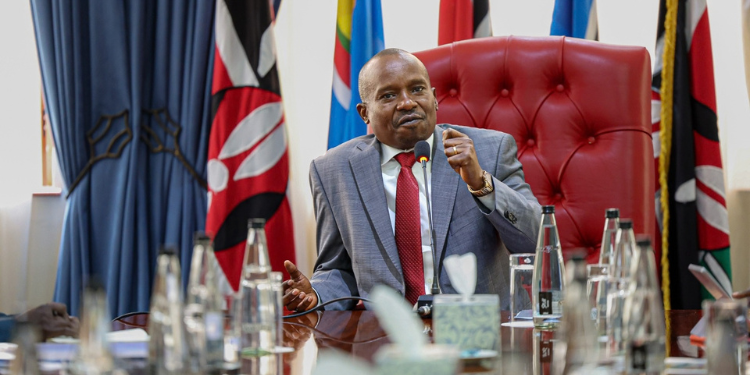
Moses Kuria, former Senior Economic Advisor to President William Ruto, has warned that the fuel prices are likely to increase as the conflict in the Middle East intensifies.
In a statement on April 1, 2026, Kuria cited that April will be the toughest and most brutal month of all times as the real effects of the regrettable war in Iran will take toll on the global economy.
He added that the effects of the disruption of energy supply in the Strait of Hormuz will have a great impact on the global economy.
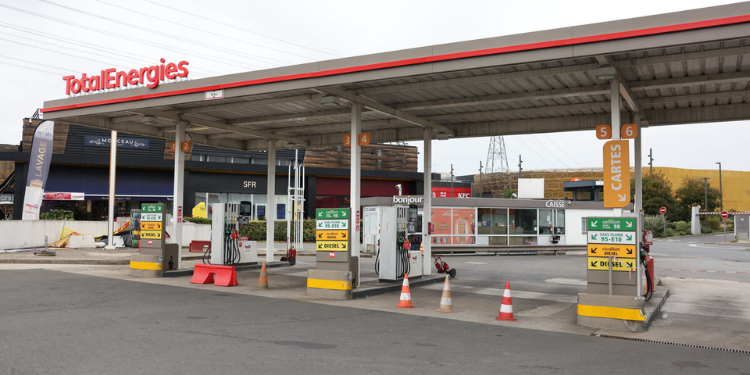
According to Kuria, the Kenya pump prices are likely to increase to Ksh 230 to Ksh 250 per liter.
“April will be the toughest and most brutal month of all times. The real effects of the regrettable war in Iran will take a toll on the global economy. The Hormuz effects of energy supply disruptions will hammer the global economy. In countries like Kenya, pump prices will end up in the region of Ksh 230 to Ksh 250 per liter,” part of the statement read.
Additionally, he warned that short-term solutions such as subsidies and foregoing tax revenues in the country must be avoided at all costs to avoid interfering with the current macroeconomic gains achieved.
Any interference and changes in the gains will have economic consequences on Kenya that will not be solved two years after the war, according to Kuria.
Moses Kuria also expressed that, as the country continues to deal with the inflation caused by the war, he hoped that Benjamin Netanyahu, Donald Trump, and the IRGC leadership would agree to stop the war.
Also Read: EPRA Reveals Petrol Stations and Sites Selling Contaminated Fuel
Government Mitigation Measures on Strait of Hormuz Supply Disruption
On March 30, President William Ruto confirmed that the disruption of the energy supply in the Strait of Hormuz was affecting the global economy, including Kenya.
He explained that Kenya was not immune to the war, noting that the government is actively taking steps to curb the issue.
“The ongoing conflict in the Middle East is having a significant impact on the global economy. This disruption is already being felt across global supply chains and is placing pressure on economies worldwide,” Ruto said.
Additionally, the President stated that he had received a briefing and recommendations on the way forward from the Ministries of Energy, Agriculture, and Trade, the National Treasury, the Central Bank, and the private sector.
Speaking on the expected rise in petroleum product prices, Ruto stated that measures had been put in place to mitigate the effects, ensure adequate supplies in the country, and maintain stable fuel prices.
Among the measures is the Government-to-Government fuel procurement arrangement that has cushioned Kenyans from the immediate shock of the international oil prices, according to the President.
In addition, Ruto stated that the Ministry of Energy, together with the National Treasury, continues to assess international fuel prices and identify mitigating measures.
Furthermore, on the agricultural product such as fertilizer, the President reaffirmed that the country has a sufficient supply that could last till September this year.
However, Ruto noted that the meat export sector has been affected by the disruptions in the Middle East.
Despite the challenges the country is facing due to the war, the President announced that there is growth in the activities at the ports of Mombasa and Lamu, with reference to the over 4,000 high-value motor vehicles that are being handled by the port of Lamu.
Also Read: Govt Secures Fuel, Fertilizer, and Trade Amid Middle East Crisis
Global Fuel Prices
Reports from Trading Economics indicate that Brent Crude, the international benchmark, is approximately $105.39–$105.62.
During March, the prices increased by over 35–64% in the month amid supply concerns, according to the report.
The global average gasoline price as of late March 2026 is $1.44 per liter, with diesel averaging $1.24 per liter in early 2026, according to Global Petrol Prices.
In Kenya, the Energy and Petroleum Regulatory Authority of Kenya( EPRA) maintained a maximum retail fuel price for the March 15 to April 14 review period.
According to EPRA, the prices for the super petrol are KSh 178.28 per liter, diesel is KSh 166.54 per liter, and kerosene is KSh 152.78 per liter in Nairobi.
The prices, however, vary depending on the town in the country.
Middle East Conflict
As of April 1, 2026, the US-Israel war with Iran is now in its fifth week and continues to disrupt global energy markets significantly.
Iran’s effective restrictions on shipping in the Strait of Hormuz have caused global economic disruption, as approximately 20% of the world’s crude oil is transported through the strait.