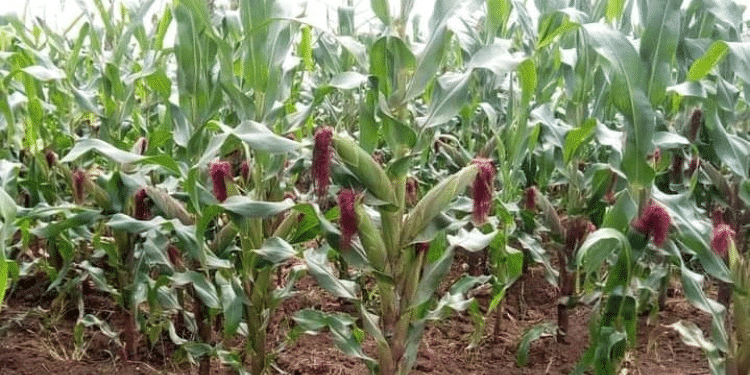

President William Ruto’s Government has announced a reduction in maize seed prices under a newly rolled-out subsidy programme targeting farmers ahead of the 2025/2026 planting season.
In a directive issued on March 23, the State allocated KSh2 billion to Kenya Seed Company to support the immediate implementation of the initiative.
“As you are aware, the Government has allocated Kenya Shillings Two Billion (Kshs. 2,000,000,000) to the Kenya Seed Company to facilitate the immediate implementation of the maize seed subsidy programme,” read part of the statement.
The subsidized maize seed prices will take effect from March 25 at 11:00 a.m., following the completion of system updates by Kenya Seed Company.
According to the Ministry of Agriculture and Livestock, the move aims to lower input costs and boost maize production across the country.
Under the revised pricing structure, farmers will now purchase certified maize seeds at subsidized rates as follows:
- 1kg – KSh260
- 2kg – KSh525
- 10kg – KSh2,625
- 25kg – KSh6,560
Previously, a 1kg packet of maize seeds retailed at KSh 300, while the 2kg pack cost KSh 600. The 10kg bag was priced at KSh3,000, and the 25kg pack sold at KSh7,500.
Also Read: Mutahi Kagwe Issues Ultimatum to Maize Hoarders Ahead of Duty-Free Imports
Ruto Orders Cut in Maize Seed Prices
On March 24, Deputy President Kithure Kindiki said President William Ruto ordered the immediate reduction of maize seed prices after farmers raised concerns over high costs.
While inspecting ongoing development projects in Trans Nzoia County, Kindiki noted that the move is part of the government’s broader plan to boost maize production, a key staple in the country.
He explained that farmers had flagged the rising cost of seeds as a major barrier to production, prompting the President to direct the Kenya Seed Company to lower prices.
Also Read: Matatu Fares and Gas Prices Rise as Maize Flour Costs Drop – Report
“We received concerns from farmers who complained about the high prices of maize seeds. The President has directed the Kenya Seed Company to immediately reduce the prices of seeds so that farmers can afford them,” Kindiki said.
He added that the latest reduction in seed prices is aimed at sustaining this upward trend in production while improving farmers’ earnings, with the government indicating plans to further lower input costs over time to strengthen food security.
Kindiki also pointed to earlier interventions in the agriculture sector, noting that fertilizer prices have dropped to around KSh2,500 from about KSh7,000 in 2022 when the current administration took office.