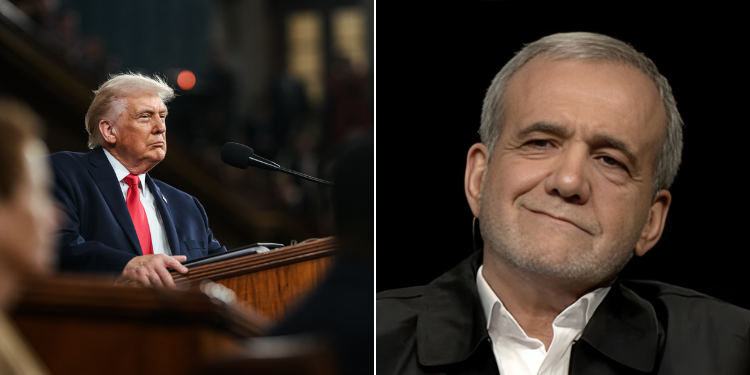

President Donald Trump has announced that he has agreed to a two-week ceasefire with Iran following last-minute talks led by Pakistan, less than two hours before his deadline to destroy a “whole civilization.”
Trump, in a Tuesday, April 7, post on Truth Social, said parties sealed the ceasefire agreement on the condition that Iran agree to reopen the critical Strait of Hormuz.
“Based on conversations with Prime Minister Shehbaz Sharif and Field Marshal Asim Munir, of Pakistan, and wherein they requested that I hold off the destructive force being sent tonight to Iran, and subject to the Islamic Republic of Iran agreeing to the complete, immediate, and safe opening of the Strait of Hormuz, I agree to suspend the bombing and attack of Iran for a period of two weeks. This will be a double-sided ceasefire!” Trump posted.
According to the president, “the reason for doing so is that we have already met and exceeded all Military objectives, and are very far along with a definitive agreement concerning long-term peace with Iran, and peace in the Middle East.”
“We received a 10 point proposal from Iran, and believe it is a workable basis on which to negotiate. Almost all of the various points of past contention have been agreed to between the United States and Iran, but a two week period will allow the agreement to be finalized and consummated. On behalf of the United States of America, as President, and also representing the Countries of the Middle East, it is an Honor to have this Longterm problem close to resolution,” he added.
According to CNN, Israel has also agreed to a temporary ceasefire, suspending its bombing campaign while negotiations continue.
Pakistan pushes ceasefire
Earlier, diplomatic efforts to halt the escalating U.S.–Iran war reached a critical stage with Pakistani Prime Minister Shehbaz Sharif mediating urgent negotiations between Washington and Tehran.
Sources on Tuesday told CBS News that Vice President JD Vance is serving as the U.S. interlocutor in the talks, which could produce a temporary ceasefire “within the hour.”
Lebanon’s MTV reported that Iran is pushing for Lebanon’s inclusion in any ceasefire arrangement. At the same time, Pakistani government sources confirmed that discussions are being steered directly by Pakistan’s army chief, Field Marshal Asim Munir.
CNN cited a regional source saying “some good news is expected from both sides soon” and that a deal was expected to be closed tonight.
Pakistani Prime Minister Sharif proposed a two-week ceasefire to allow diplomacy to proceed, urging Iran to reopen the Strait of Hormuz as a goodwill gesture.
Also Read: Senator Lindsey Graham Issues Statement Ahead of Trump’s Plan to Strike Iran After 8 p.m. Deadline
In a message posted on X, he appealed to President Trump to extend his deadline and called on all parties to observe a ceasefire during the period.
The White House confirmed that Trump has been made aware of the proposal. Press Secretary Karoline Leavitt said, “The President has been made aware of the proposal, and a response will come.”
Iran’s ambassador to Pakistan, Reza Amiri Moghadam, on his part, described the talks as a “critical, sensitive stage” and signaled cautious optimism.
“Respect and comity should be replaced by rhetoric and redundancy,” he wrote on social media.
Trump’s ultimatum
President Trump’s self-imposed deadline for Iran to reopen the Strait of Hormuz was to expire at 8 p.m. ET Tuesday. In a statement earlier this week, he warned that “a whole civilization will die tonight” if Tehran fails to comply.
Vice President JD Vance reinforced the administration’s stance, saying the U.S. has “largely accomplished its military objectives” but left open the possibility of either a negotiated resolution or further military action depending on Iran’s response.
Trump declined to comment directly on Pakistan’s request for a two-week extension, telling Fox News correspondent Jacqui Heinrich, “I can’t tell you, because right now we’re in heated negotiations.” He added, “I can say this – that I know him [Sharif] very well. He’s a highly respected man, all over.”
Meanwhile, confusion has surrounded Iran’s diplomatic posture. Initial reports suggested Tehran had severed communication channels, but Iranian state media later clarified that indirect negotiations remain ongoing.
Also Read: Pakistan Reveals Israel Disrupted US‑Iran Talks at Crucial Stage
As talks continue, Iran has threatened retaliatory strikes against Gulf states if the U.S. attacks. An Islamic Revolutionary Guard Corps (IRGC) spokesperson warned that power plants and energy infrastructure in Israel, the United Arab Emirates, Bahrain, and Saudi Arabia could be targeted, with attacks potentially beginning at 11 p.m. local time.
The Iranian regime earlier called on young people to form human chains around power plants, a move President Trump criticized as “totally illegal” in an interview with NBC News.
Israel’s military also warned of an increased risk of inbound attacks as the deadline approached, stating that “there may be an increase in fire toward the territory of the State of Israel in the coming hours.”
U.S. and Israeli strikes have already escalated ahead of the deadline. Israel acknowledged attacks on Iranian railways and bridges, while the U.S. launched fresh strikes on the oil export hub of Kharg Island. Iranian officials reported at least 18 civilian deaths in one province on Tuesday.
In Iraq, an Iranian-backed militia announced it would release American journalist Shelly Kittleson, abducted in Baghdad a week ago, on the condition that she leave the country immediately.
Global reactions
The looming deadline has drawn widespread international concern. Senate Democrats condemned Trump’s threats, warning that deliberate attacks on civilian infrastructure would constitute war crimes.
Former House Speaker Nancy Pelosi criticized Trump’s rhetoric, calling it “dangerous” and urging Congress to act.
Pope Leo XIV also described Trump’s threat to destroy Iranian civilization as “truly unacceptable,” emphasizing that attacks on civilian infrastructure violate international law. He urged global leaders to reject escalation and work for peace.
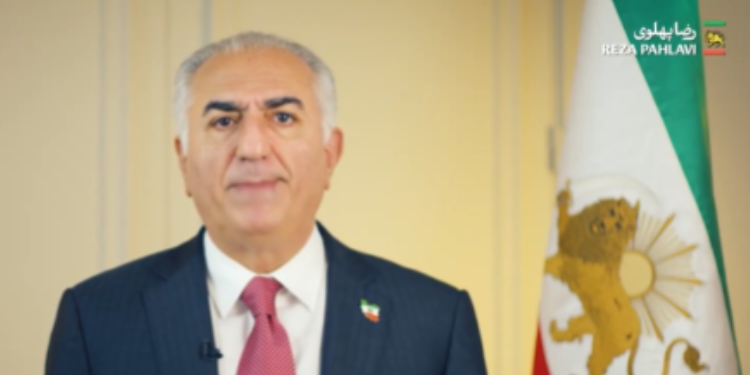
Meanwhile, Iranian opposition figure Prince Reza Pahlavi has called on Iran’s military to rise against the regime, urging soldiers to “step forward” and defend the nation against the IRGC.