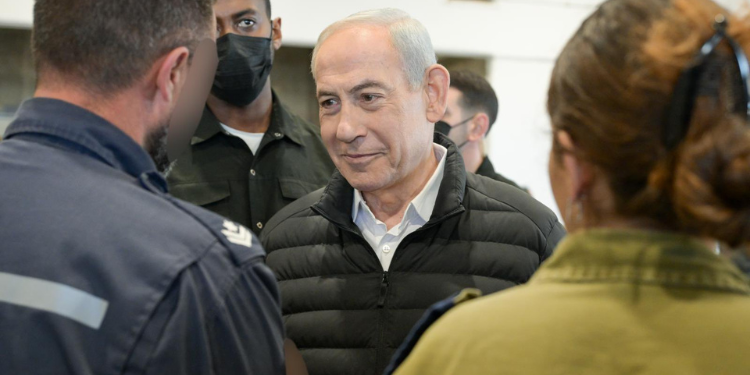
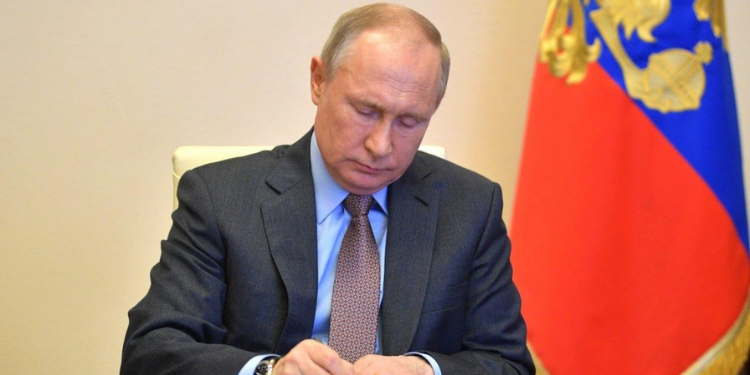
Russia has sharply criticized Israeli Prime Minister Benjamin Netanyahu over his recent remarks comparing Iran’s nuclear ambitions to the Holocaust, calling the comparison historically false and offensive to victims of World War II.
In a strongly worded statement, Russian Foreign Ministry spokeswoman Maria Zakharova on Wednesday, April 22, said invoking Nazi death camps in the context of Iran’s nuclear program “is an insult to the memory of all victims of the Second World War.”
The remarks come after Netanyahu, speaking at a memorial ceremony on Mount Herzl, warned that Iran had effectively planned “another Holocaust,” claiming the country intended to destroy Israel using nuclear weapons and ballistic missiles.
He further argued that sites linked to Iran’s nuclear program—such as Natanz and Fordow—could have become synonymous with Nazi death camps like Auschwitz and Majdanek had Israel not acted militarily.
Russia accuses Netanyahu of ‘holocaust distortion’
However, Zakharova rejected that comparison outright. “To invoke Auschwitz, Majdanek and Sobibor in the context of an alleged Iranian ‘nuclear Holocaust’ against Israel is an insult,” she said, adding that such parallels are “baseless, conceptually false and historically distortive.”
Also Read: Iran Supreme Leader Issues Warning to Trump and Netanyahu
She also questioned the framing of Iran as a historical aggressor, noting that Iran declared war on Nazi Germany in 1943 under Shah Mohammad Reza Pahlavi.
“So who did perpetrate the Holocaust?” she asked, pointing instead to Nazi Germany and its collaborators across Europe.
The Russian statement expanded beyond Netanyahu’s comments, linking the issue to broader geopolitical tensions. Zakharova criticized Israel for what she described as silence regarding Ukrainian figures accused by Moscow of collaboration with Nazi forces during World War II, and accused Western institutions of historical inconsistency.
She also referenced claims about financial backing for Nazi Germany, alleging involvement by Western institutions, though such assertions remain widely disputed in mainstream historical scholarship.
The exchange marks a further escalation in rhetoric as tensions surrounding Iran intensify, particularly following the ongoing conflict involving the United States, Israel, and Iran. The dispute over Iran’s nuclear capabilities remains central to the crisis.
Diplomacy
Russia reiterated its support for diplomatic solutions, with Foreign Minister Sergey Lavrov pointing to the 2015 nuclear agreement as a potential model for de-escalation.
“Our experience has taught us to rely on facts,” Lavrov said, emphasizing that the agreement imposed strict monitoring on Iran’s nuclear program and limited its ability to pursue military nuclear capabilities.
Also Read: Pezeshkian Rejects US Nuclear Demands Amid Fading Hopes for Talks
Lavrov added that renewed negotiations between the United States and Iran could still produce a similar framework, describing such an outcome as a “major success” if achieved.
Zakharova also raised the issue of nuclear oversight, noting that Israel is not a signatory to the same safeguards agreements with the International Atomic Energy Agency (IAEA) as Iran.
She further emphasized that international monitors have consistently described facilities such as Bushehr as civilian.
Netanyahu delivered his remarks in a highly symbolic setting during Israel’s memorial for fallen soldiers, where he framed the current conflict with Iran as an existential struggle.
Referencing historical persecution of Jews, he said threats against Israel persist “in every generation,” positioning Iran as the latest in a line of adversaries.
He credited Israel’s military actions, alongside support from the United States, with preventing what he described as an immediate existential threat.