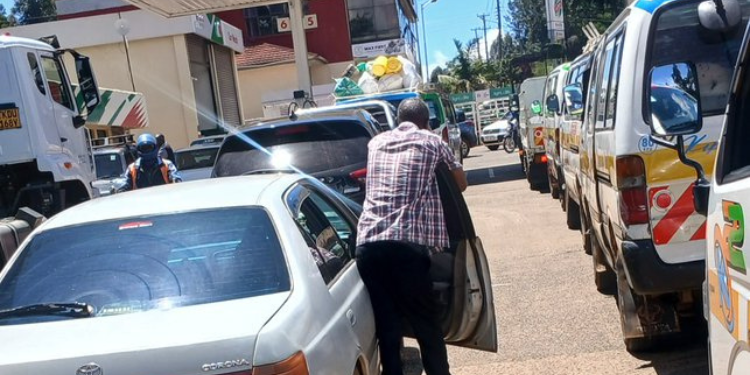
The Kenya Transporters Association (KTA) has issued a statement concerning the worsening fuel situation in the country.
Transporters are facing rationing, refusal of bulk supplies, and the withdrawal of credit facilities, leaving many operators struggling to maintain essential services.
“Kenya Transporters Association Ltd (KTA) wishes to formally express our deep concern and frustration regarding the current fuel supply situation in the country,” the statement read.
The association has also criticized the government for providing conflicting statements and a lack of clarity on the actual fuel stock levels.
Contradictions Between Official Statements and Market Conditions
Despite official assurances from the government that fuel supply is adequate in the country, many stations are either empty or offering only limited quantities.
Also Read: Fuel Shortage Hits as Petrol Stations Display “No Fuel” Signs
The association has also questioned why the government’s statement does not reflect the ongoing crisis.
If indeed the country has sufficient fuel, then the market must reflect this reality immediately and consistently. This situation must be addressed urgently; otherwise, it risks escalating into a full-blown logistics crisis with national and regional consequences.
KTA points to a clear disconnect between these assurances and observable market behavior.
On April 7, Energy and Petroleum CS assured that the country has enough fuel stock and that no disruption will be caused.
Long queues have been witnessed at several petrol stations in the country. In Kisii, on April 8, boda boda riders reported being compelled to buy fuel worth a minimum of Ksh 500 at petrol stations.
A spot check by The Kenya Times reveals the growing impact of the looming fuel shortage across several counties.
In Busia County, for example, drivers are crossing into Uganda to source fuel, underscoring the severity of the crisis.
Transporters report difficulty accessing fuel in the volumes necessary to sustain operations.
Widespread Supply Disruptions and Credit Withdrawal
According to KTA, Oil Marketing Companies (OMCs) have been restricting fuel sales to bulk buyers and suspending credit arrangements that transporters rely on to operate.
The association notes that these developments have disrupted normal transport operations, forcing drivers to source fuel in smaller quantities from multiple locations.
This has complicated route planning and increases operational inefficiencies, particularly for long-distance drivers.
In addition, the withdrawal of credit facilities has created immediate cash-flow pressures, requiring transporters to make upfront payments.
“Over the past several days, Transporters across the country-particularly those operating along key logistics corridors-have reported widespread fuel rationing, refusal by marketers to supply in bulk, and a complete withdrawal of credit facilities by oil marketing companies,” the statement read.
Also Read: Global Oil Prices Decline as Kenyans Set Eyes on EPRA
Calls for Transparency, Directives, and Accountability
In response, KTA has issued a set of demands aimed at restoring clarity and stability in the fuel supply chain.
The association is calling for immediate transparency from the government and regulators on the true status of national fuel stocks, insisting that any claim of adequate supply must be supported by consistent availability in the market.
- Immediate resumption of normal bulk fuel supply by OMCs
- Reinstatement of credit arrangements for transporters
- Urgent engagement between the government, the Energy and Petroleum Regulatory Authority (EPRA), OMCs, and other stakeholders to resolve the disruption
- Implementation of accountability mechanisms to identify and address any artificial supply constraints, hoarding, or market manipulation