Imagine a genie appears before you, offering three wishes. Each one will permanently solve a piece of the climate crisis, no strings attached. What would you ask for?
Would you wish away plastic straws? Detachable bottle caps, perhaps, or a lifetime supply of carbon offsets? Would you campaign for the abolition of outdoor patio heaters, or insist that every supermarket on earth switch from plastic to paper bags?
Of course not. Anyone serious about saving the planet would spend the wishes differently. They would ask for universal access to clean electricity. They would ask for the end of energy poverty.
They would ask for abundant, reliable, low-carbon power to run the factories, hospitals and cities of this century. Here is the uncomfortable part for much of the environmental movement: all three wishes point at the same technology. Nuclear power. Not because nuclear alone can save the climate, but because a movement unable to answer what it is actually for will keep mistaking gestures for progress.
Modern climate politics has a curious relationship with scale. It rewards the things we can see and photograph, and largely ignores the infrastructure we never notice until it fails. Plastic straws, bottle caps and net-zero pledges dominate headlines and shareholder reports because they are visible and easy to sell to a consumer audience. Grid stability and industrial decarbonisation get almost none of that attention, and yet they do almost all of the actual work. Somewhere along the way, the movement began measuring itself by how virtuous a policy feels rather than what it changes.
Judge environmentalism by outcomes
Electricity access has implications for life expectancy, industrial output, hospitals that keep the lights on through the night, food supply that does not depend on diesel-powered refrigeration and cities that can grow without choking on smog.
Also Read: Africa’s AI Future Depends on Energy Sovereignty — Not Just Renewables
Measured this way, the sharpest environmental emergency on earth sits not in the overconsumption of the rich world but in the energy poverty of the poor one. Roughly 600 million people in Africa still live without access to electricity, according to the International Energy Agency, and millions more endure supply so unreliable it barely counts as access at all.
A vaccine refrigerator with no power to keep it cold or maternity wards lit by torchlight cut off from the grid are environmental hazards in their own right, not just an economic one.
Why Nuclear Power Is Essential
Nuclear power changes this equation, and it does so as a complement to renewables rather than a rival. Wind and solar have transformed the economics of electricity generation over the past decade, a genuine achievement that deserves recognition and should continue to expand as fast as capital and grids allow. Their limitation is not ambition but physics: a steel mill, a desalination plant or an AI data centre running around the clock needs power on demand, not power when the wind happens to blow.
Nuclear remains the only proven technology offering enormous energy density, a small land footprint and decades of continuous, dispatchable output, with lifecycle emissions that studies place in the same range as wind power. Reactors commonly run for sixty to eighty years once relicensed, longer than almost any other piece of energy infrastructure ever built. Systems should be built for pragmatic realism and slogans.
Carbon offsets have a semblance of a legitimate role in sectors that are genuinely hard to decarbonise, and dismissing them outright misreads their purpose. However, they are just certificates and financial instruments to be traded on a ledger, whereas a nuclear reactor, for example, is physical infrastructure that employs tens of thousands of people over its 60-year lifetime as it generates electricity, literally turning night into day. Financial tools can smooth a transition but cannot substitute for one. Ask which of the two keeps a tonne of carbon out of the atmosphere with certainty, and the case for concrete over certificates is hard to avoid.
Also Read: Opinion | Why the Digital Savannah Needs a Nuclear-Powered Silicon Savannah
Africa’s defining energy challenge is not too much consumption but too little supply, and the gap will only widen as industrialisation, urbanisation, fertiliser production, desalination, electric mobility and the first wave of African data centres and AI infrastructure all compete for reliable power. Whether Africa becomes a producer of these technologies or merely a customer for them will be decided largely by whether its grids can deliver electricity on demand, day and night, dry season and wet.
Kenya’s Moment of Truth
Kenya illustrates the point without needing to carry the whole argument. An environmental movement earns its name only when it reduces emissions, ends energy poverty, lifts human welfare and builds electricity systems reliable enough to trust at three in the morning, all at once. A planet running on abundant clean power is a better environmental outcome than a poorer planet running on guilt.
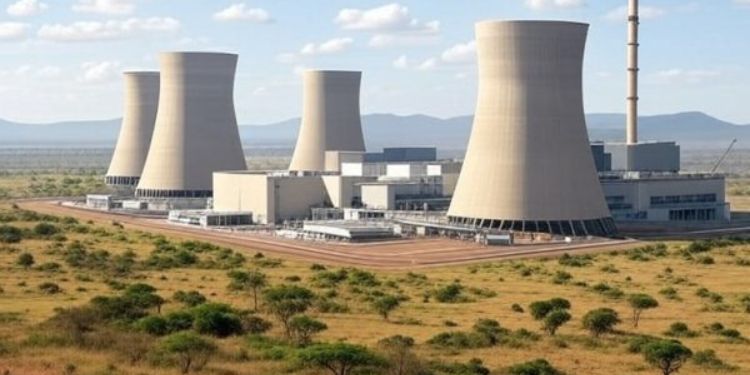
Koeberg Nuclear Power Plant in Cape Town is surrounded by a protected area that serves as a sanctuary for hundreds of endangered plant and animal species. The engineers, utilities, workers and other professionals working at Africa’s only fully operational nuclear power plant are far better, far more effective and far more literate environmentalists than anti-nuclear zealots keen to torpedo the Raila Odinga Nuclear Power Plant in the same way they tried to torpedo the Sondu Miriu project and failed spectacularly.
A wise genie would never hand unemployed youth in Siaya another carbon credit. It would build nuclear reactors that would employ the same youth, electrify their villages and, in a generation, extinguish energy poverty in the region in the way nuclear has been doing elsewhere for decades. The genie would then quietly disappear.
Everything else, however loud and well-intentioned, is not environmentalism. It is just gardening.
Follow our WhatsApp Channel and X Account for real-time news updates.