Despite being French-designed and optimized to fit hand in glove in the European Union, the world’s first European Pressurized Reactor (EPR) to begin commercial operations was neither at Penly, Gravelines, nor Bugey. The first EPR in the world came online at Taishan Unit 1 in Guangdong, China, in 2018. This was way ahead of the project at Olkiluoto in Finland, where, since 2003, the third unit at the site had steadily been worked on from the pouring of the first concrete in 2005 and a scheduled commissioning date targeting commercial operations in 2009, only to find itself 14 years behind schedule, at a final cost roughly 3 times the original estimate.
Flamanville 3 in Normandy, where the first concrete was poured in 2007, was only loaded with fuel in 2024, 17 years behind schedule and Kshs. 1.5 trillion Kenya Shillings over budget. Right across the English Channel, progress in the construction of the EPR at Hinkley Point C in Somerset has slowed to a crawl, with a projected cost of between Kshs. 5.4 trillion to 6.1 trillion, making it one of the most expensive engineering projects in British peacetime history.
But things were not always like that in France. In the aftermath of the oil crisis triggered by the Yom Kippur War, France’s near-total dependence on imported hydrocarbons was exposed with brutal clarity, prompting Prime Minister Pierre Messmer to place energy sovereignty at the center of his 1974 epigenous Messmer Plan. This standardization of reactor technology culminated in the deployment of 34 units of the 900 MWe series at Gravelines, Bugey, Tricastin, and Cruas, followed by 20 of the 1300 MWe units at Flamanville, Cattenom, and Penly, with the more recent 4 advanced 1450 MWe N4 reactors at Chooz and Civaux. Combined, this fleet of 56 reactors supplies roughly 75% of the electricity mix.
France’s Nuclear Journey
Yet the same industrial logic also created a systemic vulnerability because the reactors aged together, used similar components, and faced similar degradation pathways. The scale of this vulnerability became evident only in the summer of 2022, when stress corrosion cracking was discovered in the cooling circuit, forcing half of the fleet to go offline to allow corrective measures.
Despite such vicissitudes, France remains a nuclear state as defined in The Nuclear Non-proliferation Treaty (NPT) capable of maintaining a complete fuel cycle from mining of Uranium, its enrichment to reprocessing. Its institutional knowledge accumulated over decades includes the operation of Gen-IV reactors like Super-Phenix, a now-decommissioned Sodium-Cooled Fast Reactor (SFR) designed to use what Kenyan anti-Nuclear Zealots call “Waste” to produce electricity.
Also Read: Why the Digital Savannah Needs a Nuclear-Powered Silicon Savannah
Nuclear power has re-entered global economic strategy, largely driven by the insatiable demand for power that accompanies data centers needing a continuous supply of high-density, high-quality electricity. The scrapping of the $1 billion data center project in Kenya, slated to host Microsoft Azure, is an example of the harsh reality that digital infrastructure and nuclear power equally require long-term economic coordination and investment joined at the hip.
The EPR2 developed by French EDF and CEA (France’s Alternative Energies and Atomic Energy Commission established in 1945 by Charles de Gaulle) is one of the options Kenya is evaluating to construct at the Siaya Nuclear Power Plant (slated to be the first nuclear plant north of the Limpopo and south of the Sahara) It comes with fewer of the 4 safety trains that disadvantaged EPR when compared to the likes of the American AP1000 by Westinghouse, Russia’s VVER by Rosatom, China’s Huolong-One by CNNC and South Korea APR-1400. The South Koreans brandish the formidable competitive industrial model that allowed them to deliver 4 reactors on time and within budget at the Barakah Nuclear Power Plant in Abu Dhabi despite disruptions to global supply chains by COVID.
Lessons for Kenya from France
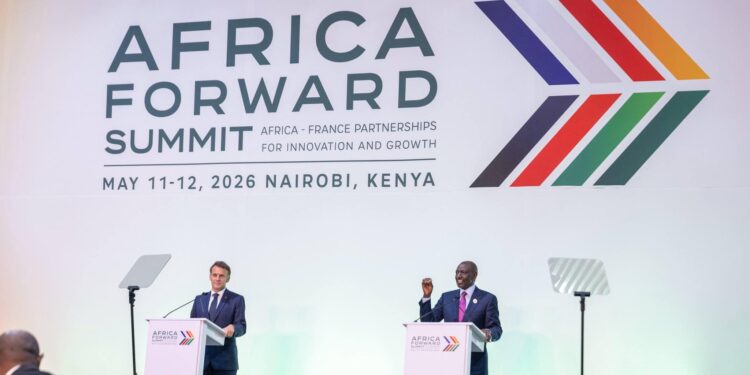
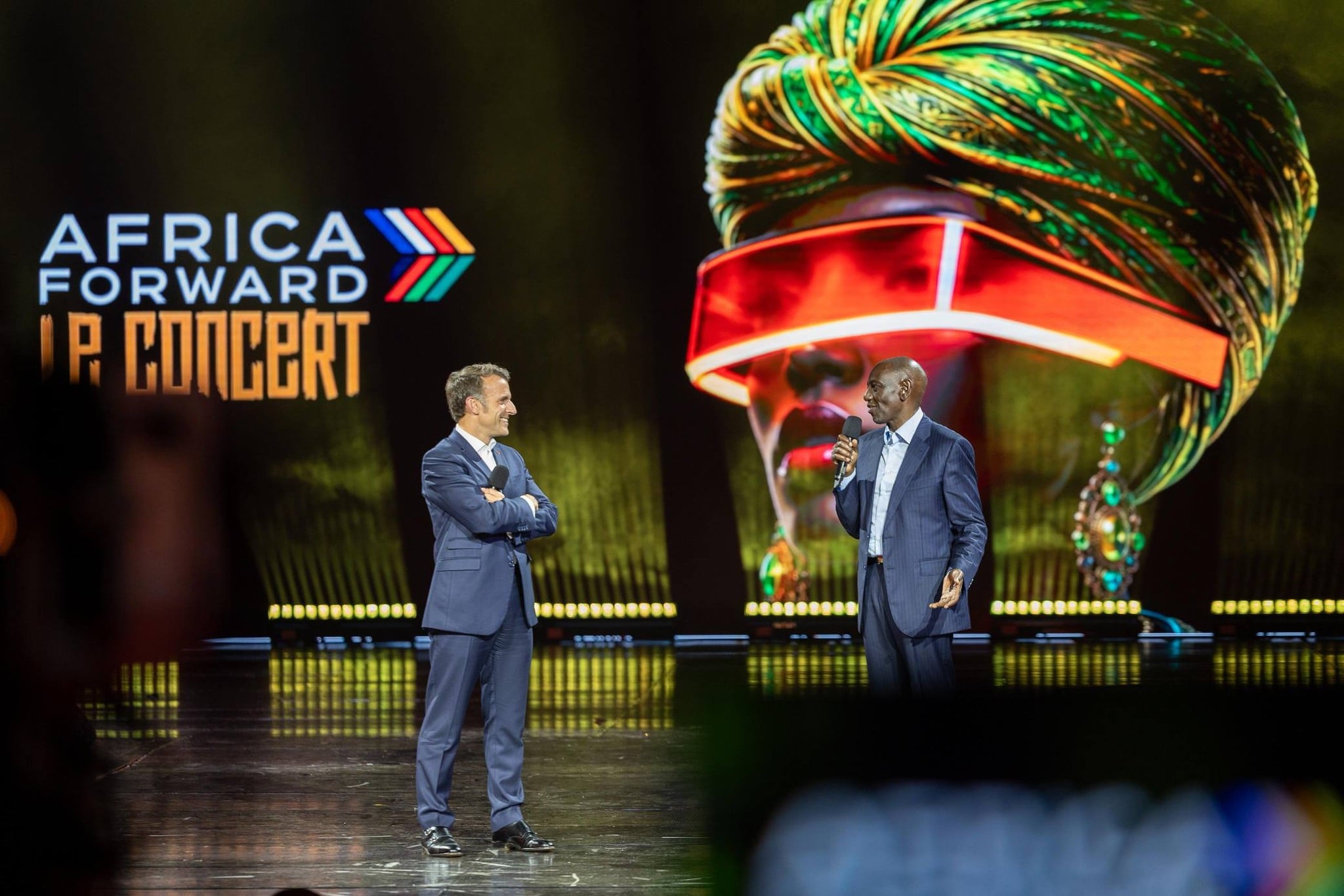
Partnership with all these vendors generates long-term obligations that will extend across multiple governments and generations. As detailed during the recent Africa Forward Summit, the French offer extensive engineering depth, an established fuel cycle through the likes of Orano, training infrastructure at CEA, and a mature diplomatic relationship shaped by proximity and historical engagement with Africa.
Also Read: Buffer Zones in Siaya: Lessons from Fukushima And Chernobyl
France, however, also comes with a recent record of cost overruns, schedule failures, and industrial disruption that any serious procurement process must be weighed directly if EPR, EPR2, or even the 400-megawatt NuWARD are gonna be options to be considered, given Kenya’s specific needs, timeline, financial constraints, and long-term development strategy. This requires using historical performance to evaluate whether France has the industrial capacity and will to commit to the localization of manufacturing, workforce training with genuine technology transfer, fuel supply arrangements that avoid recreating over-dependencies, and financing options that do not exceed Kenya’s debt tolerance.