
Monday, August 31, 2026
  • News
    • Latest News
    • Breaking News
    • Fact Check
    • Investigations
    • Explainers
  • Politics
    • Global Politics
    • Elections
    • Government & Policy
    • Diplomacy
    • Conflicts & Security
    • Political Analysis
  • Business
    • Global Economy
    • Markets
    • Technology
    • Startups
    • Energy
    • Finance
  • World News
    • Americas
    • Asia
    • Asia Pacific
    • Africa
    • Europe
    • Middle East
  • Africa
    • Central Africa
    • East Africa
    • West Africa
    • Southern Africa
  • Health
    • Global Health
    • Public Health
    • Health Policy
    • Medical Research
    • Diseases & Conditions
    • Mental Health
    • Nutrition
    • Climate & Health
    • Health Explainers
  • Sports
    • World Cup 2026
    • Athletics
    • Basketball
    • Boxing
    • Cricket
    • Football
    • Formula 1
    • Golf
    • Rugby
  • Weather
    • Climate Business
    • Climate Change
    • Climate Solutions
    • Living Green
  • Culture
    • Arts
    • Film & TV
    • Food and Recipes
    • Music
    • Lifestyle
    • Travel
  • Opinion
    • Editorials
    • Letters
  • Behind The Brand
REGISTER
LOGIN
No Result
View All Result
The Kenya Times
  • News
    • Latest News
    • Breaking News
    • Fact Check
    • Investigations
    • Explainers
  • Politics
    • Global Politics
    • Elections
    • Government & Policy
    • Diplomacy
    • Conflicts & Security
    • Political Analysis
  • Business
    • Global Economy
    • Markets
    • Technology
    • Startups
    • Energy
    • Finance
  • World News
    • Americas
    • Asia
    • Asia Pacific
    • Africa
    • Europe
    • Middle East
  • Africa
    • Central Africa
    • East Africa
    • West Africa
    • Southern Africa
  • Health
    • Global Health
    • Public Health
    • Health Policy
    • Medical Research
    • Diseases & Conditions
    • Mental Health
    • Nutrition
    • Climate & Health
    • Health Explainers
  • Sports
    • World Cup 2026
    • Athletics
    • Basketball
    • Boxing
    • Cricket
    • Football
    • Formula 1
    • Golf
    • Rugby
  • Weather
    • Climate Business
    • Climate Change
    • Climate Solutions
    • Living Green
  • Culture
    • Arts
    • Film & TV
    • Food and Recipes
    • Music
    • Lifestyle
    • Travel
  • Opinion
    • Editorials
    • Letters
  • Behind The Brand
  • News
    • Latest News
    • Breaking News
    • Fact Check
    • Investigations
    • Explainers
  • Politics
    • Global Politics
    • Elections
    • Government & Policy
    • Diplomacy
    • Conflicts & Security
    • Political Analysis
  • Business
    • Global Economy
    • Markets
    • Technology
    • Startups
    • Energy
    • Finance
  • World News
    • Americas
    • Asia
    • Asia Pacific
    • Africa
    • Europe
    • Middle East
  • Africa
    • Central Africa
    • East Africa
    • West Africa
    • Southern Africa
  • Health
    • Global Health
    • Public Health
    • Health Policy
    • Medical Research
    • Diseases & Conditions
    • Mental Health
    • Nutrition
    • Climate & Health
    • Health Explainers
  • Sports
    • World Cup 2026
    • Athletics
    • Basketball
    • Boxing
    • Cricket
    • Football
    • Formula 1
    • Golf
    • Rugby
  • Weather
    • Climate Business
    • Climate Change
    • Climate Solutions
    • Living Green
  • Culture
    • Arts
    • Film & TV
    • Food and Recipes
    • Music
    • Lifestyle
    • Travel
  • Opinion
    • Editorials
    • Letters
  • Behind The Brand
No Result
View All Result
The Kenya Times ~ Trending, Breaking News and Videos
No Result
View All Result
ADVERTISEMENT

Kenya’s Big Railway Project makes Life Even Harder for the Poor by Ignoring Their Reality

Gediminas LesutisbyGediminas Lesutis
October 28, 2022
Reading Time: 7 mins read
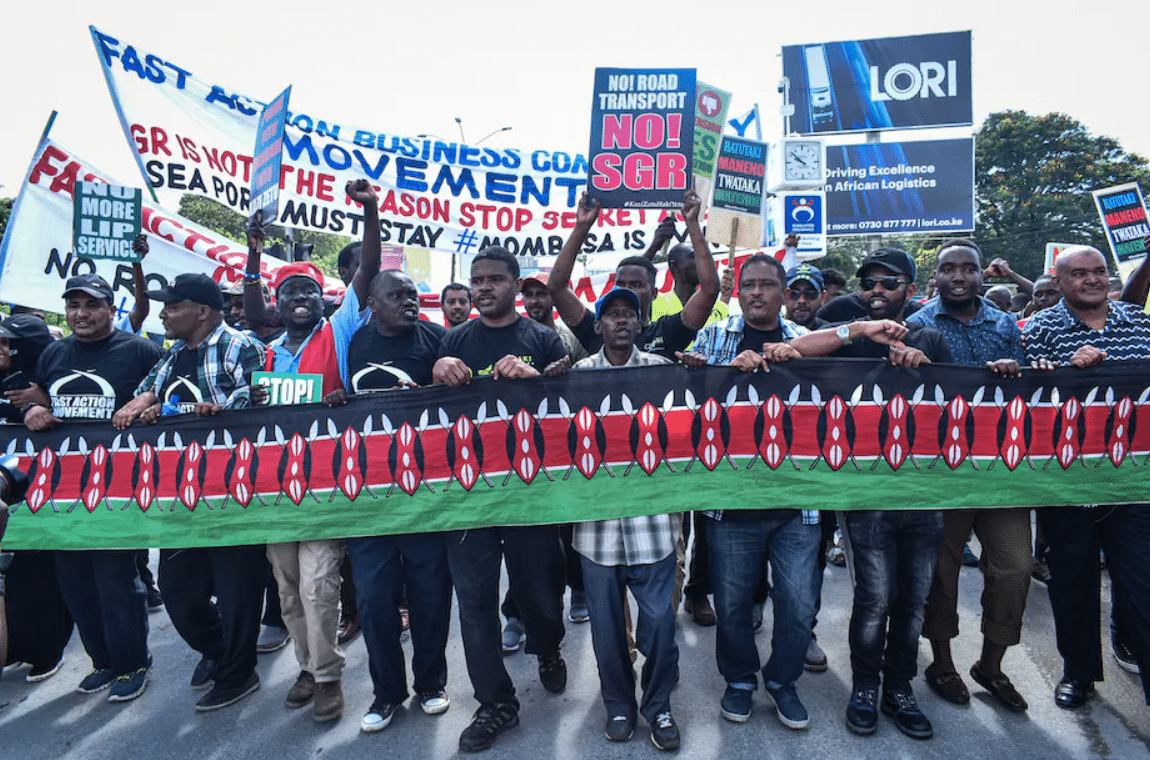
Truck Drivers, Clearing Agents, Business Owners And Activists Protest Over Job Losses In Mombasa, Kenya. Stringer | Afp Via Getty Images

Truck drivers, clearing agents, business owners and activists protest over job losses in Mombasa, Kenya. Stringer | AFP via Getty Images

FacebookTwitterLinkedInRedditWhatsApp
Advertisement

People’s responses to large infrastructure projects – railways, bridges, highways – are rarely neutral. To some, these projects represent powerful social and political promises of transformative change and a brighter future. To others, they mean evictions and the disruption of livelihoods.

The reaction of Kenyans to the country’s Standard Gauge Railway, dubbed the Madaraka Express, is no different.

In 2017, Kenya finished the railway’s first phase, which connects the Port of Mombasa to the country’s interior. Its second phase stops abruptly in Naivasha, a town 120km northwest of the capital, Nairobi.

Ultimately, the railway is planned to reach Kenya’s border with Uganda at Malaba, helping to further connect East Africa’s regional transport and trade.

Alongside other large projects, such as a transport corridor from the Lamu Port to South Sudan and Ethiopia, the Standard Gauge Railway is central to Kenya’s current national development policy, Vision 2030.

The policy frames these mega-projects as key to attracting the private sector interest needed to fuel economic growth, increase exports and alleviate poverty. From this perspective, the new railway is a powerful symbol of development, change and national pride.

ADVERTISEMENT

But there’s a flip side. In my earlier research on the impact of the railway project, I looked at evictions, displacement and the interruption of livelihoods. In my new study, I set out to examine how people cope with these disruptions in their lives.

The resounding response? This mega-project has failed to bring the promised positive changes. My latest research builds on my earlier work, which showed that the project increased socio-economic inequalities across Kenya. I demonstrated that mega-projects tend to represent only the interests of state and business elites.

In this study, I further explore how those most disadvantaged experience the changes brought by mega-projects.

Villages Cut into Two

I undertook more than five months of fieldwork during several periods between November 2018 and January 2020 in different urban, peri-urban and rural locations between Mombasa and Narok in the south-west of the country. I interviewed more than 200 people to better understand whether and how the new railway had affected their lives.

Makueni County is located in the south-eastern part of Kenya. Some of the county’s small villages, such as Kima, home to over 400 people, were cut into two when the railway was built.

ADVERTISEMENT

An embankment and fence runs right through what was once a single village.

Previously, residents could visit their neighbors and relatives in less than 15 minutes. Today, it takes one hour to reach the closest underpass that connects Kima.
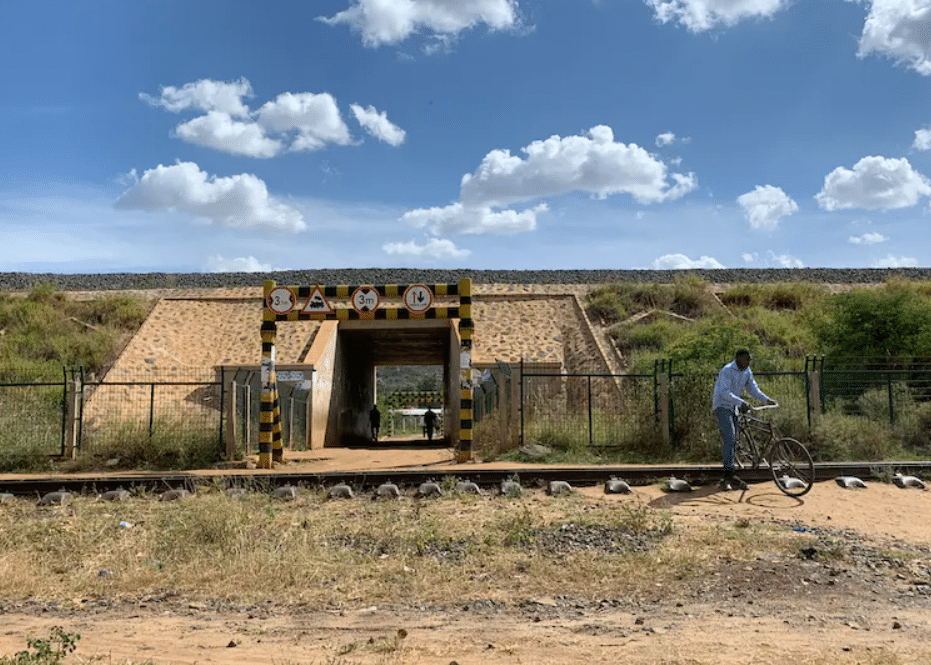
An underpass in Kima village | Gediminas Lesutis

As a group of men in the village told me:

(The government is) imagining that they are creating development for the people, but this is not the case, this railway brings serious problems (here) – the road to development is paved on the pain and suffering of poor people like us.

According to community leaders, this disruption of local mobility patterns occurred due to a blatant disregard for their lives from both the national government and the project contractor, China Road and Bridge Corporation.

In other parts of Kenya, similar views were expressed by several community liaison officers. They were contracted by Kenya Railways to mediate community relations before and during the railway’s construction. These officers explained how the railway design was developed without prior community consultation and, therefore, ignored existing mobility routes.

The Standard Gauge Railway has in fact disrupted livelihoods that depend on local transport systems.

This particularly includes the Nairobi-Mombasa Road A109, infamous for traffic congestion caused by long-distance trucks transporting cargo to and from the Mombasa Port to inland destinations in Kenya and beyond.

In Taita Taveta, for instance, over a range of 47 kilometres of the A109 between Voi and Miaseni, local livelihoods fundamentally depend on traffic movement. Alongside this road, there are convenience shops, eateries, guesthouses and brothels.

Outside these facilities, young men wash cars or provide mechanical services for passing truckers. For a small fee of a few hundred Kenyan shillings, older men watch these trucks overnight when drivers stop to rest. Women provide laundry and other services.

Although trucks congest the road, resulting in air and noise pollution, a busy road means economic activity for those in nearby communities.

This reality, however, was ignored by the Kenyan government. In 2018, it passed a national decree obliging all containerized cargo entering the Mombasa port to be transported on the Standard Gauge Railway. According to the Kenya Transporters Association, this led to about 12,000 trucks carrying container cargo being put out of business. As a result, a similar number of drivers and truck loaders lost their jobs.

At the time of my research, this had noticeable effects. Alongside the A109 road, guesthouses accommodating long-distance drivers were empty on most days, car washing spots had closed down and drinking houses were mostly frequented by local men. Residents of these areas had been economically dependent on the long-distance truck industry for 30 years. They expressed their discontentment and despair. As one shop owner noted:

This SGR, it has taken our lives from us, it has left us here with no customers, no movement, no nothing. People are very poor here, so they don’t buy the things I sell here. I need movement to survive.

The railway project’s impact on livelihoods was turned into a campaign issue ahead of Kenya’s August 2022 elections. A month after being voted in, President William Ruto made good his campaign promise and lifted the order on mandatory use of the railway for containerized cargo. Different groups, including transporters and Mombasa port stakeholders, have praised this move as likely to revive the coastal economy and restore lost jobs.

What’s Needed

As demonstrated in other contexts, the key to avoiding mega-projects having a dramatic effect on vulnerable groups is to rigorously assess the social and environmental impacts before, during and after project construction.

These legal mechanisms exist in Kenya. But there’s not enough political will to use them.

Unless local people’s needs and livelihoods are taken into account when mega infrastructure is planned and implemented, these projects are unlikely to bring the promised development.The Conversation

Gediminas Lesutis, Marie Curie Fellow, University of Amsterdam

This article is republished from The Conversation under a Creative Commons license. Read the original article.


Tags: ChinaCustomary landDevelopmentKenyaKenya Vision 2030Lamu Port-South Sudan-Ethiopia Transport (Lapsset) CorridorMombasaMombasa RoadRailTruck driversUgandaUhuru Kenyatta
Gediminas Lesutis

Gediminas Lesutis

Gediminas Lesutis is a Marie Curie Fellow at University of Amsterdam, the Netherlands. His research is in the areas of political geography and global political economy, particularly in regard to everyday life, subjectivity, extractivism, mega-infrastructures, bio- and necro-political power, and the politics of development across South and East Africa. Gediminas has published peer-reviewed research articles in African Affairs, Geoforum, Political Geography, Urban Geography, Transactions of the Institute of British Geographers, Annals of the American Association of Geographers, Environment and Planning D: Society and Space, and others. His first monograph, The Politics of Precarity: Spaces of Extactivisim, Violence, and Suffering, was published with Routledge Interventions in 2022. Before joining University of Amsterdam, Gediminas was a Research Associate at University of Cambridge and a Research Fellow at Darwin College, the United Kingdom.

Related Posts

Ruto Orders Police To Go After Politicians Funding Goons

Why Kenya Never Finishes a Presidential Election 

August 29, 2026
Kenya Politics And Hate Speech: Institutionalize Communication In Leaders’ Offices

Kenya Hate Speech: Why Political Offices Need Professional Communication Units

August 29, 2026
The Role Of The United Nations In Addressing Severe Diseases In Africa 

The Role of the United Nations in Addressing Severe Diseases in Africa 

August 28, 2026
Antinuclear Misinformation Debunked Using Google Maps.

Antinuclear Misinformation Debunked Using Google Maps

August 28, 2026
ADVERTISEMENT

The Kenya Times Facebook

LATEST NEWS

  • Gor Mahia Eye Ksh776 million CAF Champions League Prize as Pyramids Test Looms
  • Multi-Billion-Shilling Companies Behind Two Rivers Office Towers
  • Betty Kaari Murungi: The Woman Behind James Orengo’s Success
  • Which Number Plates Are Skipped in Kenya? Full List and Reasons Behind
  • Major JKIA Disruption Hit Kenya Airways, Qatar and Emirates Flights
  • Decorated Career of KUCCPS Director Prof. John Oluoch Honored With PRSK’s 2026 Highest Individual Award
  • Who Is Abigael Gikonyo? Kenyan CEO Who Became a Political Activist Rallying Behind Sifuna
  • Veteran Kenyan Broadcaster Dies After Long Illness
  • NPS Sets Record Straight on New Police Uniform Tender, Names Company Awarded Contract
  • Kenyan Students Studying Abroad Face Strict New Financial Rule
  • Babu Owino’s Wife and Fashionista: Fridah Muthoni’s Journey From Banking to Building Her Own Fashion Brand
  • JKIA Chaos Deepens as Only 30% of Kenya Airways Flights Depart
  • Kenyan Athletes Pocket Millions as Jepchirchir Wins Sydney Marathon
  • Kenyatta Family Members Who Keep a Low Public Profile
  • Family Explains Kalenjin Clan Customs and Rituals Observed During the Burial of Rosemary Chemutai
ADVERTISEMENT

Company

About Us

Our Authors

Our Experts

Social Media

Policies

Privacy Policy

House Rules

Standards and Policies

Terms and Conditions

Subscription

My Account

Contact Us

Contact Us

Join Our Team

Advertise With Us

© Copyright 2026 | The Kenya Times | All Rights Reserved

Welcome Back!

Sign In with Facebook
Sign In with Google
Sign In with Linked In
OR

Login to your account below

Forgotten Password? Sign Up

Create New Account!

Sign Up with Facebook
Sign Up with Google
Sign Up with Linked In
OR

Fill the forms below to register

All fields are required. Log In

Retrieve your password

Please enter your username or email address to reset your password.

Log In
Your Privacy and Cookies
We use cookies on our website to give you the most relevant experience by remembering your preferences and repeat visits. By clicking “Accept”, you consent to the use of ALL the cookies.
Do not sell my personal information.
Cookie settingsACCEPT
Privacy & Cookies Policy

Privacy Overview

This website uses cookies to improve your experience while you navigate through the website. Out of these cookies, the cookies that are categorized as necessary are stored on your browser as they are essential for the working of basic functionalities of the website. We also use third-party cookies that help us analyze and understand how you use this website. These cookies will be stored in your browser only with your consent. You also have the option to opt-out of these cookies. But opting out of some of these cookies may have an effect on your browsing experience.
Necessary
Always Enabled
Necessary cookies are absolutely essential for the website to function properly. This category only includes cookies that ensures basic functionalities and security features of the website. These cookies do not store any personal information.
Functional
Functional cookies help to perform certain functionalities like sharing the content of the website on social media platforms, collect feedbacks, and other third-party features.
Performance
Performance cookies are used to understand and analyze the key performance indexes of the website which helps in delivering a better user experience for the visitors.
Analytics
Analytical cookies are used to understand how visitors interact with the website. These cookies help provide information on metrics the number of visitors, bounce rate, traffic source, etc.
Advertisement
Advertisement cookies are used to provide visitors with relevant ads and marketing campaigns. These cookies track visitors across websites and collect information to provide customized ads.
Others
Other uncategorized cookies are those that are being analyzed and have not been classified into a category as yet.
SAVE & ACCEPT
LOGIN | REGISTER
  • Login
  • Sign Up
  • Cart
No Result
View All Result
  • News
    • Latest News
    • Breaking News
    • Investigations
    • Explainers
    • Fact Check
  • Politics
    • Global Politics
    • Conflicts & Security
    • Elections
    • Diplomacy
    • Government & Policy
    • Political Analysis
  • Business
    • Global Economy
    • Markets
    • Technology
    • Startups
    • Energy
    • Finance
  • World News
    • Americas
    • Asia
    • Asia Pacific
    • Africa
    • Europe
    • Middle East
  • Africa
    • East Africa
    • West Africa
    • Southern Africa
    • Central Africa
  • Health
    • Global Health
    • Public Health
    • Health Policy
    • Medical Research
    • Diseases & Conditions
    • Mental Health
    • Nutrition
    • Climate & Health
    • Health Explainers
  • Sports
    • World Cup 2026
    • Athletics
    • Basketball
    • Boxing
    • Cricket
    • Football
    • Formula 1
    • Golf
    • Rugby
  • Weather
    • Climate Business
    • Climate Change
    • Climate Solutions
    • Living Green
  • Culture
    • Arts
    • Film & TV
    • Food and Recipes
    • Lifestyle
    • Music
    • Travel
  • Opinion
    • Editorials
    • Letters
  • Behind The Brand
  • Contact Us

Not enough quota to unlock this post
Unlock left : 0
Are you sure want to cancel subscription?